Key takeaways
- Reaction income is diversified. Ads, memberships, Super Chat and sponsors each pay on their own terms, and the biggest reactors add Twitch, Kick or Patreon on top.
- Fair use is nuanced, not an automatic shield. Only a court decides it, and Content ID doesn't check for it.
- Content ID claims can reroute a video's revenue to the rights holder while the video stays up and keeps its views.
- The biggest reactors lean on live features and multistreaming. Kai Cenat passed 1 million active Twitch subscribers in September 2025.
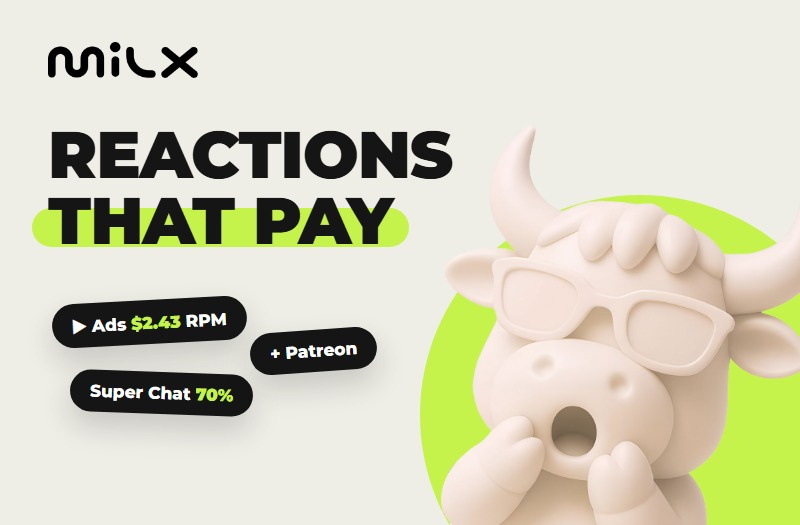
- In our research of 300 channels (by MilX and AIR Media-Tech), Entertainment, the niche most reaction channels sit in, had a median RPM of $2.43 between May 2025 and May 2026.
What reaction content is and why it's so big
A reaction video shows a creator watching, listening to, or playing something and commenting on it in real time. The source can be a movie trailer, a music video, a TikTok trend, a sports highlight, or a news clip. The face cam and the commentary belong to the creator. The clip on screen usually doesn't.
So why would anyone watch a reaction video? Three reasons keep the format big.
- It rides demand that already exists. People search for a new trailer and find reactions next to it. Greg Alba of Reel Rejects told Spotlight by G.E.M.A. that their movie reviews drew 5,000–10,000 viewers, while trailer reactions drew 100,000–200,000.
- Viewers come back for the person. A first-time listener hearing a classic rock song, or a doctor pausing a medical drama, gives the original a second life with a new angle.
- It's cheap to make. The subject already exists, so the work goes into commentary and editing.
YouTube treats the format as legitimate. Its channel monetization policies list "reaction videos where you comment on the original video" among the content that can earn. So are reaction videos allowed on YouTube? Yes, as long as there's real commentary and the copyright side holds up. More on both below.
Waiting 50 days for money your views already earned?
Your YouTube revenue reaches your MilX balance every day. Advance Funds lets you take what you've already earned up to 50 days before AdSense pays, for a one-time 4.3%.
Get paid earlier →The most popular reaction channels on YouTube in 2026
The reaction channels YouTube recommends most fall into four groups. Viral-clip reactors cover whatever is trending this week. Streamers react live and post the best parts as videos. Movie and TV reactors watch episodes and films with their audience. Expert reactors, a doctor, a therapist, or a vocal coach, add knowledge the original didn't have.
Here are the top reaction channels and the biggest reaction YouTubers 2026 has so far, ranked by YouTube subscribers and checked on their channel pages on November, 2026.
| Channel | What they react to | YouTube subscribers | Platforms | Income source that stands out |
|---|---|---|---|---|
| SSSniperWolf | Viral clips, TikTok trends | 35M | YouTube | YouTube ads on long videos and Shorts |
| REACT | Group reactions to trends, games, videos | 20.2M | YouTube | YouTube ads across its own formats |
| penguinz0 | Internet news, games, viral videos | 18.3M | YouTube, Twitch | YouTube ads plus live streams on Twitch |
| Doctor Mike | Medical scenes in TV, health trends | 15.1M | YouTube, Patreon | YouTube ads, Patreon |
| Kai Cenat | Live reactions, IRL streams | 8.26M | Twitch, YouTube | Twitch subscriptions |
| SidemenReacts | TikToks, memes, group challenges | 5.84M | YouTube | YouTube ads, the group's own brands |
| FlightReacts | NBA, music, viral clips | 5.14M | YouTube, Twitch | Live streams on Twitch |
| xQc | Variety streams, live reactions | 2.51M | Kick, Twitch, YouTube | Streaming deal with Kick |
| Danny Motta | TV and movie episodes | 1.73M | YouTube, Patreon | Patreon |
| Reel Rejects | Trailers, movies, TV | 1.49M | YouTube, Patreon | Patreon watch-alongs |
| Lost in Vegas | Music, first listens | 1.33M | YouTube, Patreon | Patreon |
Subscribers from each channel's YouTube page, checked November 10, 2026. Platforms from links on the channels' YouTube pages. Kai Cenat: Tubefilter on Mafiathon 3. xQc: Guinness World Records.
Subscriber counts move every day, so read the table as a snapshot. It ranks the best reaction YouTubers by reach, not by quality, and leaves out local scenes in Spanish, Turkish, or Ukrainian.
How reaction channels make money
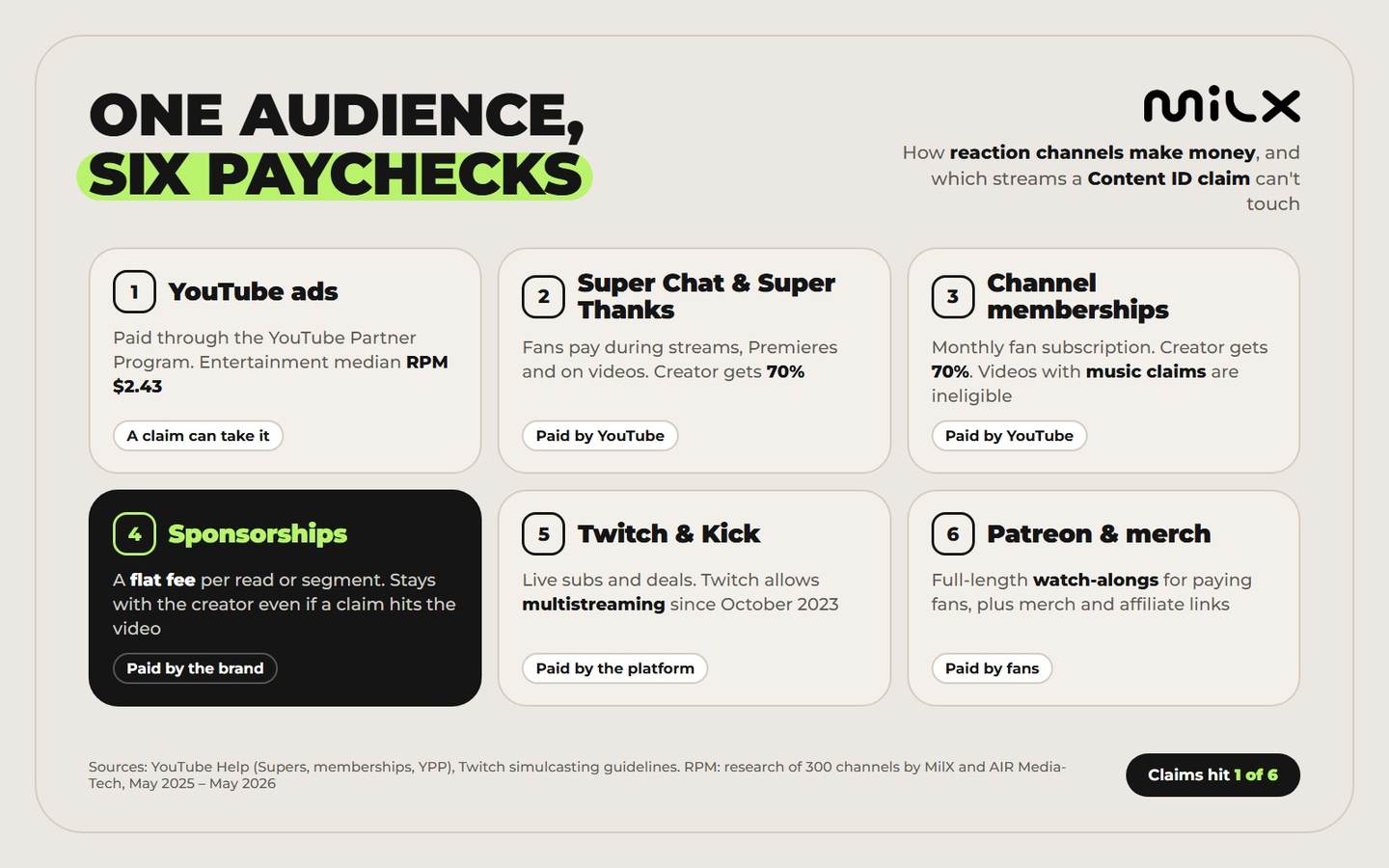
So how do reaction channels make money? Rarely from one source. Reaction YouTube channels' monetization usually stacks five or six income streams, each with its own rules and its own payout date.
Ads through the YouTube Partner Program
Ads are the base layer. To earn from them, a channel joins the YouTube Partner Program with 1,000 subscribers and either 4,000 qualified watch hours in the last 12 months or 10 million qualified Shorts views in the last 90 days. YouTube has announced that new creators applying from February 1, 2027 will need 8,000 hours or 20 million Shorts views to turn on ads.
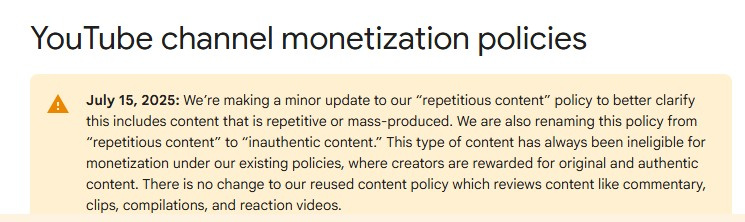
Do reaction channels get monetized? Yes, and the check that decides it is the commentary. YouTube's reused content rules allow reaction videos where you comment on the original. They don't allow "content that gets views from mostly non-verbal reactions" without added voice commentary. A face cam that gasps and laughs over someone else's video is the format that gets rejected. When YouTube renamed its "repetitious content" policy to "inauthentic content" on July 15, 2025, it said on the same page that the reused content policy for reaction videos didn't change.
The niche sets the rate. In our research of 300 channels (by MilX and AIR Media-Tech), Entertainment, the niche most reaction channels belong to, had a median RPM of $2.43 between May 2025 and May 2026. The middle half of those channels earned between $0.88 and $5.02 per 1,000 views. At the median, $1,000 in ad revenue takes about 412,000 views, and only the views the creator keeps the ad money for count.
Super Chat, Super Thanks and channel memberships
Live-heavy reactors get a big part of their income straight from fans. Super Chat and Super Stickers pay during live streams and Premieres, Super Thanks works on uploaded videos, and channel memberships are a monthly subscription. Creators get 70% of Supers revenue and 70% of membership revenue after taxes and fees, per YouTube Help.
Memberships and Super Chat work well together on a reaction stream, since that's where viewers want to be seen and a member badge sits next to everything they write in chat. There's one catch for music reactors. YouTube's memberships rules count videos with music claims as ineligible, and a channel with many ineligible videos can lose access to memberships.
Sponsorships and brand deals
Monetization and sponsorship go together once a reaction channel has a loyal audience. A sponsor pays a flat fee for a read or a segment, so that money stays with the creator even if a Content ID claim later takes the ad revenue from the same video. Every paid mention needs YouTube's paid promotion disclosure.
Twitch, Kick and multistreaming
Many of the biggest reactors are streamers first. Twitch has allowed simulcasting to other platforms since October 2023, so multistreaming to Twitch and YouTube at the same time is now an option for creators without an exclusive Twitch deal.
The live audience pays well. Kai Cenat crossed 1 million active Twitch subscribers during his month-long Mafiathon 3 stream and ended September 2025 with more than 1.1 million, as Tubefilter reported. xQc signed with Kick in 2023 for $70 million over two years, and up to $100 million with incentives, according to Guinness World Records. On channels like these, YouTube often gets the edited highlights and the full streams live elsewhere.
Patreon, merch and licensed clips
Movie and TV reactors face a different problem. A full episode on screen draws Content ID claims, so many of them post a shorter cut on YouTube and keep full-length watch-alongs on Patreon, often with the show blurred out, as Moxie's look at reaction creators describes. Danny Motta, Reel Rejects and music reactors Lost in Vegas all link Patreon from their YouTube pages. Moving a reaction behind a paywall doesn't make the footage licensed, though.
Some reactors license clips instead of hoping for fair use. Collab, for example, offers a library of over 235,000 clips, and with its revenue-share option the creator pays nothing upfront, only a share of the revenue from the part of the video where the clip appears, Tubefilter wrote in October 2025. Merch and affiliate links fill in the rest.
Ads, Super Chat, memberships, each paid on its own day?
MilX brings all your YouTube payouts into one place with daily access. Ad revenue, Supers and memberships reach your balance every day, and you move them when you want, through 30+ payment methods in 70 currencies.
See payment methods →How much do reactors earn?
YouTube doesn't publish what creators make, so the public numbers come from deals and estimates. Forbes put Kai Cenat at No. 24 on its 2024 Top Creators list with about $8.5 million in earnings, as Complex reported.
For an ordinary reaction channel, ads are the easiest part to estimate. At the Entertainment median of $2.43, 1 million monthly views brings about $2,430 from ads. That's before Super Chat, memberships, sponsors and anything off YouTube, and before claims. If 600,000 of those views sit on claimed videos, the ad money drops to about $970. That's why movie reactors care more about their claim rate than about their RPM.
1 million monthly views at a $2.43 RPM
No claims
≈ $2,430
from ads a month
60% of views claimed
≈ $970
from ads a month
The same views pay about $1,460 less when claims take the ad revenue. Median RPM from our research of 300 channels (by MilX and AIR Media-Tech), May 2025 to May 2026.
For bigger creators across niches, see how much popular YouTubers earn. The streamers' side of the money is in what YouTubers can learn from Twitch streamers about monetization.
The copyright tension: fair use, Content ID and demonetization
Reaction content copyright sits under every income stream above. Two systems apply to the same video at once, and they don't check each other's work.
The first is the law. Fair use is a US legal defense that lets you use copyrighted material without permission for purposes like commentary, criticism or news, and courts weigh four factors to decide it. YouTube's own fair use page says transformativeness is usually key. In practice, transformative content adds new meaning or a new message instead of replaying the original. In 2017, a US court ruled that an h3h3Productions reaction video was fair use, and the judge wrote in the same ruling that it wasn't deciding all reaction videos are fair use, TechCrunch reported. So fair use reaction videos exist, but each one stands on its own facts.
The second is Content ID. It matches uploads against files from rights holders, and the owner can block the video, monetize it, or track its views. A copyright claim that monetizes your reaction sends the ad money to the claimant while the video stays up. That's how reaction and Content ID add up to lost income without any strike. Our explainer on what Content ID is and how it detects copyright violations covers the matching itself.
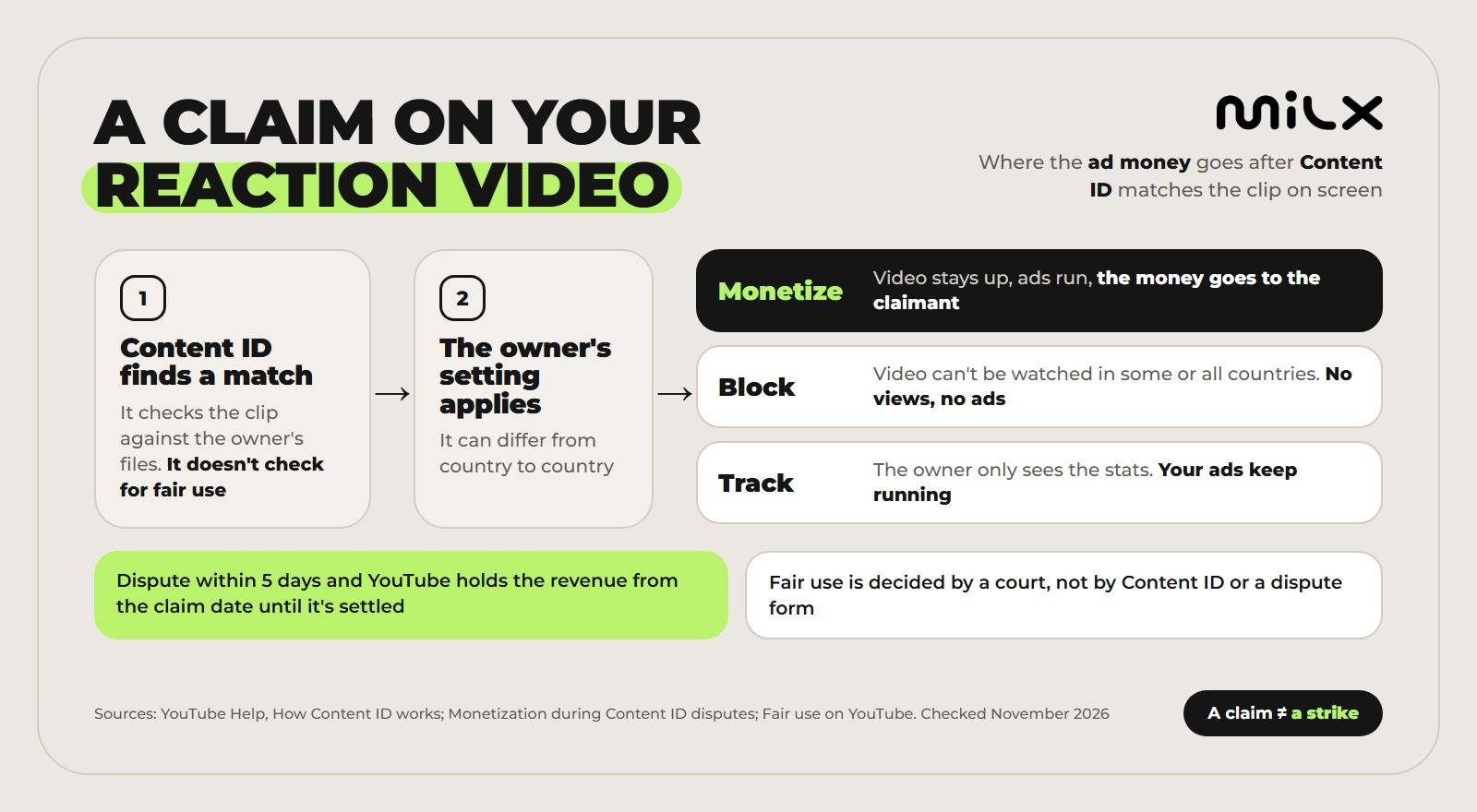
Do reaction videos get demonetized? Yes, in two different ways. A Content ID claim takes the ad revenue of one video. Reaction channel demonetization happens at the channel level, when YouTube's review finds reused content without real commentary and the whole channel loses ads. What to do after a claim, from disputes to edits, is in our guide on how to monetize reaction videos without getting demonetized.
Fair use is not automatic protection
- Only a court decides fair use. Content ID doesn't check for it before it places a claim.
- Credit to the owner and lines like "no copyright intended" don't turn a copy into fair use.
- Fair use is US law. Other countries have their own exceptions, often narrower.
- Talking over the clip, keeping it short and adding analysis help your case. They don't guarantee it.
Sources: YouTube Help — Fair use on YouTube; U.S. Copyright Office — Fair Use Index. Checked November 2026.
The reactors who last keep footage short with their own voice on top, and move full-length watch-alongs off YouTube.
Bills due before YouTube pays?
Turn scattered reaction income into stable cash flow with MilX. Your YouTube revenue lands on your balance every day, and you choose when and how to move it.
- Advance Funds: revenue you've already earned, up to 2 months early, for a one-time 4.3%
- 30+ payout methods in 70 currencies, plus BTC, USDT and USDC
- Free, instant P2P payments to your editor or co-host on MilX