


MilX breaks down how much YouTube pays per view by country and format.
What should you remember about YouTube monetization myths in 2026?
- YouTube pays for monetized playbacks, Premium watch time, fan funding, and Shopping. Everything else moves income by changing reach.
- The costliest mistake in 2026 is optimizing a metric with no payment line attached to it.
- Length and geography move revenue faster than upload volume: 72% higher RPM from one format change, and a five- to seven-times CPM gap between markets.
- Money earned on the 1st arrives 50 to 60 days later, a cash flow problem rather than an earnings problem.
YouTube Monetization Myths vs Reality - 2026
|
Myth |
Reality |
What Matters |
|
Likes = money |
Likes pay $0 |
Reach & distribution |
|
Every view is paid |
Only monetized playbacks generate ad revenue |
Monetized playback rate |
|
Comments boost payout |
Comments pay $0 |
Audience insights & content ideas |
|
You need 1M subscribers |
Monetization starts far earlier |
RPM & qualified audience |
|
Shorts don't pay |
They pay, but RPM is much lower |
Shorts → long-form traffic |
|
Everyone gets the same rate |
CPM/RPM varies greatly |
Audience geography & niche |
|
Watch time doesn't matter |
Longer watch time can increase revenue |
Retention, mid-rolls & Premium |
|
AI content gets demonetized |
AI is allowed; repetitive/mass-produced content is the risk |
Originality & human input |
|
Premium/ad-block = $0 |
Premium pays; ad-block generally doesn't generate ad revenue |
Premium watch time |
|
Viral = instant payout |
AdSense pays on a monthly cycle |
Cash-flow planning |
If MilX guidelines help you, add the MilX blog to your preferred sources.

What does YouTube pay for?
Four lines:
- ad revenue from monetized playbacks,
- Premium revenue from member watch time,
- fan funding,
- and Shopping commissions.
Engagement signals sit outside all four and change how far a video travels, which changes how many playbacks it collects.
|
Metric |
Pays directly |
What it does |
|---|---|---|
|
Ad impressions on monetized playbacks |
Yes |
Main revenue line, 1 to 3 impressions per playback |
|
Premium watch time, memberships, Super Thanks |
Yes |
Paid by viewers, no ad fill needed |
|
Likes |
No |
Engagement signal feeding recommendations |
|
Comments |
No |
Engagement signal plus content research |
|
Subscribers |
No |
Eligibility metric and distribution |
|
Raw views |
No |
Only the monetized share pays |
|
Watch time |
Indirectly |
Adds mid-roll slots and Premium revenue |
1) Do YouTubers get paid for likes?
Myth (false): every thumbs-up adds a fraction of a cent.
Why creators believe it: likes and views sit side by side in Studio and rise together.
What's true: a like appears on none of the payment lines. YouTube says recommendations work by "understanding a user's viewing behavior, likes, dislikes, subscriptions, and feedback." A like buys distribution, and distribution buys playbacks.
What to do: compare a video's like-to-view ratio against its monetized playback rate. Likes rising while playbacks stay flat means the video found an audience your advertisers do not cover.
2) Does YouTube pay for views?
Myth (false): 100,000 views means 100,000 paid views.
Why creators believe it: earnings calculators multiply view count by a flat rate.
What's true: YouTube pays on monetized playbacks, and the gap is wide.
In a small sample of kids channels from our research, 45.7% of Shorts views were monetized, against 12.1% of long-form views, because made for kids content runs far fewer ads on long videos.
What to do: Analytics → Revenue → Monetized playbacks, divided by views, gives your paid share. One MilX user turned mid-rolls on, saw views drop that quarter, and still grew revenue.
3) Do comments and engagement raise your payout?
Myth (false): a busy comment section lifts engagement rate, and a higher rate pays more per view.
Why creators believe it: analytics tools bundle likes, comments, and shares into one number.
What's true: comments pay $0. Their value is direction.
One MilX user ran systematic comment analysis alongside a higher upload cadence and grew across all three language versions.
What to do: sort comments by Top, pull every question asked more than twice, and build your next three videos from it.
4) Do you need 1 million subscribers to make money on YouTube?
Myth (false): real income starts at the Gold Play Button.
Why creators believe it: the press only covers seven-figure channels.
What's true: fan funding opens at 500 subscribers with 3 valid public uploads in 90 days plus 3,000 watch hours, or 3 million Shorts views in 90 days.
Ad and Premium revenue sharing starts at 1,000 subscribers with 4,000 watch hours, or 10 million Shorts views in 90 days.
Past that, subscriber count predicts little: two MilX users, each with roughly 450,000 subscribers, earned about $1,000 and about $10,000 a month in the same period.
What to do: read subscriber count as an eligibility number, and track revenue per 1,000 views.
5) Do YouTube Shorts pay creators?
Myth (false): Shorts are pure exposure and pay nothing.
Why creators believe it: the Shorts revenue line in Studio rounds to zero.
What's true: Shorts pay at a fraction of long-form rates.
Across MilX users spanning 274 channels and 13 niches, Shorts RPM runs at 3% to 14% of long-form RPM, so 11,000 to 34,000 Shorts views earn what 1,000 long-form views earn. In one MilX user's portfolio, where Shorts made up 28% of views, views grew 24.2% in a quarter, and revenue grew 13.69%.
What to do: keep roughly one Short per two to three long uploads, and route Shorts viewers into long-form with end screens and matching titles.
Your Revenue Is Already Earned ButHasn't Landed. You Can Still Withdraw It
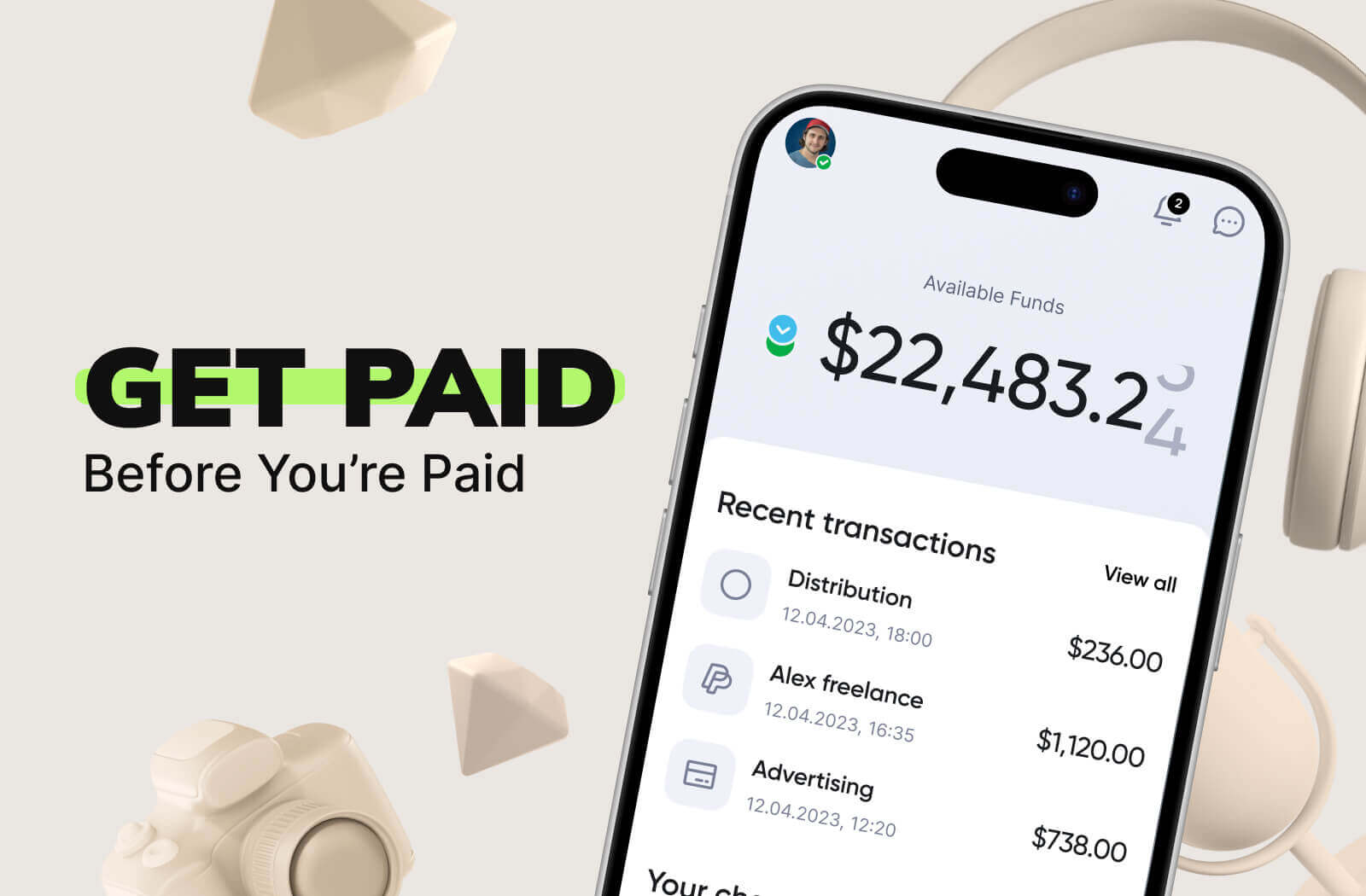
The views happened last month; the money arrives after the 21st of this one. MilX Advance Funds brings forward up to 2 months of revenue your channel has already earned, up to 50 days before AdSense sends it, for a one-time 4.3%. Try MilX
6) Does YouTube pay every channel the same rate?
Myth (false): a standard YouTube rate per 1,000 views exists.
Why creators believe it: estimator sites publish one global CPM, an advertiser-side number.
What's true: advertisers bid per audience, so your rate follows your viewers.
Across MilX users, French-speaking markets run CPMs of $6.76 to $12.98 against $1.10 to $1.82 in Latin American Spanish markets, a five- to seven-times gap on identical watch time.
What to do: sort your top ten countries by watch time, not by views. With a sub-$2 CPM market at the top, translating metadata into a higher-CPM market tells you more in 30 days than three more videos, as the MilX guide to CPM vs RPM explains.
7) Does watch time still matter in 2026?
Myth (false): the algorithm moved to clicks and Shorts, so retention stopped paying.
Why creators believe it: short-form growth advice skips revenue per view.
What's true: watch time carries two revenue lines. Videos of 8 minutes or longer run mid-rolls, turning one playback into several ad impressions, and Premium revenue is distributed "based on how much members watch your content."
One MilX user's kids channel compared its 2- to 3-minute videos with 10-minute compilations of the same footage: 19% higher average view duration, 9% higher CPM, 72% higher RPM.
What to do: with an average video under 8 minutes, build one 10-minute version from footage you own, turn mid-rolls on, and compare RPM after 30 days.
8) Does YouTube demonetize all AI-generated content?
Myth (false): touch an AI tool and the channel loses monetization.
Why creators believe it: the policy rename landed with a wave of faceless-channel demonetizations.
What's true: YouTube renamed "repetitious content" to "inauthentic content" on 15 July 2025, targeting "content that is repetitive or mass-produced."
AI tools stay allowed, and YouTube's own example of acceptable use is "using AI to visualize a unique character and narrative you invented." The triggers sit at channel level: a dozen uploads a day with no variation, clones differing only by title.
What to do: keep one documented human step in every video- your script, voice, or framing- and vary formats across the week.
9) Do Premium viewers and ad-block users earn you nothing?
Myth (false): anyone who skips ads is a free viewer.
Why creators believe it: Premium revenue arrives inside the same monthly payment as ads.
What's true: Premium members are among your best-paid viewers. YouTube pays creators out of membership fees by member watch time, and downloads and background plays count. Ad-block viewers produce neither.
What to do: split revenue by source in Analytics and read the Premium line on its own. Where Premium carries a real share, longer background-friendly formats pay twice.
10) Does YouTube pay you right after a video goes viral?
Myth (false): a spike today shows up in your account this week.
Why creators believe it: Studio updates estimated revenue daily, which reads as money moving.
What's true: AdSense finalizes last month's earnings between the 7th and the 12th, checks your balance against the $100 threshold on the 20th, and pays between the 21st and the 26th.
Revenue earned on the 1st reaches a bank account 50 to 60 days later, which is how a channel goes viral and still misses payroll for its editor.
What to do: budget on last month's finalized figure, never this month's estimate, and build a one-month buffer before hiring.
Fund the Next Video, No Need to Wait for the Payout Date
A trending topic has a two-week window, and AdSense runs on a monthly one. MilX Active Funds gives an established channel up to 4 months of future revenue at 0.33% per day, repaid automatically at 5% of monthly revenue and scored on your channel's own history rather than a credit file. Try MilX
How do you check what your channel is paid for in 30 days?
Four weeks, one number per week, all inside YouTube Studio.
Find your paid share
Analytics → Revenue.
Note views, monetized playbacks, and RPM for 90 days, then divide playbacks by views. Under 40% puts the problem in audience or format, not traffic.
Find your paid audience
Analytics → Audience, top geographies by watch time.
Write down five markets and their CPM. A sub-$2 market at the top means translation beats production next quarter.
Run one format test
Publish one video of 10 minutes or longer from footage you own, mid-rolls on, in your normal slot. Change nothing else that week.
Read the test
Compare its RPM and average view duration against your 90-day median. Higher RPM on similar views makes length your fastest lever; flat RPM with higher views points to geography.
👉 The MilX guide on reading YouTube Analytics correctly covers those tabs.
How does MilX close the 50-day gap?
Your channel earnings land on your MilX balance daily, and you can move them anytime.
Cash out any day, as often as you like: 54 currencies, 30+ methods, including BTC, USDT, and USDC. Instant Payment in under 5 minutes for 1%, from $1. MilX to MilX is free.
When the calendar is the problem rather than the earnings,
- Advance Funds brings forward up to 2 months of revenue your channel has already earned, up to 50 days earlier than AdSense, for a one-time 4.3%.
- Active Funds finances up to 4 months of revenue not yet earned, at 0.33% per day, repaid at 5% of monthly revenue. Your channel needs to be monetized and linked to AdSense, and money already in AdSense is paid out by Google as usual.
MilX has paid out more than $500M, works with 3,100+ connected channels, and holds a Money Service Business licence regulated by FinTrac in Canada. Trustpilot rating: 4.6 out of 5.
👉 Take control of your creator finances with MilX; download the app for free.