


YouTube advertising data 2026 reveals a clear shift in how revenue is generated, where success depends less on raw view counts and far more on how precisely your content aligns with advertiser demand, audience intent, and evolving platform mechanics.
At the same time, YouTube ad insights show that CPM is no longer a stable or standalone metric, as it fluctuates heavily by geography, device usage, content category, and even viewer behavior patterns across sessions.
For creators, production teams, and marketers, this means one thing: revenue must be planned, not assumed, and understanding YouTube CPM trends, YouTube RPM forecasts, and YouTube ad format performance is now essential for making informed decisions.
AI-Driven Ad Personalization
YouTube's advertising engine is now built around AI at every level. Formats like Video View Campaigns and Demand Gen use machine learning to optimize delivery in real time, adjusting bids, placements, and creative selection without manual input.
The result is lower cost-per-acquisition across the board, but only when the inputs are strong.
The algorithm still needs direction. Without clear audience signals or well-built creatives, AI-optimized campaigns underperform. The system can find the right viewer at the right cost, but it cannot fix a weak hook or a vague message.
What this means in practice: brief well, test fast, and let automation handle the distribution.
The creators and brands winning on YouTube ad demand right now are the ones treating AI as a media buyer, not a creative director.
👉 Example: A creator running a channel about personal tax filing noticed their RPM was significantly lower on "beginner" videos than on more advanced content. The advanced videos attracted a specific audience that tax software and accounting brands were actively targeting with high-budget AI campaigns. Same topic, more specific angle, higher RPM because the ad system found a better match between content and advertiser intent.
Advanced audience segmentation tools launched in early 2026 introduced predictive modeling, identifying users likely to convert even without prior brand interaction.
That is a significant shift. It moves targeting from behavioral history to behavioral prediction, and it favors advertisers with clean first-party data.
Short-Form Video Dominance
YouTube Shorts ads are no longer an experiment. They are a budget line.
RPM around $0.01–$0.07 per 1,000 views, lower than long-form, but impressions scale fast.
Shorts deliver volume. Long-form delivers value.
Videos over eight minutes unlock mid-roll placements, meaning more ad inventory per session and higher effective CPM. A finance video with 10+ minutes of retention, watched by a US audience in November, can earn three to five times more than the same video in July with average retention from lower-CPM regions.
Shorts are optimized for discovery, while long-form content is optimized for monetization, which is why YouTube RPM forecast models consistently show higher revenue density in longer videos.
That is not a minor difference. That is a content strategy.
🧐 Tip for creators: Do not rely on Shorts for AdSense income; use them to grow the audience that watches your long-form content. A Short with 500K views sounds impressive. But if it does not pull viewers into a 12-minute video on the same topic, the revenue impact is minimal. Pin your long-form video in the Short's comments, and end every Short with a direct reason to go watch the full version.
👉 Learn more about how much you will get for 10 million views on YouTube Shorts.
Your YouTube Revenue, Your Rules
Cash out your YouTube income to a bank, card, e-wallet, or crypto - in 40+ currencies. With MilX, there are no delays, no minimums, and no complicated setups. It is free to start and fully in your control.
Brand Partnerships Over CPM
CPM alone no longer defines success because direct brand partnerships now represent a significant portion of total creator revenue.
In YouTube ad revenue changes, creators who combine AdSense with integrations or sponsorships generate higher earnings per viewer and reduce dependence on fluctuating ad markets.
🧐 Tip for creators: When pitching a brand deal, lead with your audience composition, not your view count. Pull your YouTube Analytics data and show the brand exactly what percentage of your viewers are in the US, UK, Canada, or Australia, the geographies where their ad spend performs best. Show average view duration, not just total views. Brands in 2026 are buying access to specific people, not raw impressions.
👉 Discover how to get repeat sponsors on YouTube.
Interactive and Shoppable Ads
The most significant YouTube ad format performance shift of 2026 is the full rollout of Shoppable CTV ads. These are non-skippable units that run on connected TVs with an interactive product carousel alongside the video.
How they work:
Shoppable CTV ads connect passive viewing with instant action.
A typical flow looks like this:
- A video ad plays on a smart TV (YouTube, streaming apps, etc.).
- A QR code or clickable overlay appears on the screen.
- The viewer scans it with their phone.
- They land directly on a product page, checkout, or offer.
Early experiments show that integrating interactive elements like QR codes into YouTube ads can more than double conversion rates, while extending campaigns to connected TV unlocks access to entirely new audiences who primarily watch YouTube on larger screens. These formats are now available through Demand Gen and Performance Max, where product data flows directly from Google Merchant Center to support seamless, action-driven ad experiences.
This is the convergence of TV awareness and performance marketing. It is no longer theoretical.
Regional Ad Growth
Not all markets move at the same speed, and the YouTube ad revenue changes hitting different regions in 2026 are sharp enough to affect strategy decisions.
👉 Check out these countries with the highest CPM rate.
APAC and LATAM continue to expand in advertiser demand, while Eastern Europe is steadily increasing its contribution to global ad revenue.
The geography of your views is not a background detail. It is a revenue multiplier.
🧐 Tip for creators: Open YouTube Analytics right now and check your top 5 countries by watch time. Then check your top 5 countries by revenue. They are probably not the same list. A country driving 20% of your views but only 4% of your revenue is a signal; either your content is not resonating with higher-CPM audiences, or your titles and thumbnails are not optimized for English-language search. Shifting even 10% of your audience toward Tier 1 markets can move your monthly RPM, more than doubling your upload frequency.
👉 Example: A creator who adds Spanish subtitles and localized thumbnails increases total revenue without producing new content, simply by unlocking additional audiences.
Ad Revenue Seasonality Shifts
The YouTube RPM forecast for 2026 confirms patterns that have held across multiple years, with a few refinements worth noting.
- Q1 opens hot. January saw a global CPM increase compared to December lows, driven by advertisers re-entering with fresh annual budgets. Competition is high, and costs follow.
- Q2 is the most stable quarter. CPMs hold steady, view rates improve, and CTRs begin climbing. It is the best window to test creatives and build audience data before Q4 saturation.
- Q3 is the runway. Use it to refine bidding strategies, rotate creatives, and build campaign momentum. Brands that optimize in Q3 enter Q4 with lower CPAs and stronger performance baselines.
- Q4 is the battleground. CPMs peak. Conversion intent is highest. But in Q4 2024, cost levels were more efficient than expected, a signal that even peak season leaves room for smart buyers.
December is the hidden window. Most advertisers pour spend into bottom-funnel Q4 campaigns, leaving upper-funnel placements with less competition and lower CPMs. Brands with remaining budget can extend awareness reach at a discount right before year-end resets.
🧐 Tip for creators: Plan your content calendar around the revenue cycle, not just the upload schedule. Put your highest-effort, most monetizable videos, detailed tutorials, product comparisons, and finance breakdowns live in October and November when CPMs are at their peak. January and February are when RPM is lowest, so that is the time to batch-produce, experiment with new formats, and build your backlog. Work with the cycle, not against it.
Privacy-Driven Reporting Changes
Third-party cookies are largely gone. The shift has been gradual, but the impact on YouTube ad insights is real: attribution paths are shorter, reporting is less granular, and first-party data is now the primary currency.
Google has responded with tools like Attributed Branded Searches, a new Demand Gen metric that tracks when users search for a brand after seeing an ad. This captures the "halo effect" of awareness campaigns.
For creators and advertisers, the practical implication is clear: build first-party audience signals aggressively.
🧐 Tip for creators: The privacy shift is making first-party audience data more valuable, and that includes your channel membership list, your email newsletter, and your community tab engagement. Advertisers are paying more to reach audiences they can identify and verify. If you have built any of these lists, mention them when pitching brand deals. A 5,000-person email list of engaged subscribers can be worth more to a brand than 100,000 passive YouTube followers in a targeting conversation.
Creator-First Payment Tools
The gap between when a creator earns and when they get paid has always been a problem. YouTube pays monthly, but production costs hit daily. Equipment, editing, location fees, collaborators- none of them wait for AdSense day.
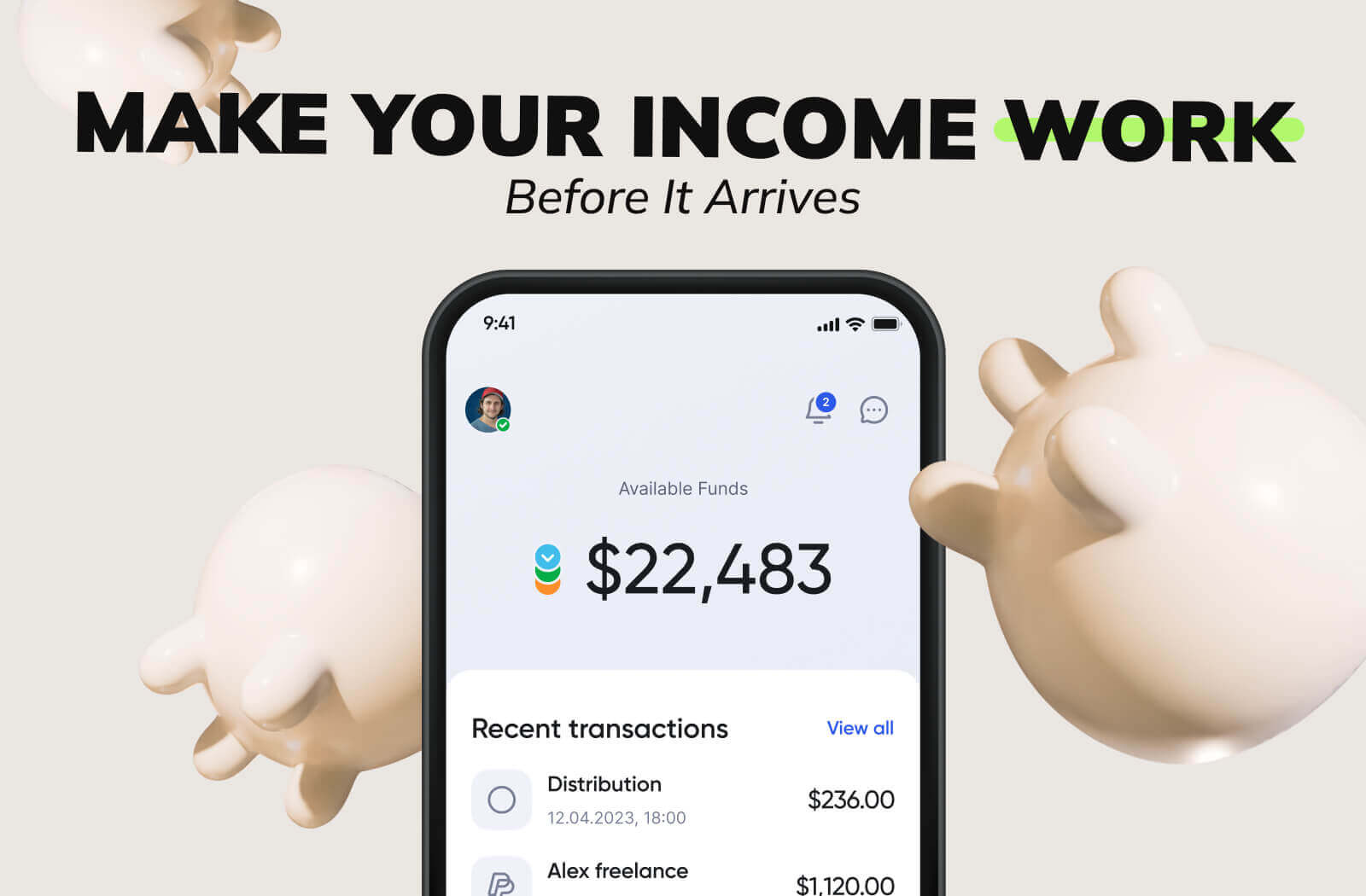
Financial tools like MilX, built specifically for creators, are filling that gap. Access to future income, multi-currency payouts, and flexible withdrawal options are shifting how creators manage cash flow.
The question is no longer just "how much will I earn?" It is "when can I access it?"
👉 Explore tips for creators to get daily YouTube payments.
Channels with stable monthly ad revenue now have options that did not exist two years ago.
That changes the math on when to invest in production upgrades, when to launch a new series, and when to scale ad spend on their own content.
👉 Example: A travel creator needed a gimbal stabilizer and a new lens to film a series of location videos they had already planned. The total cost was $1,100. Their AdSense payout was three weeks away. By accessing their upcoming income early through MilX, the gear arrived before the shoot, and the series launched on schedule. The six videos from that shoot generated $3,400 in ad revenue over the following two months. Waiting would have meant a delayed series, lost momentum, and lower total earnings from a window that does not repeat.
Cash Out Before the Views Catch Up
With MilX Active Funds, you can access up to six months of future YouTube income right now, before the ad cycle resets, before the slow months hit. Try the MilX app free and unlock your earnings on your own schedule.
Automated Copyright and Monetization Claims
Content ID claims and monetization eligibility decisions are happening faster and with less human review. In 2026, automated systems flag, demonetize, and in some cases re-monetize content within hours of upload.
The yellow icon, restricted monetization, now triggers not just on explicit content but on anything the system reads as advertiser-unfriendly. Light profanity, reused clips, sensitive topics, and even certain audio signatures can limit RPM before a video gets traction.
👉 Learn more about copyright strike and copyright claim on YouTube.
The practical fix is front-loading brand safety. Review content against advertiser guidelines before publishing. Keep music licensing clean. Avoid clickbait framing even when the content itself is appropriate.
Channels that operate clean earn more per view. It is that direct.
🧐 Tip for creators: The first 48 hours after publishing are when most of your views and the best RPM rates hit. A yellow icon during that window is expensive. Before you publish anything, run the video through YouTube Studio's monetization checker while it is still in draft. Check your music sources, scan your title for flagged language, and look at your thumbnail with fresh eyes. Five minutes before publishing saves you days of appeals afterward.
Multi-Platform Ad Strategies
Demand Gen campaigns now span YouTube (including Shorts), Google Discover, Gmail, and the Display Network, all from a single campaign structure.
The multi-platform approach enables sequential storytelling at scale. A viewer encounters a bumper ad first. Then an in-stream ad with more depth. Then a Shorts ad with a direct product link. Each touchpoint builds on the last. Google's AI manages the sequencing; the advertiser manages the message.
For creators, the implication is that ad revenue is no longer just about YouTube watch time. It is about how well a channel fits into an advertiser's full-funnel system. Channels with strong audience data, consistent engagement, and clear niche positioning become preferred placements, and preferred placements command higher CPMs.
How to Implement These Trends to Increase YouTube Income
- Start with your RPM, not your CPM. CPM tells you what advertisers pay. RPM tells you what you actually receive. The gap between them reflects YouTube's 45% cut, ad-blocker impact, and non-monetized views. Track RPM month over month, not CPM in isolation.
- Prioritize longer content in high-CPM niches. Videos over eight minutes unlock mid-roll ads. Finance, technology, and education content consistently deliver the highest CPMs. Combining format length with niche positioning is the most controllable lever available to creators.
- Use Shorts to grow the audience that watches your long-form content, not as a standalone income source. Every Short should have a reason to send viewers somewhere that earns more per view.
- Keep your audience geography in mind with every video you make. English-language content targeting universal topics consistently pulls higher-CPM viewers from Tier 1 markets. That is a real and significant income lever that does not require more subscribers.
- Publish your best content in October and November. Use January and February to batch, experiment, and plan. Work with the seasonal revenue cycle, not around it.
- Stay advertiser-safe at the content level. A clean, clearly focused channel earns more per view than a broad or borderline one. The yellow icon costs money. The green icon compounds.
Use MilX to Finance Your Content and Cash Out Faster
Understanding YouTube ad revenue changes is only half the equation. Acting on them takes budget for equipment, production, promotion, and the team that keeps output consistent. Most creators wait on monthly AdSense cycles that do not match how production actually works.
MilX Active Funds gives creators access to up to six months of future YouTube income upfront.
Repayment happens automatically at 5% monthly from future income, with fees starting from just 0.33% per day, so there is nothing to track manually.
👉 Find out why YouTube creators love MilX.
Over 3,100 creators already use MilX to stay ahead of the cash-flow gap. They cash out in 40+ currencies through 10+ payout options: bank, card, e-wallet, or crypto; send fee-free P2P transfers to editors, designers, and collaborators.
Move fast without waiting.
If you are scaling a channel, launching a new series, or covering your next shoot, MilX removes the financial bottleneck so the work does not have to slow down.
Try MilX free and see if your channel qualifies for Active Funds.