

Here's what triggered the crackdown, what counts as “inauthentic content,” and how to keep your monetization safe.
AI Boom. Demonetization Wave
Thousands of faceless YouTube AI channels suspended their monetization because old policies around reused and repetitive content are now applied at scale.
The difference? YouTube AI detection 2026 can finally spot patterns behind mass‑generated videos.
Channels built on AI scripts, slideshows, synthetic voices, or copy‑paste formats are the first to fall, especially when every upload looks, sounds, and moves the same.
This wave of YouTube AI content demonetization targets videos that mimic effort but lack originality.
YouTube’s systems now evaluate channels as a whole. Upload frequency, format similarity, lack of commentary, and minimal editing all stack up as risk signals under the YouTube inauthentic content policy.
This is not an AI ban. It’s a quality filter.
What no longer passes is content that looks manufactured rather than created. AI-generated content, due to YouTube rules, now expects human creativity in the mix.
If your videos don’t show clear human judgment, intent, or value, the algorithm treats them like spam. And spam doesn’t get paid.
Let’s break down what triggers AI-slop YouTube takedowns, what puts your channel at risk, and how to protect your YouTube channel from suspension, so you can stay monetized and build with confidence under the new YouTube monetization AI content framework.
What Triggered the AI Channel Takedowns?
YouTube’s 2026 strategy drew a hard line, and thousands of channels crossed it.
The platform now flags inauthentic content as anything that looks mass-produced, templated, or machine-made without real human effort, core to the updated YouTube inauthentic content policy.
You’re in danger if your channel relies on:
- AI slideshow videos with no real narration or editing.
- Template clones where only the title or character name changes.
- Music playlists built with tools like Suno, paired with static images.
- Faceless compilations that skip commentary, structure, or value.
- Overposting, daily uploads with no variation, signal AI slop YouTube patterns.
Behind the scenes, YouTube AI detection 2026 uses pattern recognition to spot mass-generated formats from tools like ChatGPT, Gemini, and Suno.
It also introduced YouTube creator protection features like likeness detection, allowing creators to remove unauthorized use of their face or voice.
Why and how? Let’s see below.
YouTube’s 2026 AI Strategy: Creation, Control, and Cleanup
YouTube just outlined its roadmap for AI in 2026, and it’s all about supercharging creators while keeping content quality intact.
AI as a Сreative Tool - Not a Shortcut
YouTube sees AI as the next creative revolution, like the rise of Photoshop or synthesizers.
In December alone, over 1 million channels used YouTube’s built-in AI tools daily. And the features are only expanding.
This year, creators will be able to:
- Generate Shorts using their own digital likeness.
- Build games with a simple text prompt.
- Experiment with music tools directly inside the platform.
YouTube rules position AI as a tool for expression, not automation.
Human creativity stays at the core.
Stronger Labels and Creator Protections
As deepfakes get harder to spot, YouTube is doubling down on transparency.
Creators must now disclose when content is synthetic or realistically altered, and YouTube clearly labels anything made with its own AI tools.
But YouTube creator protection doesn’t stop at disclosure. The platform will remove misleading AI content that violates policies and is building tools (like a new version of Content ID) to let creators control the use of their likeness, face, voice, or style in AI content.
👉 Learn more about Content ID and how it works.
To back this, YouTube supports real-world protections too, like the proposed NO FAKES Act aimed at preventing unauthorized AI replicas of real people.
Fighting Back Against AI Slop
The explosion of generative tools brought a flood of low-effort content, which YouTube now calls “AI slop.”
Instead of banning this content outright, YouTube is adjusting visibility and discovery. Their updated systems aim to:
- Detect and downrank spammy, repetitive uploads.
- Strengthen protection against clickbait.
- Keep recommendations satisfying for viewers.
It’s a reset. YouTube is balancing openness with enforcement under its YouTube inauthentic content policy, ensuring creators still innovate while the feed stays clean.
AI That Makes Videos More Useful
YouTube is expanding what AI can do for viewers.
- Over 20 million people used the new Ask tool in December to dive deeper into videos with instant AI-powered answers.
- More than 6 million users watch auto-dubbed content, making global videos more accessible.
Here, YouTube AI detection 2026 is working both ways: flagging lazy content, but also powering smart features that help users get more out of every video.
For YouTube, AI is the bridge between what creators make and what audiences need, faster, smarter, and more personalized.
Create Now. Don’t Wait for Payday
Why pause uploads while waiting for your next AdSense payout? MilX Active Funds gives you instant access to up to 6 months of future YouTube income.
What YouTube Now Flags as Inauthentic
Here’s what’s getting channels hit with YouTube AI content demonetization right now:
- AI-only slideshows: Static AI-generated images without motion, edits, or pacing, just auto visuals under music or text. Example: “Top 10 Unknown Planets” with nothing but Midjourney images fading in and out.
- Generic TTS narration: Synthetic voices reading AI-written scripts with no emotion, insight, or opinion. If it sounds like a bot reading Wikipedia, it's a strike under AI-generated content YouTube rules.
- Minimal or no editing: without zooms, transitions, and structure. Same background, same flow. This screams “mass-produced,” a clear violation of the YouTube inauthentic content policy.
- Same format, every upload: Daily videos that all look, sound, and feel identical. Even templated thumbnails and titles now trigger YouTube's reused content policy enforcement.
- No author commentary: Remixing Reddit posts, clips, or news footage without your own context? It’s still a risk, even if you’re not breaking copyright.
Even faceless YouTube AI channels suspended in recent waves were expected to show creative fingerprints: unique tone, opinion, or structure.

The Difference Between Using AI Tools and Creating AI Slop
AI itself is not the problem. How you use it is.
Under AI-generated content YouTube rules, AI-assisted content is allowed when a creator stays in control: scripts get rewritten, visuals get edited, and ideas get shaped by human judgment. That’s assistance.
AI slop is different. It’s content produced in bulk, with the same structure, the same pacing, and the same assets, just published faster. That’s where AI-slop YouTube enforcement kicks in.
AI helps outline ideas. Humans decide what matters.
Is Your Channel at Risk?
You don’t need a warning email to be in danger.
If your content looks like it came from a script factory, YouTube AI detection in 2026 already sees the signs.
The more your channel feels templated, the faster it gets flagged as inauthentic.
AI alone won’t kill your monetization. But under the current YouTube monetization AI content framework, AI without a creator will.
Ask yourself: Does this video show judgment? Intention? A point of view?
If not, it’s just noise. And YouTube doesn’t pay for noise.
👉 Explore how to boost YouTube income with AI tools.

How to Fix Your AI Content Before It’s Too Late
Don’t delete your channel - just stop looking like a bot.
Here’s how to clean things up without triggering YouTube AI detection in 2026.
Fix Your Top Performers First
Start with your most-watched or most recent videos.
Update the titles, thumbnails, and descriptions to reflect real human input.
Tweaking metadata in batches of 10–15 per day is safe. Changing everything at once? That’s a red flag under YouTube's reused content policy filters.
Add Your Voice - Don’t Outsource It
If you’re using AI narration, rewrite your scripts to include your opinion or perspective.
Hot take > plain facts.
Better yet? Use a real voice, yours or a voice actor.
The YouTube monetization AI content system rewards human tone, not robotic delivery.
Drop the Static Visuals
Still images and AI slideshows look lazy to the algorithm.
Add motion stock footage, video clips, animated text, or even pan/zoom effects.
If you run a music channel, AI-generated content YouTube rules suggest animating lyrics or adding context between tracks. Static = stale.
Inject Real Value
Every few minutes, offer something new: commentary, insight, or explanation.
Even faceless creators can pass YouTube's inauthentic content policy checks by showing structure, edits, and judgment.
Use jump cuts, overlays, or questions to engage. Show you’re in control, not the machine.
Be Transparent - But Don’t Rely on Labels
Yes, you can flag your content as AI-assisted using YouTube’s “Altered Content” toggle.
But that won’t protect you if your video feels low-effort or templated.
Transparency helps, but under current YouTube AI content demonetization standards, transformation matters more.
Your earnings, your way
Withdraw YouTube income anytime with MilX, in 40+ currencies, straight to your card, bank, wallet, or crypto.
What About AI Music Channels?
Even with a Suno Pro license, your channel can still get demonetized.
Why? Because owning the rights isn’t enough, YouTube also checks for originality, effort, and human input.
Here's what triggers demonetization:
- Hour-long playlists of AI songs that sound too similar.
- Static visuals, same loop, same image, no movement.
- Without intros and commentary, only tracks dumped online with zero variation.
This pattern screams “automated music dump,” not a creative project.
How to protect your music channel:
- Animate your lyrics: Dynamic subtitles show editing effort.
- Use real footage or visualizers: Backgrounds that move, react, or evolve.
- Add voice intros or notes: Talk about the theme, genre, or process.
- Mix it up: Combine AI tracks with human-made songs, remixes, or vocals.
- Write better metadata: Use curated titles, unique tags, and clear timecodes.
Even better, explain your input in the video description. YouTube checks that too.
👉 Discover more about YouTube monetization and reused music.
What to Do If You Already Received a Warning or Suspension
Getting flagged feels personal, but your next steps should be strategic.
YouTube doesn’t hand out second chances easily, so how you respond in the first few days can make or break your channel’s future.
The First 72 Hours Matter Most
If your warning or suspension is tied to YouTube AI content demonetization, the worst thing you can do is keep uploading.
That signals denial, not accountability.
Instead, freeze all uploads. Let your channel breathe while the system reassesses it. Any new content, especially if it follows the same risky pattern, can strengthen the case against you and lower your chances of reversal.
Document Everything
Before you appeal, audit your own content.
Create a clear list of flagged videos. Identify common patterns: AI narration, repetitive format, lack of commentary, and mark where you did add human value.
Screenshots, timestamps, and metadata changes all help. This is especially important under AI-generated content YouTube rules, where transformation and originality are required for monetization.
Treat this like a professional dispute, not a casual support ticket.
Submit One Clear Appeal
You get one shot. Make it count.
Avoid blaming the system or using emotional language. Focus on what you've changed and why your content qualifies for monetization.
Explain how you now meet the YouTube inauthentic content policy:
- Human commentary.
- Structured editing.
- Personal opinions or insights.
- A visible shift from templated, low-effort formats.
Attach links, examples, or even a short video showing what you’ve fixed.
Be Realistic with Timelines
YouTube reviews don’t happen overnight. Most take 3–6 weeks, especially if your case involves YouTube AI channels suspended for system-detected violations.
During this time, don’t just wait - rebuild. Focus on new content ideas that reflect your improved strategy. Treat the review period as a relaunch runway, not dead time.
Most Importantly, Pivot Fast
Survival isn’t about proving the algorithm wrong; you need to adapt fast and visibly.
Channels that recover show consistent change across their next 5–10 uploads. That’s what tells YouTube’s systems, and real reviewers, that you’ve shifted your process, not just your metadata.
Because in 2026, AI didn’t end monetization, but low-effort automation did.
And now, originality is the only way forward.
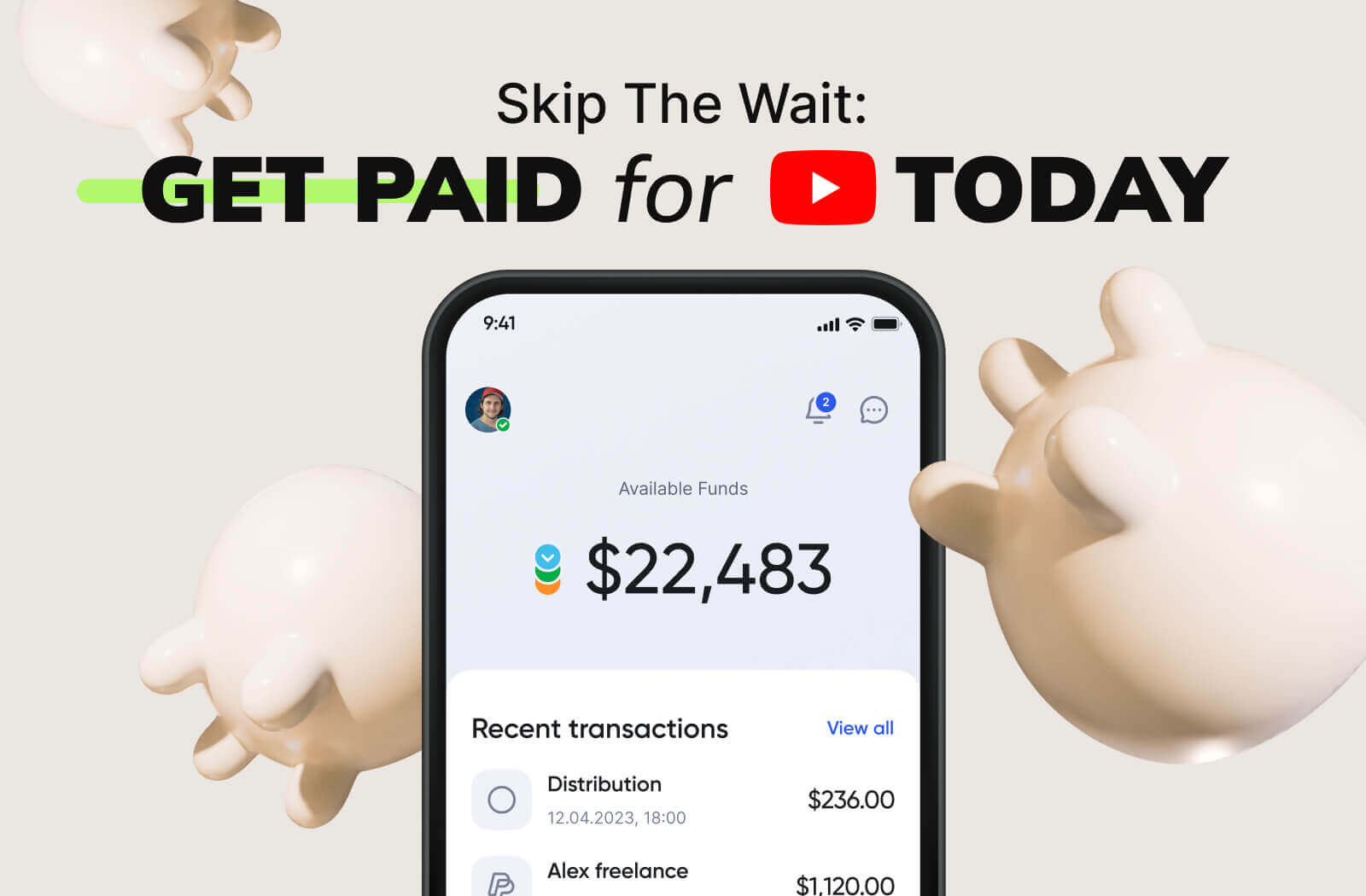
Keep Earning, and Move Your Cash Flow With MilX
Getting demonetized hurts. Waiting weeks for payouts? Sometimes even worse.
MilX changes that. Whether you're fixing old videos or testing new formats, MilX keeps your cash flow moving.
Withdraw your YouTube income anytime in over 40 currencies. Bank, card, e-wallet, or crypto.
MilX Active Funds unlocks up to 6 months of your future AdSense revenue today. Use it to reinvest, stay liquid, or cover production costs, without loans or contracts.
Over 3,000 creators already use MilX to stay independent. Now it’s your turn.