


In this blog, we’ll break down real-world YouTube RPM by niche, compare average CPM by country, and show you how to forecast monthly revenue, so you can stop guessing what you’ll earn and start scaling what works.
CPM vs RPM in 2026: What the Numbers Really Mean
CPM is what advertisers pay. RPM is what you actually get.
- CPM (Cost per Mille) = price per 1,000 ad impressions;
- RPM (Revenue per Mille) = your revenue per 1,000 total views.
👉Learn more about the key metrics for YouTube monetization.
RPM includes skipped ads, non-monetized views, YouTube’s cut, and other revenue streams. It’s the number that matters for your bank account.
You can have a $20 CPM but only a $4 RPM, and that’s normal. Most creators track RPM over CPM because it shows real earnings.
Want a quick check? Use a YouTube RPM calculator or estimate using this formula:
RPM × (views ÷ 1,000) = estimated earnings.

Which Industries Typically Pay More (and Why)
Niches with money on the line always pay more.
High-paying YouTube RPM niches in 2026:
- Personal Finance → Budgeting, investing, credit;
- Business → SaaS, marketing, sales;
- Tech → Product reviews, software, AI tools;
- Education → Career skills, how-tos, languages.
Why? Because advertisers in these spaces are chasing conversions.
A finance viewer might open a bank account. A tech viewer might buy software. That’s why their YouTube CPM by niche often doubles entertainment content.
Low-paying niches:
- Vlogs, pranks, short comedy;
- Compilation channels;
- ASMR, lo-fi, ambient streams.
These still get views, but the RPM stays low unless you build extra monetization like merch, memberships, or affiliate links.
👉 Find out the real reasons why your RPM can drop.
Here’s where most creators land in 2026 with long-form videos, according to the MilX data:
|
Niche |
CPM |
RPM |
|
Personal Finance |
$15–$40 |
$5–$20 |
|
Tech & Productivity |
$10–$30 |
$4–$12 |
|
Business & Marketing |
$12–$35 |
$5–$15 |
|
Education & How-to |
$6–$22 |
$3–$8 |
|
Fitness & Wellness |
$5–$18 |
$2–$7 |
|
Fashion & Beauty |
$4–$15 |
$1.50–$6 |
|
Gaming |
$2–$9 |
$0.50–$4 |
|
Entertainment & Vlogs |
$2–$10 |
$0.50–$3 |
If your content receives 100,000 views and your RPM is $5, you’ll earn approximately $500. That’s how YouTube ad rates really work.
👉 Check out the most profitable niches.
Control Your Cashflow, Fully
Choose where your YouTube revenue lands: bank, card, e-wallet, or crypto. MilX gives creators full control in 40+ currencies.
CPM by Country: High-Paying Geos vs Low-Paying Geos
Sometimes, where your views come from matters more than how many.
Top 10 High-CPM Countries in 2026 (based on real MilX data):
- United States – ~$14.67;
- Australia – ~$13.30;
- Switzerland – ~$12.98;
- Norway – ~$11.21;
- New Zealand – ~$10.21;
- Canada – ~$9.93;
- Germany – ~$9.79;
- Denmark – ~$9.13;
- UK – ~$8.91;
- Netherlands – ~$8.62.
These regions have strong economies, big ad budgets, and brand-safe viewer behavior. If your content reaches these markets, your YouTube CPM by country goes up fast.
👉 Read more about the countries with the highest CPM.
Lowest-CPM Regions:
- India – ~$0.74;
- Bangladesh – ~$0.53;
- Pakistan – ~$0.53;
- Yemen – ~$0.48.
But don’t ignore them; the scale can still drive big traffic, especially for Shorts.
What Changes Your Rates in 2026
Your YouTube RPM 2026 isn’t fixed. It shifts based on timing, audience, and how advertisers view your content.
Seasonality
Ad budgets spike in Q4, especially in November and December. That’s when brands push holiday campaigns and spend big.
In January, those budgets reset. Expect a 30–50% dip in RPM across almost all niches. Smart creators plan uploads and launches around this cycle.
Format
Long-form still dominates. Videos over 8 minutes unlock mid-roll ads, meaning more chances to monetize.
Shorts may rack up views fast, but their RPM is much lower due to pooled ad revenue and faster skip rates.
Audience Geography
This one’s huge. A video with mostly US or German traffic might earn $10+ RPM. The same video with views from India or Indonesia could bring in less than $1.
That’s why YouTube RPM by country can change everything, even for identical content.
Watch Time
Higher retention = more ad placements = higher RPM.
A viewer who sticks around for 8 minutes is far more valuable than one who bounces after 20 seconds.
👉 Learn more about how to boost your watch time on YouTube.
Content compliance
If your video gets flagged with a yellow icon, you’re cut off from premium advertisers.
Even light profanity, reused clips, or sensitive topics can limit your RPM potential.
Staying ad-safe = staying revenue-ready.
Real-World Example
A finance video posted in November, watched mostly in the US, with 10+ minutes of retention, could earn 3–5× more than that same video in July with low-retention traffic from lower-CPM countries.
Fast-track Your Growth, Not Your Wait List
Access up to 6 months of future YouTube payouts instantly with MilX Active Funds.
From RPM to Monthly Income Scenarios
You don’t need to guess what you’ll make on YouTube.
Let’s say your channel averages 500,000 views a month.
At a $4 RPM, that’s:
500,000 ÷ 1,000 × $4 = $2,000
This is how real creators build predictable income, not by hoping for a viral hit, but by understanding their baseline and scaling from there.
Monthly Income Scenarios
|
Views |
RPM |
Estimated Income |
|
10,000 |
$3 |
$30 |
|
100,000 |
$5 |
$500 |
|
1,000,000 |
$8 |
$8,000 |
Now layer in what you know:
- Which countries are watching (use your analytics to check your top geos).
- What your niche typically pays (see the CPM/RPM by niche section).
- What your highest-retention videos are doing (longer watch time = better RPM).
How much does YouTube pay per 1000 views? It depends, but now you have a framework.
Once you know your YouTube RPM by country and YouTube RPM by niche, you can plug in realistic traffic goals and turn them into monthly revenue targets.

Planning Playbook for 2026: Benchmarks → Targets → Budget
YouTube's success in 2026 is a math.
Treat your channel like a business. Start with three core numbers: RPM, views, and goals.
Step 1: Set Your RPM Benchmark
Check your current RPM or look at averages for your niche. If you’re in tech, aim for $5–$12. In fitness, plan for $2–$7. Be conservative, especially if your traffic is still global and mixed.
Step 2: Lock in Monthly View Targets
Use past data or content calendars to stay consistent. Example:
- 250K views/month × $4 RPM = $1,000 revenue;
- 500K views × $6 RPM = $3,000 revenue;
You need consistency and clarity.
Step 3: Forecast Earnings and Budget Accordingly
RPM × views ÷ 1,000 = projected income.
Then reverse-engineer your costs:
- What can you reinvest in gear?
- Is it time to pay an editor or VA?
- Can you finally run ads to grow faster?
Creators who track these numbers plan smarter.
If your income’s delayed, your growth stalls. That’s why timing matters just as much as totals.
How MilX Helps With Cash Flow
Want more than data? Want flexibility?
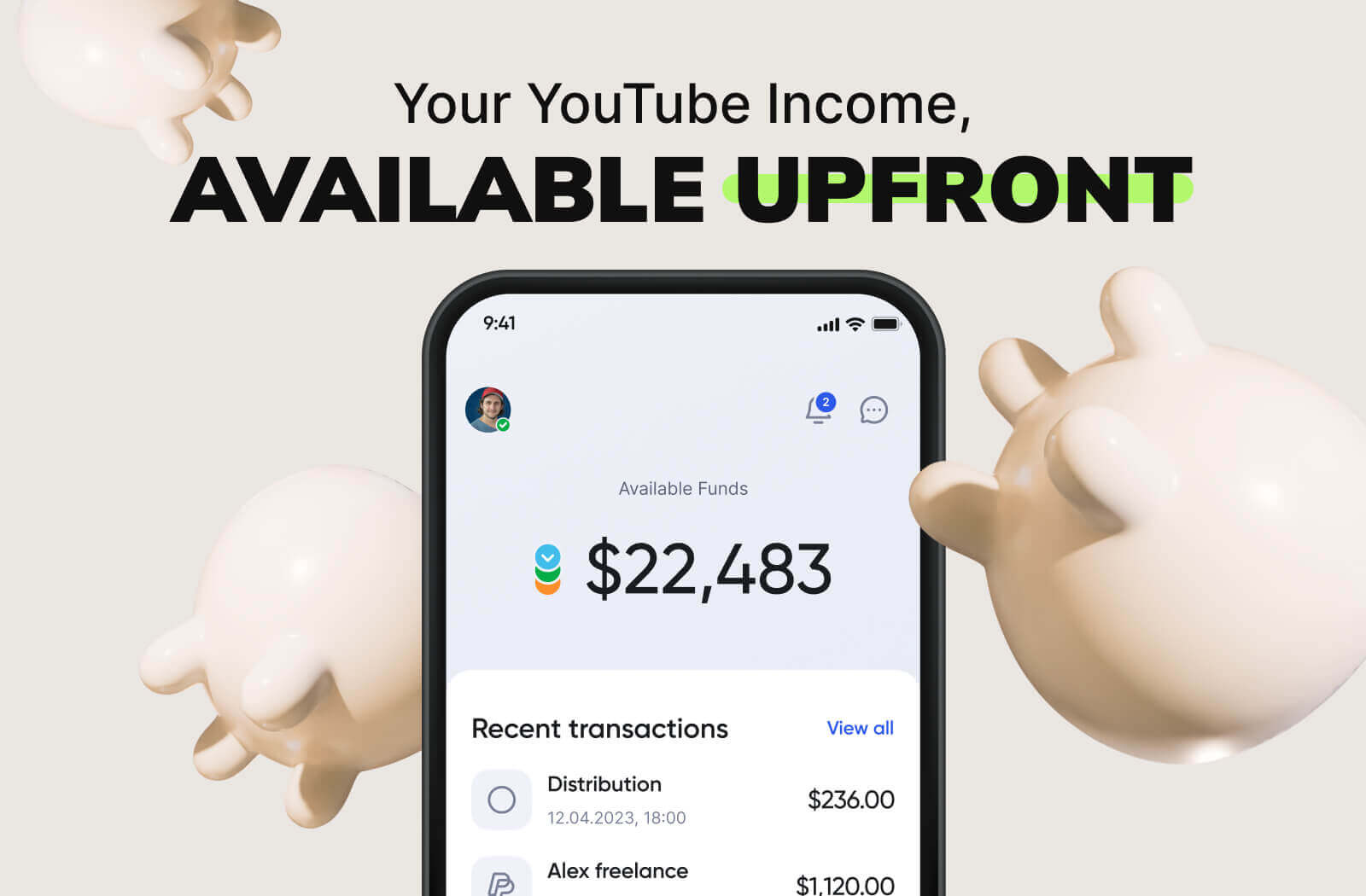
MilX gives you access to your channel revenue before it is credited to AdSense. With MilX Active Funds, you can unlock up to six months of your YouTube payouts upfront and spend it how you need on gear, ads, translations, or a new content hire.
Here’s how it works:
- Automatic 5% monthly repayment;
- Fees from just 0.33% per day;
- Withdraw in 40+ currencies: card, wallet, crypto, or bank;
- Free P2P transfers to pay your editor, designer, or manager.
Over 3,100 creators already use MilX to grow faster, without waiting on YouTube’s next payday.
Want to see if your channel qualifies?
Try MilX and unlock your Active Funds.