


Old tricks stopped working. Clickbait thumbs get ignored. Long intros get skipped. Videos stretched to 10 minutes for mid-rolls get punished faster than ever.
Below is a step-by-step playbook. Concrete moves, specific numbers, ready-to-use hook formulas, worked examples, and a 30-day recovery plan you can start Monday.
Use this to protect your reach and sharpen your YouTube content strategy for 2026.
How YouTube Algorithms Work in 2026?
The short answer: On top of ranking videos, it now ranks viewers.
The recommendation system update in late 2025 pushed the focus onto personalized session value. Every tap on Home, Watch Next, and Search feeds a signal about how that specific person watches.
Two viewers searching for the same keyword can now get completely different thumbnails, creators, and video lengths.
Three metrics rule the 2026 system:
- Unique viewer watch time: Did this person stay and keep watching after?
- Return rate: Did they come back to your channel within 7 days?
- Cross-surface fit: Does your content match both Home and Search behaviour?
And, you know, all this is about one thing 👉 VIEWER SATISFACTION 👈
The algorithm now draws on a richer set of signals to evaluate how a viewer felt after watching your video:
- post-watch survey responses,
- re-watch behavior,
- "Not Interested" dismissals,
… and whether a viewer continued their session or quietly closed the app.
These satisfaction signals are weighted alongside traditional engagement metrics to build a more honest picture of content quality.
What this means in practice: a video with moderate watch time but strong repeat viewing and positive survey data can outrank a video with higher raw minutes watched but low return rates.
YouTube is essentially asking, "Did this video leave the viewer better off?" and rewarding creators whose answer is consistently yes.
So, optimizing for clicks is still necessary, but it's no longer sufficient. You now need to work for the full viewing experience - delivering on your title's promise, ending on a high note, and leaving viewers satisfied enough to come back.
The YouTube algorithm in 2026 measures what that attention was worth.
Three Non-Obvious Rules Most Creators Miss
1️⃣ The 90-day memory. The system mostly weighs your last 90 days, and heavily weighs your last 3 uploads. Recent viewer behavior has more weight than old data.
2️⃣ The sandwich effect. When your video sits in a viewing session between two high-retention videos, you get a reach boost. Which means your end screen is a ranking tool. Linking to a proven high-retention video of yours raises the odds that your next upload catches a tailwind.
3️⃣ Warm versus cold impressions. An impression from a viewer who just watched a similar video in your niche is worth far more than a random Home impression. Optimize for "adjacent relevance," not just broad keywords.
✨ Example: A cooking channel started ending every video with "Watch this one next," linking to their top-retention knife-skills video. Average session duration per viewer rose by 38% over 6 weeks, and three previously buried videos suddenly started appearing on Home.
Why Your Reach Dropped: Diagnose Before You Fix
A YouTube reach drop in 2026 almost always traces back to one of five root causes. Before you rework anything, figure out which one is hitting you.
Cause 1: Session Kill
Your viewers watch your video, then close YouTube. The algorithm logs it as a session ender and stops suggesting you on Home.
Try to end every video with a specific next-click, not a generic subscribe pitch.
✨ Example: Replace "like and subscribe" with "The mic I mentioned at 4:12 gets its own breakdown in this video." End-screen + pinned comment linking to that video. Session watch time often lifts this way.
Cause 2: Search Mismatch
People search in full questions now: "best cheap mic" lost to "is the Shure MV7 worth it in 2026." If your titles read like 2019 SEO, search can’t match you.
✨ Fix: Rewrite your 10 most-viewed titles into natural questions. Update descriptions so the first 100 characters mirror what a real person would type into YouTube, not Google.
Cause 3: Click-Retention Mismatch
CTR matters, but only if watch time follows. A 12% click-through rate and a 14% retention rate will kill your next 10 videos. The algorithm reads "bait" and deprioritizes you on cold audiences.
✨ Fix: Every thumbnail must match the first 60 seconds of the video. If your thumb shows a shocked face, the first 15 seconds must deliver the shock, literally.
Cause 4: Audience Drift
If your core viewer moved from 18 to 25 years, their habits changed. Longer attention, bigger screens, different hours. The algorithm adjusts faster than most creators do.
✨ Fix: Check Analytics > Audience > When Your Viewers Are on YouTube. If your peak shifts by more than 2 hours over 3 months, adjust your upload timing, pacing, and even word choice.
Cause 5: Velocity Split
Uploading two videos within 48 hours splits your early-impression pool.
The second video borrows views from the first; both underperform, and the algorithm logs both as weak.
Avoid back-to-back uploads unless they are intentionally paired (like a Part 1 / Part 2).
Fix Your Retention Signals First
YouTube retention signals are still the single most important ranking factor in 2026. If you fix only one thing this month, make it this one.
Open Analytics to view a summary of your channel performance.
Any video with a drop steeper than 30% in the first 30 seconds is shouting at you. Your hook is off, your intro is too slow, or your thumbnail over-promised.
The 10-Second Rule Stack
In 2026, with Shorts and TikTok flooding the feed, attention has become even more fragmented. If there's no visual payoff in the first 10 seconds, viewers experience anticipation fatigue and close the video.
The rule states: something on screen must change every 10 seconds: a cut, zoom, text, or action, to trigger a dopamine response in the viewer and prevent their attention from drifting. This means you're layering different types of stimuli on top of one another in a precise sequence.
If you are still introducing yourself at 30 seconds, you are bleeding viewers.
The Pattern Interrupt Clock
Static camera + static voice = swipe.
This is a supplement to the previous point. Add a visual change (b-roll, text overlay, cutaway, zoom) at least every 12 seconds. For tutorial content, every 6–8 seconds. For vlogs, every 4–5 seconds.
The Mid-Point Reset (Rarely Used)
At exactly 50% of your video, change pace, location, or camera. This re-captures the viewer who was drifting. Mid-video drop-offs usually cluster between 40–60% of runtime, so a hard reset right before that zone rescues the back half.
✨ Example: A tech reviewer moved from "one camera, one desk" to a 5-second product cutaway at the midpoint. Second-half retention lifted from 28% to 41% across 12 videos.
Open Loops and Callbacks
At 0:15, tease a payoff at 4:30. At 4:30, tease one at 8:00.
End by referencing a line from your intro. Callbacks create "memory loops" that viewers remember and quote in comments, which lifts return rate.
The 5-Minute Rule
Most drop-offs happen before the 5-minute mark.
So put your best insight, biggest reveal, or strongest demo in the 3–5 minute window. Nobody sees your clever payoff at 9:47 if they left at 4:10.
Cut the Silence
Trim every pause over 0.3 seconds. Trim every "uhm."
Most editors leave 15–20% of the runtime as dead air. Cutting it lifts the average view duration without changing a single word of your script.
The "No Logo" Rule
Your animated intro graphic is a retention tax in 2026. Every second spent on a logo sting is a second where the viewer is evaluating whether to leave.
If you must brand, do it at 15 seconds. Or drop the intro graphic entirely. Your channel logo is already visible in the top-left of every player.
The 24-Word Ceiling
Your opening promise should fit in 24 words or fewer. More than that, viewers mentally check out. Write your hook, then cut it to 24 words. If you can’t, your idea is too broad.
Hook the First 30 Seconds: 8 Formulas That Still Work
Everything that matters for the YouTube recommendation system update lives in the first 30 seconds. Steal one of these proven hook formulas instead of writing from scratch.
- Outcome first: Show the finished result, then promise to explain how. "This edit took me 7 minutes. Here’s the exact workflow."
- Contrarian take: Open with a claim viewers disagree with. "Everyone tells you to post daily. That’s probably killing your channel."
- Question stack: Ask 3 short questions that the video will answer. "Why are your views dropping? Is it your niche? Or is it you?"
- Before/After split: Literal split-screen of the transformation in the first 5 seconds. No narration needed.
- Stakes on the table: "I spent $4,200 testing this so you don’t have to."
- Direct restate: One sentence that turns your title into a personal promise. "By the end of this video, you’ll know exactly what to change this week."
- Burned and learned: "I failed at this for 6 months. Here’s what worked." Works especially well on finance, fitness, and creator-economy channels.
- Permission slip: "If you’ve been telling yourself X, this is permission to stop." Builds instant trust by naming the viewer’s private thought.
Your Cash, Your Rules
Cash out on your terms, anytime, in 40+ currencies. Send your YouTube income to a bank, card, e-wallet, or crypto wallet. Free to start, and fully in your control with MilX.
Engagement Signals That Still Work
Not all engagement is equal under the YouTube ranking factors 2026. Some signals got reweighted; others lost almost all power.
Signals that still lift reach:
- Comment replies, especially yours, to viewers within the first hour.
- Shares to non-YouTube apps (WhatsApp, iMessage, X, Discord). Much stronger than in-platform shares.
- Playlist saves, "Save for Later," and "Watch Later" additions.
- Return views to your channel within 7 days (the strongest single signal for a mature channel).
- End-screen clicks that lead to another completed view.
Signals that lost weight:
- Subscribe, please, without context.
- Bell-notification CTAs shoved in the first 10 seconds.
- Hashtag stuffing in descriptions.
Make Stronger Involvement With Comments
In most cases, you may underestimate the importance of comments when promoting your content.
Comment Seeds (The Unique Bit)
Most creators wait for comments. Outstanding creators plant them. At minute 2 of your video, say something mildly disagreeable, then pause for 2 seconds.
Viewers will comment on their rebuttal, and the thread takes on a life of its own. Engagement, debate, and dwell time all jump.
👉 Learn how to turn comments into income.
The 60-Minute Comment Drill
For the first hour after every upload:
- Pin a thread-starter comment with a question, not a link.
- Reply to the first 20 comments with at least 8 words each.
- Heart your sharpest critic’s reply (signals balance, not ego).
- Share the video in one private community you belong to (Discord, group chat).
- Check Analytics > Real Time. CTR under 4% after 500 impressions = thumbnail problem. Over 10% CTR but low retention = opener problem.
Pin a Reply, Not Just a Comment
YouTube lets you pin replies inside threads. If a viewer leaves a sharp, on-topic comment and you write a meaty reply, pin the whole thread.
It signals to new viewers where the conversation is. Watch-page dwell time rises measurably when a pinned thread has 4+ replies.
Thumbnails and Titles: The Click Test That Works
In 2026, they must match the video, or your retention collapses and the algorithm blacklists the click.
The 4-step click test:
- Shrink the thumbnail to 180 pixels wide. If you can’t read the main element, redesign.
- Show thumb + title to three people who don’t watch your channel.
- Ask each one: "In one sentence, what is this video?"
- If all three say the same thing and your opening delivers it, ship. If they split, rebuild.
Unique thumbnail tactics that hold in 2026:
- The eyebrow rule: eyebrows carry more emotion than mouths in thumbnails. Raised brows beat gaping mouths.
- Face on the side opposite your text block. Center-center placement consistently underperforms.
- The 20 mph glance: if you can’t tell what the video is about in the time it takes to drive past a billboard, simplify.
- Color memory: stick to 2–3 signature colors across thumbs so your channel reads as one brand on a Home grid.
- Avoid the red arrow. It was strong in 2019–2022, flat by 2024, and now signals low effort to sophisticated viewers.
- Run YouTube Studio’s built-in A/B Thumbnail test for 7 days. Keep the winner. Repeat every upload.
- The "thumbnail series" trick: keep one visual element identical across a 5-video series (a colored border, a signature pose). The second and third videos in the series get 15–25% higher CTR from viewers who already watched the first.
Title formulas that help to convert:
- "I tried X for Y days" with a specific number.
- "X without Y" ("Growing on YouTube without going viral").
- "What nobody tells you about X" paired with a disarming thumbnail.
- "I was wrong about X" - a rare high-CTR formula because it reverses expectations.
- Two-word shock titles for strong channels ("Everything Changed") with a context-heavy thumb.
The psychologically loaded words
Swap generic verbs for high-weight ones: "quietly," "accidentally," "barely," "suddenly," "almost," "nearly."
Compare "How I hit 100K subscribers" vs "How I accidentally hit 100K subscribers in a dead niche." Same story. Double the curiosity gap.
Skip misleading angles. YouTube catches a mismatch in the first 48 hours, and one dishonest thumb can drag your next five uploads down. Honest curiosity beats bait every time.

Publishing Rhythm and the First 48 Hours
In 2026, consistency beats volume. Two strong videos a week almost always outperform five rushed ones. The algorithm values consistency of watch time, not frequency of uploads.
Pick Your Publish Window Deliberately
Check Analytics > Audience > When Your Viewers Are on YouTube.
Upload 2–4 hours before your peak so the video is already cooking when your subscribers come online. This single change can add 15–25% to first-24-hour views.
The Competitor Gap Trick
Open your three closest competitors in the niche. Plot when they publish. Pick the biggest gap in that calendar.
Uploading into a gap means your video competes for Home placement with fewer similar videos, which matters enormously in a niche-saturated 2026.
The Tuesday Trap
Conventional wisdom says "upload Tuesday morning for best reach." Everyone does it. Your video now fights hundreds of others for the same peak.
Test Thursday afternoon or Saturday morning. Smaller channels often double their first-24-hour impressions by avoiding the standard slot.
The First 48 Hours Rule the Next 6 Months
YouTube decides whether to push your video to cold audiences based on the first 48 hours. Protect that window:
- Do not release two videos within 72 hours unless you planned it (an exception where the next video is a logical sequel to the first one).
- Don’t change your title or thumbnail in the first 24 hours (resets the test).
- Do add a pinned comment, a community post, and an end-screen link within the first hour.
- Do watch Impressions CTR every 6 hours for the first day. Under 4% = thumb/title fix. Over 10% with low retention = opening fix.
- Do not delete or unlist a new upload if it flops early. Wait a full 14 days. Some videos come alive on day 9.
A rhythm that scales:
- 1 flagship long-form per week, 15–25 minutes, high-effort.
- 2–3 Shorts per week, clipped from the long-form.
- 1 community post or poll mid-week to keep the channel warm.
- A buffer of 2 completed videos at all times, so sick weeks don’t break your streak.
Shorts and Long-Form: Make the Pipeline Work
The Shorts-to-long-form pipeline is still one of the best levers you have. It only works when the audiences overlap.
In 2026, YouTube measures whether your Shorts viewers ever watch your long-form content. If the overlap is tiny, Shorts stop helping and sometimes drag your session watch time down.
Shorts that feed the main channel:
- Clip a specific "aha" moment from your long-form, not a random 30-second slice.
- Caption every Short. More than 80% of mobile Shorts viewers watch muted.
- Hook in the first 3 seconds, both verbally and visually. Motion in frame one matters.
- Use YouTube’s "related video" tool under each Short to link to the full video.
- End with one line: "Full breakdown is on the channel." Not "subscribe."
Unique Shorts tactics most creators skip:
- The 7-second test: if the value hits by 7 seconds, keep it. Otherwise rework.
- Reuse the same opening line across a 5-Short series ("One rule I learned the hard way...") to build instant recognition.
- Vertical b-roll, not cropped horizontally. Shorts shot vertically from scratch retain better than horizontal clips squeezed into 9:16.
- Native YouTube text beats imported CapCut captions. The algorithm reads native captions as a discovery signal.
The Short-to-Channel Audit
Once a month, filter Shorts separately in Analytics. Check "Viewers also watched" and "Returning Viewers."
If fewer than 20% of Shorts viewers return to your channel, your Shorts are entertainment, not a growth engine. Either rework the format or stop posting.
✨ Case insight: A finance channel moved from random market-reaction Shorts to 45-second teasers of their weekly deep-dive. Subscribers from Shorts dropped 10%, but long-form returning viewers from Shorts jumped from 12% to 38%, and long-form revenue doubled in 90 days.
Get Paid Before the Views Roll In
Access up to 6 months of future YouTube monetization today with MilX Active Funds. Try the MilX app and cash out on your terms.
Run Your Monthly Channel Audit: The 14-Point Deep Check
Block 90 minutes on the last Friday of every month. Run this list top to bottom.
- Pull the last 6 videos. Compare CTR, average view duration, and return-viewer rate against your 90-day baseline.
- Flag any video with retention below your channel average. Find the exact drop-off timestamp.
- Check your Top Videos tab for any older uploads still pulling views. Plan a companion piece within 30 days.
- Review your last 12 thumbnails as a grid. Does your channel look like one brand, or eight?
- Read your last 100 comments. Patterns = your next video topics. AI Comment Analyzer can do it for you.
- Open the Audience tab. Has the age, country, or language split shifted more than 10%? Your content should nod to it.
- Check upload gaps. Any gap longer than 10 days in the last 90? Write a recovery plan before your next upload.
- Look at your top 5 external traffic sources. Can you lean into one with a tailored video?
- Audit end screens. Are they linking to your most-watched video of the last 30 days? They should be.
- Run a "relative retention" check. Compare each video to peers in length and topic, not your channel average.
- Check the Traffic Source split. A healthy 2026 channel sits roughly at 40% Browse / 35% Suggested / 20% Search / 5% External.
- Graveyard analysis: open your dead videos from 12–24 months ago. Is there a thumbnail or topic pattern that now hurts your averages? Consider unlisting the 3 weakest.
- Competitor gap check: list 5 topics your 3 closest competitors avoided this month. Pick one you can cover uniquely.
- Save 2 wins and 2 losses in your notes with screenshots. After 3 months, you will see patterns that no dashboard will show.
The "Watch Yourself at 1.5x" Trick
Watch your last 3 videos back-to-back at 1.5x speed.
Note every moment you would skip. That list is your retention bug report.
Most creators find 4–7 skippable moments per video that they would defend in slow motion.

Your 30-Day Recovery Plan (Step by Step)
If your channel is in the middle of a reach drop right now, follow this exact 30-day plan.
Week 1: Diagnose and Stabilize
- Day 1: Run the full monthly audit. Identify your dominant failure mode.
- Day 2: Do not upload new content. Finish edits on whatever is in the pipeline.
- Day 3: Watch your 5 most-viewed videos at 1.5x speed. Mark every skippable second.
- Day 4: Rewrite the titles and thumbnails of your last 5 videos using the click test.
- Day 5: Refresh descriptions: first 100 characters = natural question match.
- Day 6–7: Pick your Week 2 topic. It must be your strongest proven theme from the last 12 months.
Week 2: Ship Your "Signal Reset" Video
- Record using the 10-Second Rule Stack and one of the 8 hook formulas.
- Add one open loop in the first 30 seconds and one callback at the end.
- Include a Mid-Point Reset at exactly 50% of runtime.
- Upload 2–4 hours before your audience peak, avoiding the Tuesday trap.
- Run the 60-Minute Comment Drill.
- Launch an A/B thumbnail test for 7 days.
Week 3: Feed the Algorithm
- Publish 2 Shorts that are genuine teasers of the Week 2 video.
- Add end-screen links from every Short to the long-form.
- Reply to every new comment across all videos for one week.
- Post one community poll tied to the Week 2 topic.
- Reach out to one small collaborator in your niche for a comment exchange. Specific, on-topic comments from peer channels lift early-hour velocity.
Week 4: Review and Lock In
- Compare Week 2 video’s 28-day numbers against your 90-day baseline.
- If retention is up 10%+ and CTR holds: repeat the pattern for 60 more days.
- If CTR is up but retention is flat, the opener is the issue. Rework hooks.
- If both are down, the topic no longer fits your audience. Pivot with the 80/20 rule (80% core, 20% new-angle).
- Unlist 2–3 dead videos pulling your channel average down. Do not delete. Private-list them so watch-history signals are preserved.
This plan is deliberately narrow. A 30-day reset should focus on signal, not volume. Volume comes back in Month 2.
Cash Out Smarter with MilX
Here is the problem behind the YouTube algorithm changes in 2026: when reach fluctuates, so does cash flow.
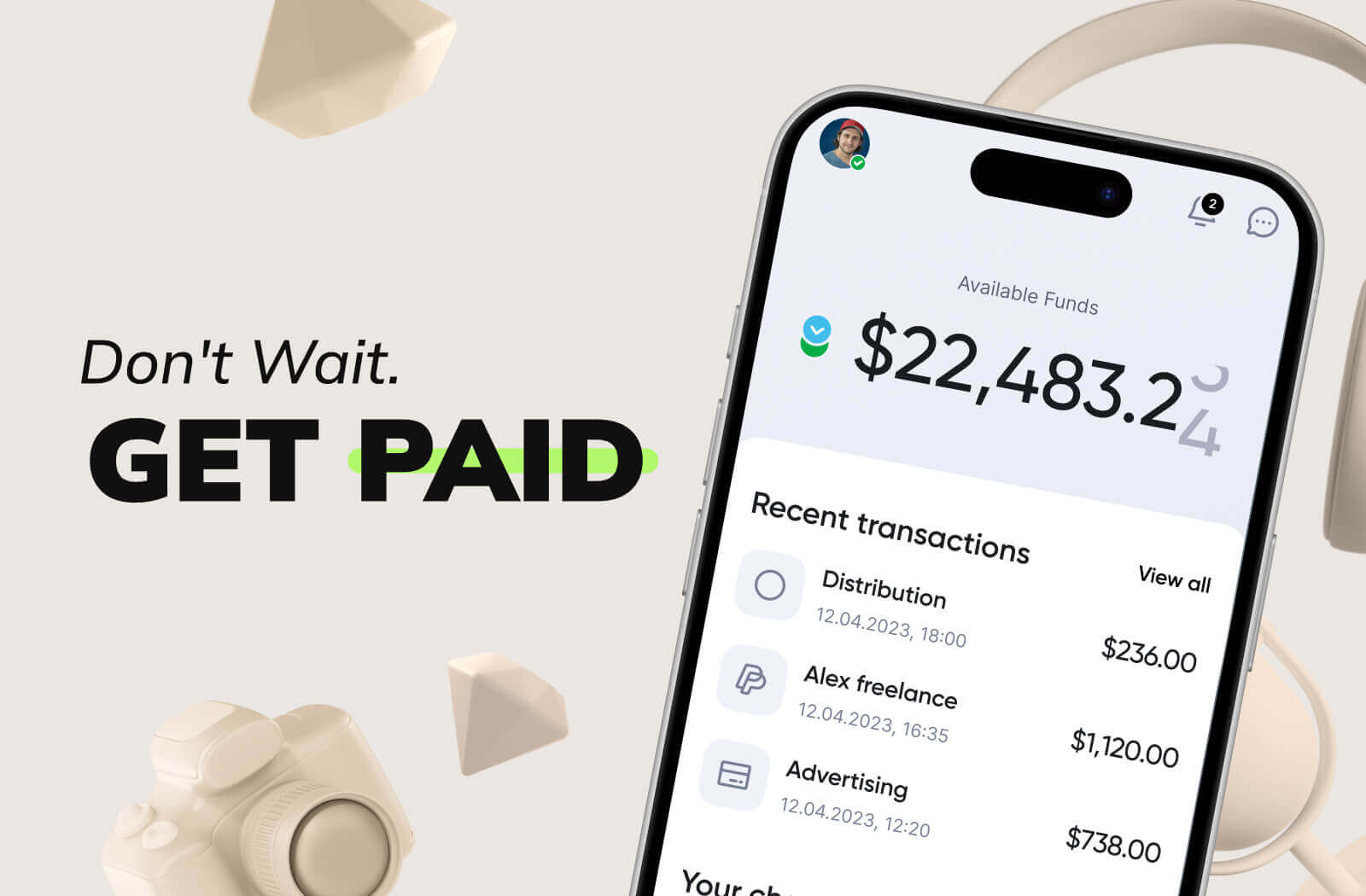
AdSense still pays on a 30–60 day lag. A real drop you feel in April lands in your bank in June. By then, you have already paid editors, rented studios, and funded three new uploads. That is how a lot of creators go negative in the middle of a good year.
The smarter play when reach gets bumpy: try Active Funds by MilX.
MilX gives you a financial layer that keeps up with the algorithm. When reach dips, you keep shipping. When you reach spikes, you scale without waiting for slow payouts.
👉 Discover why YouTube creators love MilX.
With MilX, you stay in control:
- Access up to 6 months of future YouTube revenue with Active Funds.
- Automatic 5% monthly repayment from future income, no tracking on your side.
- Daily commission from just 0.33%, with no credit checks and no credit-score impact.
- Cash out in 40+ currencies, including crypto.
- Pick from 10+ payout methods: bank, card, wallet, or crypto.
- Send free P2P transfers to editors, designers, or collaborators in under 5 minutes.
Whether you are launching a new series, covering a shoot, or smoothing out a slow month, MilX gives you room to move without looking over your shoulder.
5,000+ creators already use MilX to cash out on their terms, without taking on debt or chasing traditional loans.
MilX is an Official YouTube Partner, regulated under an MSB license by Canada’s Fintrac, with a 4.6 Trustpilot rating and over $500M in creator revenue processed.
👉 Ready to adapt to YouTube algorithm shifts without the cash-flow stress? Try MilX free and see if your channel qualifies for Active Funds.