

The YouTube AdSense payment process is more complex than most creators expect. Payments move through several systems before reaching your bank account.
Understanding how YouTube AdSense pays creators helps you predict income, avoid delays, and reduce hidden fees. It also explains why numbers in your analytics sometimes change before money arrives.
This guide breaks down the full YouTube AdSense payout timeline, compares payment methods, and reveals where creators often lose part of their earnings.
What Role AdSense Plays in YouTube Monetization
YouTube itself does not send money directly to creators.
Payments move through Google AdSense.
AdSense acts as the financial layer behind YouTube monetization. It receives advertising revenue, processes it, and then distributes payouts to creators.
This is why YouTube AdSense often starts with the connection between the YouTube Partner Program and AdSense account.
Once a channel joins the YPP, advertising revenue starts accumulating in the creator’s AdSense account. It becomes the place where payments are finalized and released.
AdSense also handles tax forms, payment verification, and payout methods. If any of those steps are incomplete, money remains on hold.
In short, thanks to the YouTube platform, you generate revenue. Meanwhile, AdSense manages the payout infrastructure.
👉 Learn more about how YouTube AdSense withdrawals work.

AdSense vs YouTube Studio vs Bank - The Full Money Flow
Many creators assume the money shown in YouTube Studio immediately becomes a payout. Sadly, no.
In reality, revenue travels through several stages before reaching the creator’s bank account.
The process usually follows a clear sequence:
⬇️ Viewer watches ad;
⬇️ Advertiser pays YouTube;
⬇️ YouTube calculates creator revenue;
⬇️ Estimated earnings appear in YouTube Studio;
⬇️ Finalized revenue moves to AdSense;
⬇️ AdSense sends the payout;
⬇️ Bank processes the transfer;
✅ Creator receives the deposit. 🎉
Each step may introduce small adjustments, processing time, or transaction fees.
📌 That is why the number in YouTube Studio rarely matches the exact amount that arrives in the bank account.
How Estimated Revenue Is Formed in YouTube Analytics
Numbers inside YouTube Studio are estimates.
They update quickly because YouTube calculates revenue based on ad impressions, viewer location, and advertiser demand.
But these values are not final.
Before funds move into AdSense, YouTube performs several adjustments. These may include invalid traffic filtering, advertiser refunds, or revenue corrections.
This explains why AdSense revenue differs from the numbers creators see in analytics.
Example:
- A creator sees $3,200 estimated revenue in YouTube Studio.
- After final verification, AdSense may show $3,050.
- The difference often comes from invalid ad activity or late advertiser adjustments.
For this reason, AdSense always displays the finalized value that becomes eligible for payout.
👉 Discover how to read YouTube Analytics to boost your income.
YouTube Revenue Share Explained
When advertisers pay to place ads on YouTube, that money does not go entirely to the creator.
YouTube operates on a revenue-sharing model.
For standard YouTube advertising, creators receive 55% of the ad revenue, while YouTube keeps 45% for platform costs, infrastructure, and distribution.
Rough example:
- An advertiser spends $1,000 on ads shown across a creator’s videos.
- YouTube keeps $450.
- The creator receives $550.
This revenue split happens automatically before earnings appear in YouTube Studio.
It also explains the difference between advertiser CPM and creator revenue metrics such as RPM.
Keep in mind:
- CPM represents what advertisers pay for 1,000 ad impressions.
- RPM represents the revenue creators actually receive after YouTube’s share.
👉 The key metrics for YouTube monetization.
Because of this structure, high advertiser demand increases both CPM and creator earnings, while low demand reduces them.
Taxes on YouTube AdSense Revenue
YouTube income is considered taxable revenue in most countries.
Because payments move through Google AdSense, creators must submit tax information.
One of the most common forms for international creators is the W-8BEN form. It confirms that the creator is not a U.S. tax resident and allows Google to apply the correct tax treaty rules.
Why is this so important? Without tax information, Google may withhold up to 30% of revenue generated from U.S. viewers.
👉 Remember to read about US tax requirements for YouTube earnings.
Example:
A creator earns $1,000 in advertising revenue from viewers in the United States. If tax information is missing, Google may withhold up to $300 before the payout reaches AdSense.
However, many countries have tax treaties with the United States. These agreements often reduce the withholding rate.
Submitting tax forms early helps creators avoid unnecessary deductions and ensures payments move smoothly once the YouTube AdSense threshold is reached.
📌 Creators should also review their local tax obligations, since many countries require reporting global digital income.
AdSense Payment Threshold and Eligibility
Before money can leave AdSense, creators must reach the YouTube AdSense threshold.
But things aren’t that simple… The standard payout threshold is $100 (or equivalent in the local currencycal currencies).
If the balance remains below that amount, the revenue rolls into the next month.
For small or new channels, this rule can stretch the payout cycle significantly.
Example:
- January earnings: $40;
- February earnings: $65;
The balance is $105 in March. Only then does AdSense release the payment.
Several eligibility requirements also affect payouts:
- Creators must verify identity and tax information.
- The mailing address must be confirmed.
- A valid payment method must be selected.
📌 Until these steps are complete, the account cannot receive money even if revenue grows.
AdSense Payout Timeline Explained
The YouTube AdSense payout timeline follows a predictable monthly schedule.
Revenue accumulates during a calendar month.
YouTube then calculates the finalized numbers during the following weeks.
Between the 7th and 12th of the next month, earnings transfer into AdSense. Finally, payments usually arrive between the 21st and 26th, when you can withdraw them.
Example timeline:
- Revenue earned in March;
- Finalized in April;
- Paid around April 21–26;
THAT’S ALMOST 2 MONTHS!
This delay means creators typically wait four to seven weeks before receiving the income generated by their videos. For channels that rely on regular production, this waiting period can affect budgeting and team payments.
Control When and How You Get Paid
Creator income should not feel locked behind a fixed payout cycle. With MilX, you can withdraw YouTube revenue whenever you choose and receive it in more than forty currencies. Setup is free, and the entire process stays in your control.
Payment Methods Inside AdSense
AdSense supports several payout methods depending on the region. Each option differs in speed, reliability, and cost.
For creators, the payment method often determines how quickly money arrives and how much of it reaches the bank account. Some methods move funds within days. Others involve several intermediaries and hidden fees.
Below are the main options available inside AdSense and how they work in practice.
Bank Transfer
Bank transfer is the most widely available payout option.
AdSense sends funds directly to a creator’s bank account using international wire systems such as SWIFT or local banking rails where available. In most cases, payments arrive within two to five business days after the payout is issued.
However, international wires sometimes travel through intermediary banks before reaching the final destination. Each intermediary can charge a processing fee.
Example:
- A creator in Europe receives a $2,500 payout.
- Two intermediary banks deduct $10–$20 each.
- The final deposit becomes slightly smaller than the original payout.

Electronic Funds Transfer
Electronic funds transfer, often called EFT, works through domestic payment systems.
Instead of international wires, funds move inside the country’s banking network. This usually means faster processing and fewer intermediary fees.
In countries where EFT is available, payments often arrive within one to three business days.
Creators based in regions with strong domestic banking networks benefit the most from this option because the transfer avoids international routing.
Check Payments
Checks remain an option in certain regions, though they are rarely the fastest solution.
AdSense sends a physical check by mail to the creator’s address. Delivery alone can take one to four weeks, depending on the postal system.
After receiving the check, creators must deposit it at their bank. Some banks charge additional processing fees for foreign checks, and the clearing process may take several more days.
Because of the delay and extra fees, most creators move away from check payments once digital options become available.
Regional Payment Services
In some countries, AdSense integrates with regional financial systems.
These systems operate through local payment networks that reduce international transfer delays. Payments may move through domestic clearing infrastructure instead of global wire systems.
For creators in these markets, payouts often arrive faster and with lower banking fees.
Availability varies by country, which is why the list of payment methods inside AdSense differs from region to region.
Speed Comparison Between Payout Methods
Not all payout options deliver money at the same pace.
Electronic transfers through domestic networks tend to be the fastest because they stay inside one banking system. International bank wires usually follow close behind but may involve intermediary banks.
Check payments remain the slowest option because they depend on physical delivery and manual processing.
For creators running active production schedules, these timing differences can affect how quickly they reinvest revenue into new content.
10+ Ways to Transfer Your YouTube Earnings
AdSense limits how creators withdraw their revenue. MilX expands those options. Transfer your YouTube earnings using 10+ payout methods, including bank transfers, cards, e-wallets, and crypto. Send funds to your own account or distribute payments to collaborators worldwide. One platform, multiple payout options designed for the creator economy. More flexibility, faster access, and full control over how your creator income moves.
Cost Differences Creators Often Overlook
Payment speed is only part of the equation. Transfer costs also vary significantly.
International wires may include:
- intermediary bank deductions;
- currency conversion spreads;
- incoming transfer fees from the receiving bank;
Checks can introduce deposit fees and extended clearing periods.
Domestic electronic transfers usually carry the lowest cost because they avoid international routing.
Geography Also Affects Available Payout Options
AdSense payment methods depend heavily on the creator’s country.
Some regions support multiple electronic payout systems, while others rely mainly on international bank transfers.
Creators who operate businesses in multiple countries sometimes choose payment accounts strategically to access faster or cheaper transfer routes.
For example, creators with a U.S. company or bank account may receive payments through domestic systems that avoid international wire fees.
When Creators Should Change Their Payment Method
Many creators choose a payout method once and rarely review it again.
However, changing the payment method can improve payout speed and reduce transfer costs.
When to do it?
A payment method should be reconsidered when transfers consistently take too long. For example, international wires may require several intermediary banks, which slows the process.
High transfer fees are another signal. If a creator loses $30–$50 per payout to banking charges, switching to a domestic payment method may preserve more of the revenue.
Currency conversion losses can also justify a change. Some creators open accounts in U.S. dollars to avoid repeated exchange spreads during every payout.
Collaboration is another factor. Creators working with editors, producers, or translators often need faster and more flexible transfers to distribute payments to their team.
Regularly reviewing payout options helps creators ensure their YouTube AdSense payment process works efficiently. Sometimes, small improvements in speed or cost can make a noticeable difference over a year of payouts.
Common AdSense Payment Issues and Delays
Even experienced creators occasionally face payment delays.
The YouTube AdSense payment process follows strict rules. If one detail is missing or incorrect, the payout can pause until the issue is resolved.
Most delays happen for predictable reasons. Understanding them helps creators avoid weeks of unnecessary waiting.
Verification Problems
AdSense requires identity verification before releasing payments.
Creators must submit personal details, tax information, and sometimes government identification. If any of this information remains incomplete, the account cannot receive payouts.
Address verification is another common step. Google sends a PIN code by mail to confirm the creator’s physical address. Payments stay on hold until this code is entered in the AdSense dashboard.
Incorrect mailing details often slow down this process.
Payment Holds
AdSense sometimes places temporary holds on payments.
These holds appear in the Payments section of the dashboard and usually require additional information. In some cases, Google performs security checks to confirm account ownership or payment eligibility.
The hold remains active until the requested action is completed.
Creators should always check their AdSense notifications because the platform usually explains what needs to be fixed.
Bank Detail Errors
Incorrect bank information can stop a payout even after it has been issued.
Common mistakes include:
- wrong IBANs;
- incorrect routing codes;
- mismatched account holder names;
If a transfer fails, the bank returns the payment to AdSense. The payout then appears again in the account balance, but the creator must correct the banking details before requesting the next transfer cycle.
Threshold Delays
The YouTube AdSense threshold also affects when payments arrive.
AdSense releases payouts only when the balance reaches $200. If monthly earnings stay below this amount, the revenue rolls into the next month.
For channels with irregular income, this rule can extend the waiting period significantly.
Payment Method Updates
Changing a payment method too late in the monthly cycle can delay payouts.
AdSense usually finalizes payments around the 20th of the month. If bank details are updated after that point, the system may postpone the transfer until the next payment cycle.
Creators often overlook this timing rule when switching accounts.
Regional Banking Restrictions
In some countries, banks apply additional verification steps for international transfers.
Large incoming wires may trigger compliance checks, which can slow down the deposit even after AdSense releases the funds.
This delay happens outside the AdSense system, which is why creators sometimes see the payout marked as “sent” while the bank has not yet credited the account.
Where to Check the Status of a Delayed Payment
When a payout does not arrive on time, the first step is to review the Payments section inside AdSense.
This page usually shows:
- payment status;
- active holds;
- verification requirements;
- payment method details;
In most cases, the dashboard clearly explains why the payment has paused and what action is needed to restore the payout flow.
Unlock Your Future YouTube Income
Content creation often requires upfront spending. Editing, thumbnails, and promotion all cost money long before the next payout arrives. MilX Active Funds allows eligible creators to access up to six months of upcoming YouTube monetization today. Instead of waiting for the next cycle, you can reinvest in your channel immediately.
How Creators Can Track Real Income, Not Estimates
Professional creators rarely rely only on the numbers shown in YouTube Studio.
The dashboard displays fast updates, but those figures represent estimated revenue. The real payout becomes clear only after several steps inside the YouTube AdSense payment process.
To understand actual income, experienced creators track several financial indicators across different platforms.
AdSense Finalized Earnings
The first reliable number appears inside AdSense.
After YouTube completes revenue validation, the finalized amount moves into the AdSense account. This value already reflects corrections such as invalid traffic filtering and advertiser adjustments.
If creators want to know how YouTube AdSense pays creators, this number represents the official revenue eligible for payout.
It usually appears several days after the end of the revenue month.
Actual Payout History
AdSense also keeps a detailed payment history.
This section shows when each payout was issued and the exact amount released by the system. Comparing these records across several months helps creators identify patterns in their revenue cycle.
For example, creators can see how seasonal advertising demand affects monthly payouts or how different video topics influence income stability.
Bank Deposits After Transfer Fees
The final number appears in the bank account.
Once the payout travels through financial networks, additional deductions may occur. These can include intermediary bank fees, currency conversion spreads, or incoming wire charges.
Recording the exact deposit value helps creators calculate the real amount received after the full payout chain.
Building a Clear Revenue Flow
Many creators track the entire payment flow in a simple spreadsheet.
The structure often includes:
- estimated revenue from YouTube Studio;
- finalized earnings inside AdSense;
- actual bank deposit after transfer costs;
This comparison shows how much money disappears during adjustments and transfers.
Example:
- YouTube Studio estimate: $5,000;
- AdSense finalized revenue: $4,850;
- Bank deposit after fees: $4,790;
The creator quickly sees where the difference appears and how much each stage of the payout process reduces the income.
Why This Tracking Matters for Creator Businesses
For small channels, the difference between estimated and final revenue may appear minor.
For large creators, even small discrepancies can add up over time.
Tracking actual deposits rather than estimates helps creators understand their true profitability, plan budgets, and assess whether their current payout method is efficient.
In other words, analytics shows potential earnings. Financial tracking shows the money that arrives.
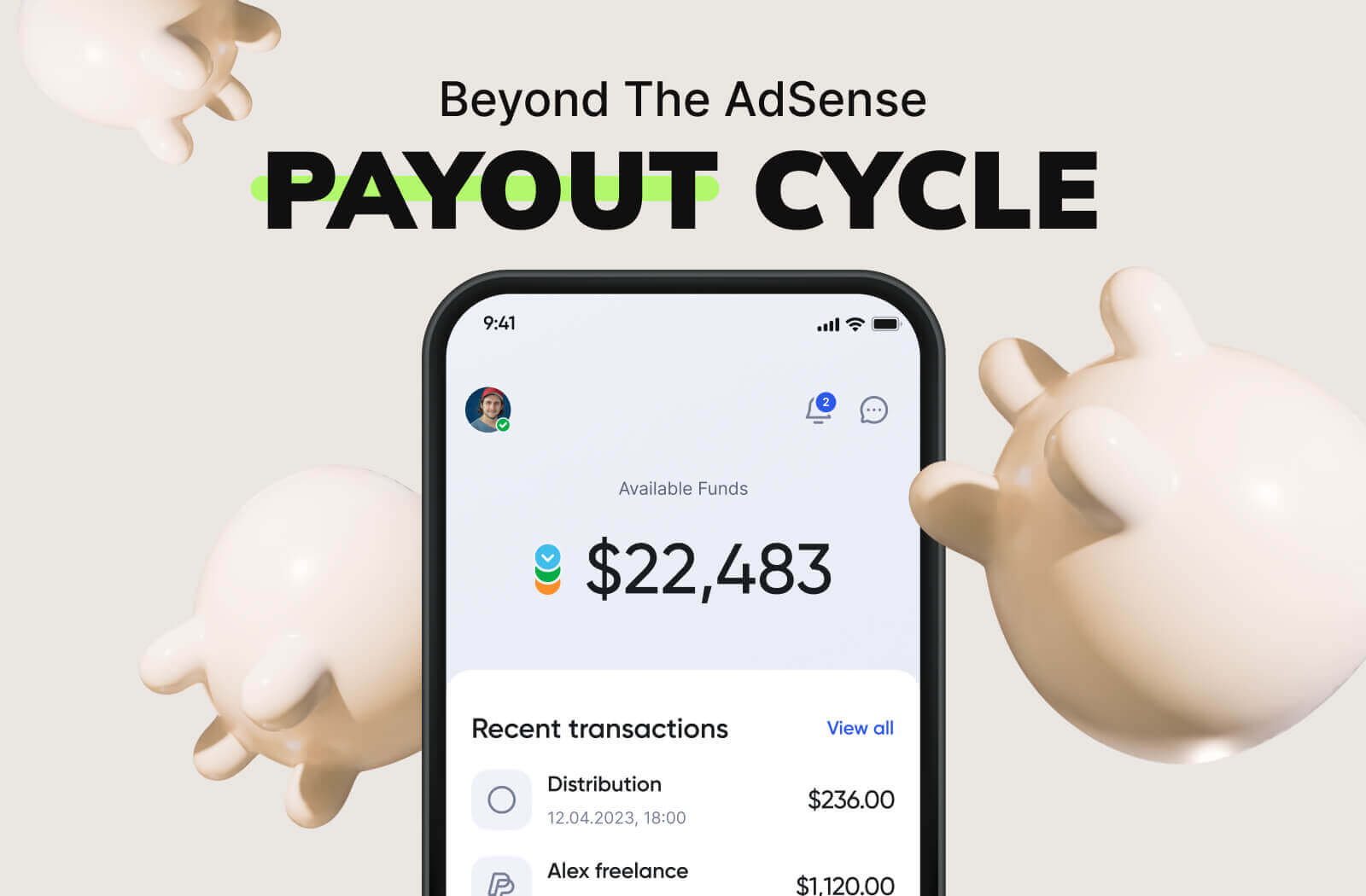
MilX Gives You 10+ Methods to Get Money from AdSense fast
The traditional YouTube AdSense payment process was designed around monthly advertising cycles.
But modern creator businesses operate faster.
Production costs appear every week. Editors, designers, and translators need payment long before the next AdSense transfer arrives.
MilX helps creators manage this gap.
Instead of waiting for the monthly payout schedule, creators can:
- Access their YouTube income earlier
- Withdraw funds via multiple payout methods
- and send money to collaborators worldwide with $0 fees.
👉 It’s time to find out why creators love MilX.
The platform also supports flexible withdrawals, multi-currency transfers, and financing tools built specifically for the creator economy.
For channels with stable revenue, this approach turns unpredictable payout timing into a steady financial system.
👉 Discover more MilX features.
Understanding how YouTube AdSense pays creators is only the first step. Managing the timing of that income is what helps creators grow their channels faster.