


That trap has a name. It is the MrBeast strategy, repeated by every creator advice channel as if it were a step-by-step plan. It is not. It is one creator's circumstance, not a YouTube growth strategy for the rest of us. Below is the YouTube monetization reality nobody puts on a thumbnail.
The Illusion: "Just Copy MrBeast"
Open any creator forum. The advice repeats: bigger thumbnails, higher stakes, faster cuts, add a countdown, and give something away…
The format gets copied. But the results do not. That is the gap most channels never close.
Jimmy Donaldson did not become MrBeast on a viral formula.
He spent six years posting daily before his first real hit.
He studied retention graphs the way a poker pro studies hand histories.
By the time the famous giveaway videos worked, he had already poured THOUSANDS of hours and most of his early revenue back into production.
But, yes, that “boring ” part often gets skipped in the tutorials.
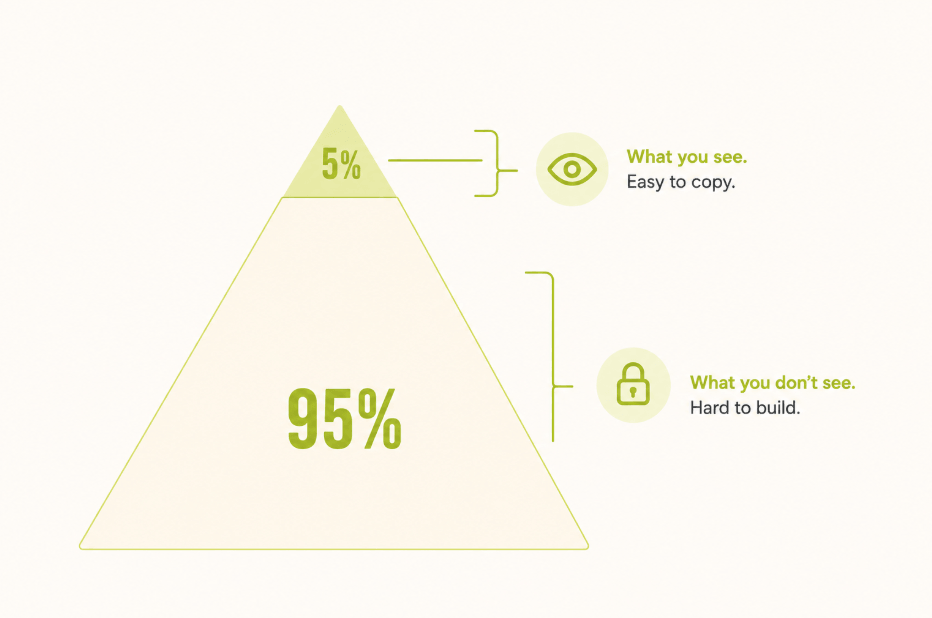
You can copy a camera angle and a title structure, but you cannot copy the volume of practice and capital behind it. This is why copying YouTubers fails so often: the visible 5% of the strategy is the only part that travels.
🎯 Practical tip: Before chasing a format, count the hours and headcount behind it. If a video took a 30-person team three months to shoot, you are not competing with a video. You are competing with a small film studio.
What Creators Get Wrong About MrBeast Monetization Strategy
Three myths cause the most damage to small YouTube creators.
Myth one. MrBeast got rich from AdSense. He did not. He has said publicly that AdSense pays for only a fraction of his costs. Brand deals, his own product lines, licensing, and his Amazon Prime show carry the rest. MrBeast's monetization strategy lives in the businesses around the channel, not the channel revenue itself.
“Each video does a couple million in ad revenue, a couple million in brand deals,” said Jimmy Donaldson.
Myth two. High production equals high growth. Production raises the ceiling on top-performing videos. It does not save a weak idea. An expensive video with poor retention performs worse than a cheap video with strong retention. Retention is the YouTube algorithm signal that matters most for small channels.
“My goal … is to make the best videos possible … if you simply make the best videos possible, all these other arbitrary vanity metrics will just fall into place,” said Jimmy Donaldson (Mr Beast)
Myth three. Viral spikes are not a YouTube business model you can rely on. A viral hit gives a sugar rush of subscribers, most of whom never come back. A consistent niche channel builds a returning audience the algorithm rewards over time.
“Typically, the harder it is to do something, the better it will do. You know, if you can get 70% retention on a 30-minute video, so of course it's going to go more viral than if you got 70% on a 10-minute video,” said Jimmy Donaldson (Mr Beast).
🎯 Practical tip: Open YouTube Studio. Look at the returning viewer percentage on your last 10 videos. If it sits below 20%, the audience is not really yours. They watched once and left. Fix that signal before raising your budget.
Scale First, Strategy Second
Most creator advice gets the order wrong. The pitch is: use the MrBeast strategy, and you will scale.
The reality runs the other way. MrBeast got to scale first. Then his strategy made sense.
Spending $300,000 on a video is rational when one upload pulls 200 million views and feeds his chocolate sales, his app downloads, his Amazon Prime show, and his sponsor rate card.
For a 5,000-subscriber channel, the same math falls apart. A $1,500 production cost on a video that brings in $40 of AdSense revenue is not a growth investment. It is a slow bleed. And it teaches the wrong lesson about what a YouTube growth strategy looks like at your stage.
🎯 Practical tip: Calculate your true RPM before you spend on a video. If your channel averages a $2 RPM, a $1,000 budget needs 500,000 views just to break even. Most small channels do not pull 500,000 views per video yet.
The Hidden Cost of MrBeast-Style Videos
A MrBeast upload is not one video. It is a production pipeline.
Press reports and his own interviews put the team at around 250 people: idea writers, designers, storyboard artists, set builders, drone pilots, and many other high-quality specialists. Sounds like a real movie production team.
The visible cost is the prize money for the participants in his video.
The invisible costs are payroll, insurance, warehouse rent, gear depreciation, location permits, legal review, talent contracts, and reshoots. MrBeast once put recent video budgets between $2.1 million and $3.5 million each.
A small channel trying to copy that look ends up paying for editing software, sound design, stock motion graphics, a freelance editor, and sometimes a stunt or location it cannot afford. Even that way, the video might look MrBeast-ish, but the math behind it is broken.
🎯 Practical tip: Audit one of your last five videos. Add up editor cost, gear used, prop spend, and hours invested. Divide by total revenue from that video. If the ratio is worse than 1 to 2, the format is too expensive for your current stage.
Revenue vs Cost Mismatch
Here is where the YouTube income reality bites. AdSense pays on views, but views from younger audiences, gaming niches, and short-form viewers pay far less per thousand impressions than business, finance, or B2B tech viewers. MrBeast pulls hundreds of millions of views, so even a low RPM stacks up to real money.
A small creator stuck in a low-RPM niche running expensive spectacle videos hits a brutal gap. The cost of production is fixed. The revenue per view is small. The break-even point keeps moving further away.
This is one of the most overlooked reasons why copying YouTubers fails. The economics of MrBeast simply do not exist at a small channel scale. Trying to import them is one of the fastest paths to a dead channel.
🎯 Practical tip: A finance channel doing 10,000 views can out-cash a prank channel doing 100,000. Match your production budget to your niche's real CPM, not to the budget of the creators you watch.
Cash Flow Risk: Why Creators Burn Out
AdSense pays once a month, usually between the 21st and 26th, and the wait can stretch 30 to 60 days from when the revenue was earned.
Front $2,000 for a spectacle-style video in April. The view spike lands in May. AdSense pays you in late June. You needed to pay your editor, your sound designer, and your rent in April and May. That is the cash flow gap that ends most channels.
When the gap repeats, creators reach for credit cards, then for personal loans, then for any sponsorship at any rate.
This affects everything: content quality drops, format becomes panicked. The audience can feel it. The channel slows. That is the creator-burnout YouTube loop, playing out in real time every quarter.
🎯 Practical tip: Track creator cash flow weekly, not monthly. Use a simple spreadsheet. Income coming in this week. Expenses going out this week. The gap between them is your real runway, not your subscriber count.
👉 Check out these 6 proven hucks to avoid burnout.
Keep Creating Without the Cash Flow Panic
Most creators do not fail because the content is bad. They fail because expenses hit before YouTube pays. With MilX Active Funds, eligible creators can unlock up to six months of future YouTube monetization upfront to cover production, editors, gear, and team costs without stopping momentum.
Why MrBeast Can Take These Risks
MrBeast can put $3 million into a single video because losing it does not break him. His income comes from many directions.
Feastables, his chocolate and snack brand, does hundreds of millions in retail revenue.
Beast Games on Amazon Prime carries a reported nine-figure budget. Beast Industries has investor backing. He owns IP across multiple verticals.
If a video flops, the chocolate keeps selling. If the chocolate has a soft month, the merch keeps moving. If the merch slows, the show contract is still paying. That cushion is what makes the format possible.
A small creator on one revenue source, AdSense, has no cushion. A single bad upload can mean an empty month. That is not a strategy. That is an exposure.
🎯 Practical tip: Do not try to match MrBeast's spending. Match his structural thinking. He never sits on one income source. Your channel should not either.
A Realistic Earning Strategy for 99% of Creators
The path that works for small YouTube creators is the opposite of the MrBeast playbook. Smaller budgets. Tighter niches. Mixed income from day one. Boring, steady, profitable.
Here is what that looks like in practice.
Start with content that costs less to produce than it returns. A tutorial creator with a $200 mic, free editing software, and a tight 12-minute format can run profitably from year one. Production is simple. Viewer intent is high. CPM is decent.
Stack income streams early. Channel memberships at $5 a month from 200 supporters give you $1,000 of predictable revenue. A small Patreon. A digital product (a template, a short course, a downloadable). One affiliate link in the description. None of these needs 10 million subscribers to work.
Reinvest but carefully. Buy gear that pays for itself in a quarter. Hire an editor only when output is the bottleneck. Avoid spending on production until revenue per video justifies it.
By the way, here is a fun fact: MrBeast reinvests almost everything.
“I personally have very little money because I reinvest everything (I think this year we’ll spend around a quarter of a billion on content),” he said.
🎯 Practical tip: Aim for a $1 of cost to $3 of revenue ratio per video before scaling your spend. If a format cannot hit that on a small budget, a bigger budget will not save it. It will only make the loss bigger.
Small Channel vs MrBeast Model
Same medium, completely different business. The figures below are rough, but the direction is honest.
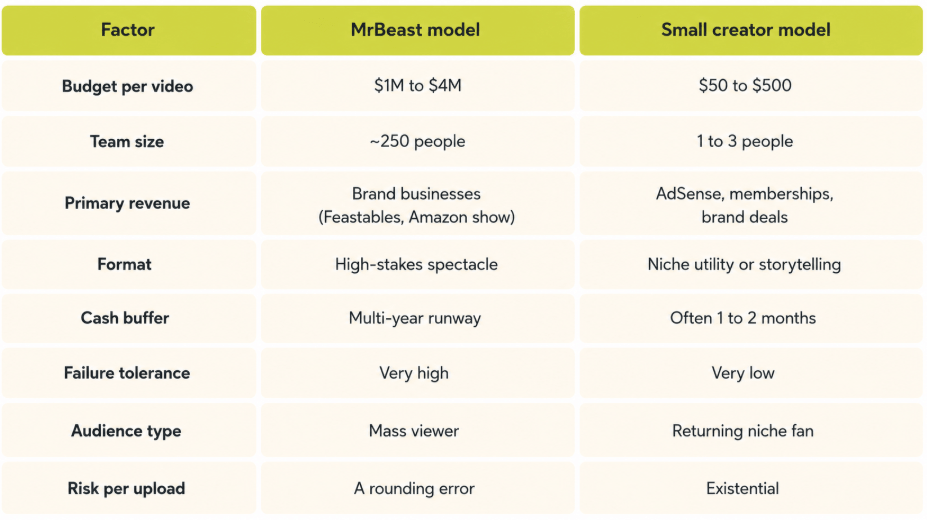
The risk row is the one that matters. A flop costs MrBeast a rounding error. A flop on a $1,500 budget for a 4,000-subscriber channel can end the channel.
🎯 Practical tip: Plan your channel like a small business, not a celebrity bid. Margin, cash flow, and audience retention beat reach in the early years of scaling YouTube channel growth.
Move Your YouTube Revenue on Your Schedule
Waiting 30 to 60 days for AdSense while bills stack up is one of the fastest ways creators burn out. MilX gives creators more control over cash flow with flexible payouts across 40+ currencies, including bank transfers, cards, e-wallets, and crypto, so your revenue moves when your business needs it to.
Why Cash Flow Matters More Than Virality
Virality is a moment. Cash flow is a system.
The creators still uploading three years from now are not the ones who hit 10 million views once. They are the ones who covered their costs every single month while the audience compounded.
“I’ve reinvested everything to the point of - you could claim - stupidity, just believing that we would succeed. And it’s worked out,” said Jimmy Donaldson.
Steady creator cash flow buys time. You can keep posting through a slow algorithm month. You can take a creative risk on episode 47 because episodes 1 through 46 paid the bills. You can hire help, plan ahead, and say no to a bad sponsorship.
Without cash flow, the channel turns reactive. You ship rushed videos. You take any deal. You skip rest. You quit, often right before the channel was about to turn.
🎯 Practical tip: Set a minimum monthly income number for yourself. Build to that number through stable sources first. Treat viral revenue as a bonus, never the base.
👉 Explore why some viral videos bring zero money.
Practical Playbook: 8 Steps for the 99% of Creators
Here is a guide you can apply this week.
- Step 1. Understand the economics of your niche before you commit to it. Different categories and language markets have completely different RPMs and CPMs, so the same number of views can produce wildly different AdSense revenue. Before building a content plan, research what creators in your niche and language group actually earn per 1,000 views. That gives you a more realistic picture of how much AdSense alone can potentially generate and how many views you would need to reach your goals.
- Step 2. Test formats in batches instead of locking yourself into one style too early. Rather than assuming one format will work forever, run structured experiments. For example, publish a batch of five 15-minute videos, then test a batch of 25-minute videos. Compare retention, RPM, watch time, and production effort. Add Shorts that funnel viewers into your long-form videos, then analyze how they affect long-form performance. The goal is not to stay repetitive forever, but to build a system where formats are tested, measured, and improved over time.
"Having a lot of different channels is just honestly a lot more work. It's much easier just to run 1 channel than 12, as you have to make 12 different thumbnails, and you have to reply to comments on 12 uploads. It's just so much easier to have it all in one central place," said Jimmy Donaldson (Mr Beast)
- Step 3. Defend retention in the first 30 seconds. Open YouTube Studio. Watch the first 30 seconds of your last five uploads. If audience retention drops hard, rewrite the hooks before changing anything else.
- Step 4. Stack three small income sources by month six. AdSense, channel memberships, and one digital product or affiliate. Do not skip this step, waiting on one big sponsor deal.
- Step 5. Cap your budget per video. Many sustainable channels cap spending at 20% of the last 30 days of revenue. If revenue dips, the cap dips with it.
- Step 6. Schedule cash flow weekly. Pay yourself a set amount from each AdSense payout. Park the rest. This single habit separates you from most creators.
- Step 7. Close the AdSense gap. The single biggest cash flow problem on YouTube is the 30 to 60-day payout wait. Use tools like MilX that give you early access to already-earned revenue, or to future revenue, keep production moving without pushing you into debt.
- Step 8. Review quarterly. Look at four numbers only: revenue per video, cost per video, returning viewer percentage, and subscribers added. If any one of those four is falling for two quarters, change the plan, not the format.
Yes, this is not glamorous. It is the boring middle of a real YouTube business. The boring middle is where careers happen.
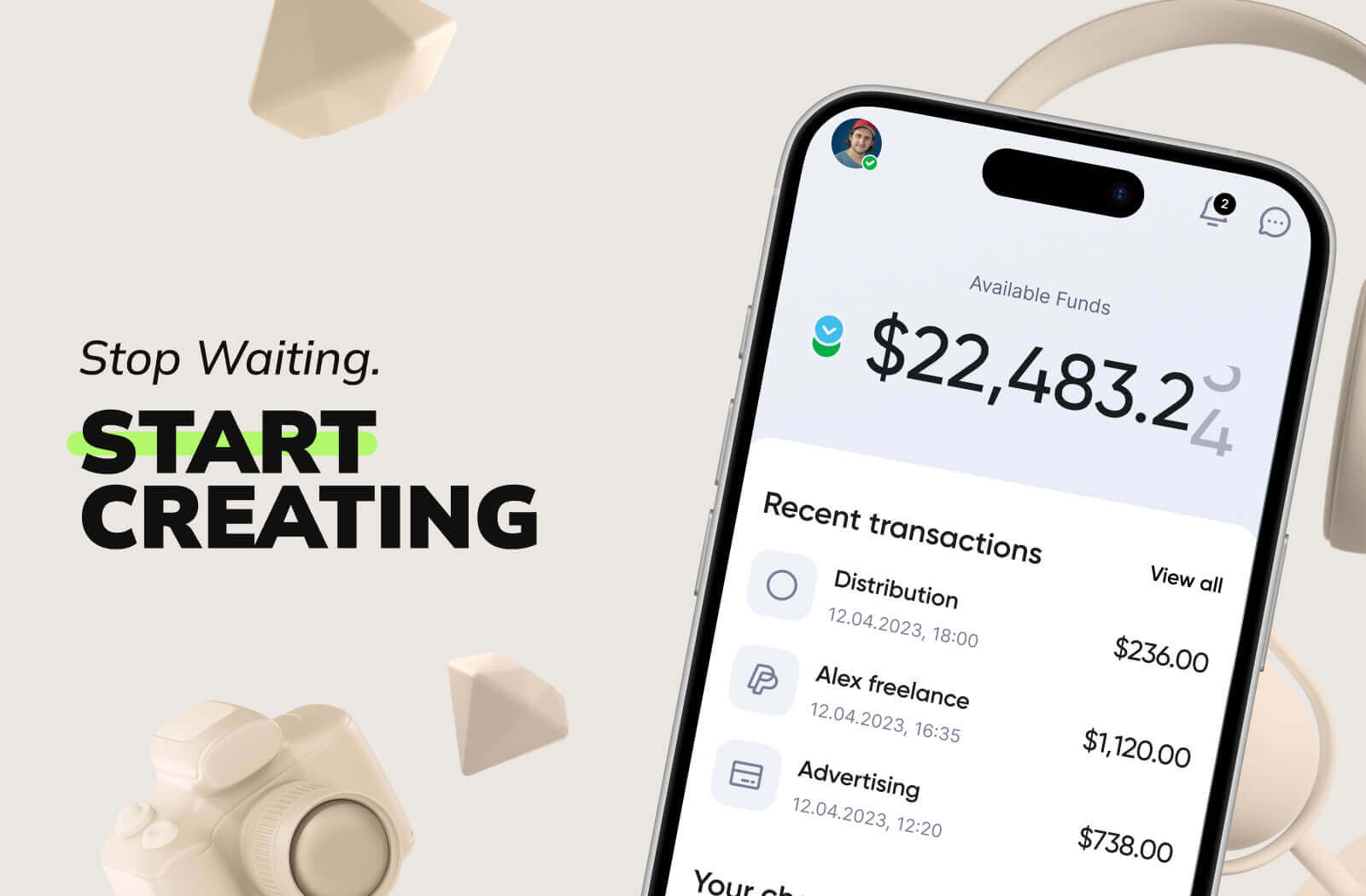
Skip the AdSense Payout Gap: Try Active Funds by MilX
When the AdSense wait gets in the way of your next shoot, Active Funds by MilX gives small YouTube creators a way out of the gap.
Get access to up to six months of future YouTube monetization upfront.
The structure stays simple.
- Daily commission starts at 0.33%.
- Repayment is automatic, set at 5% from future income, so there is nothing to track on your end.
👉 Discover more about the MilX app features.
Once funded, you stay in control of every dollar.
- Cash out through 10+ payout methods: Bank transfer, PayPal, Payoneer, Crypto in BTC, USDT, USDC, PIX, Zelle, or GIM, depending on your country.
- 40+ currencies supported.
- Free P2P transfers between MilX users, so paying editors, designers, and collaborators costs nothing.
More than 5,000+ creators have already cashed out through MilX. The platform is an Official YouTube Partner and is rated 4.6 out of 5 on Trustpilot.
Whether you are scaling a new series, covering a shoot, or keeping the lights on between paydays, MilX gives you breathing room to keep building.
👉 Try MilX and see if your channel qualifies for Active Funds.