The answer has less to do with charity and more to do with how human brains work during live content. Streamer donation psychology is a mix of social dynamics, emotional triggers, and clever stream design that most viewers never think about, and most small creators never study.
Let's break down why people donate to streamers who clearly don't need it, what the top creators do differently to pull those donations in, and which of those tricks you can realistically copy.
The Paradox: Why Viewers Donate to Streamers Who Don't "Need" Money
Here's the thing nobody says out loud: most donations aren't about helping someone pay rent.
A 2025 study published in Frontiers in Communication found that the primary motivations behind stream donations are affective, social, and symbolic, not financial. In other words, viewers don't donate because the streamer needs money. They do this because donating does something for them.
Think about it. When you drop $10 on a stream, and your message gets read aloud, you're not making a transaction. You're buying a moment. A moment where thousands of people hear your name, the streamer reacts to your joke, and you exist inside the broadcast instead of just watching it.
That's the paradox. The richer and more popular the streamer, the more valuable that moment becomes. Getting a reaction from someone with 50,000 live viewers feels different than getting one from someone with 12. It's the same $10, but the audience makes it feel like standing on a bigger stage.
So the real question isn't "why do people donate to rich streamers?" It's "What are those streamers doing to make donating feel so good?"
Streamer Donation Psychology: 5 Triggers That Open Wallets
Why viewers donate money comes down to a handful of behavioral patterns that repeat across every major platform, Twitch, YouTube Live, Kick, you name it. These aren't manipulation tactics. They're real psychological mechanisms that top streamers lean into, often without realizing it.
1. The Reciprocity Effect
You watch someone for three hours. They make you laugh, teach you something, and keep you company during a boring night shift. At some point, a voice in your head says, "I should give something back."
That's reciprocity. It's one of the oldest principles in behavioral psychology: when someone gives you value, you feel an internal pull to return the favor.
Streamers who consistently deliver high-quality, free entertainment build up a kind of social debt in their audience. Donations become a way for viewers to settle that debt, even though nobody asked them to.
The keyword here is consistent. One good stream won't trigger reciprocity. Hundreds of hours of free content will.
2. Social Proof
When a donation pops up every 30 seconds, it sends a signal: "Other people are doing this, so it must be normal." That's social proof in action. The more donations a stream receives, the more new viewers feel comfortable donating themselves.
This is why big streamers have such a massive advantage. Their donation volume creates a self-reinforcing loop. Each new alert normalizes the behavior for the next person watching.
Small streamers with quiet donation feeds don't get this momentum because the social signal isn't there yet.
3. Status Signaling
A $500 donation doesn't say "I like your content." It says, "I can afford to drop $500 on a whim, and everyone in this chat just saw me do it."
For some donors, the donation is a public display of wealth, taste, or loyalty.
It's the same instinct that drives people to buy courtside seats at basketball games. The view is better, sure, but being “seen” in those seats matters just as much.
Streamers who display top donor leaderboards, special badges, or VIP chat roles are tapping directly into this. They turn financial contributions into visible social currency.
4. Gamification
Donation goals, progress bars, milestone alerts, sub-a-thon timers, these are gamification mechanics borrowed straight from mobile games and casinos.
A 2019 study from the Social Media + Society journal described how live streamers "gamify their broadcasts" to extract donations using unpredictable reward systems, essentially the same psychology behind slot machines.
When a streamer says, "We're $50 away from the goal, and I'll do a backflip," that progress bar becomes a game. Viewers want to *win*. They want to be the one who pushes it over the line.
This is one of the most effective donation strategies for streamers of any size. You don't need 10,000 viewers to set a donation goal. You need a compelling reason for people to care about reaching it.
5. Parasocial Relationships
This one runs deeper than the others. Parasocial relationships are the one-sided emotional bonds viewers form with creators they watch regularly. You feel like you “know” them. You know their dog's name, their bad takes on pizza toppings, and their inside jokes. But they don't know you.
Donating bridges that gap. For a few seconds, the relationship becomes two-sided. The streamer says your name, responds to your message, and laughs at your joke.
And once you've experienced it, the pull to do it again is strong.
👉 Learn more about the psychology of a paying fan.
Your Cash Out YouTube Revenue Early, Your Rules
Cash out on your terms - anytime, in 40+ currencies. Send your YouTube income to a bank, card, e-wallet, or even crypto. With MilX, it's free to start and fully in your control.
Why Big Streamers Pull More Donations Than Small Ones
It's tempting to think big streamers get more donations just because they have more viewers. That's true, but it's only half the story. Understanding how big streamers get donations at scale reveals a few mechanics that compound over time.
The Trust Factor
A creator who's been living for three years, five days a week, has built an enormous bank of social proof and reciprocity.
Viewers who have watched hundreds of hours feel a stronger internal pull to give. New viewers see a polished, established operation and think: "This person is legit." Trust accelerates donations.
The Snowball Effect
More viewers mean more donations.
More donations mean more alerts.
More alerts mean more social proof.
More social proof means more donations from new viewers who just showed up. It's a flywheel, and once it's spinning, it's hard to stop.
Production Value Signals Success
High-quality overlays, custom alerts, smooth transitions, and professional audio these things signal that the streamer takes their craft seriously.
Viewers subconsciously associate production quality with the worthiness of financial support. A stream that looks like a professional broadcast gets treated like one.
Community Identity
The biggest streamers have communities with inside jokes, shared language, recurring characters, and rituals.
When you donate in a tight-knit community, you're participating in a culture. That emotional weight makes the $5 feel like $50 in terms of personal satisfaction.
3 Case Studies In Donation Mechanics
Theory is useful. But nothing beats seeing how these principles play out with real creators, real audiences, and real dollar amounts. Here are three cases that show different donation mechanics at work, and what you can learn from each.
Kai Cenat's Mafiathon 2: Spectacle As A Donation Engine
In November 2024, Kai Cenat ran a 30-day subathon called Mafiathon 2 and walked away with over 727,000 subscribers, the all-time Twitch record.
He turned his stream into a rotating variety show. Snoop Dogg stopped by. So did Serena Williams, Kevin Hart, Bill Nye, SZA, and dozens of other celebrities.
When Cenat was sleeping or eating, his team took over to keep the broadcast running. Every guest appearance created a spike. Every spike triggered social proof. Every social proof moment pushed more subscriptions.
Ironmouse's Charity Subathon: Purpose-Driven Donations
One month before Cenat's record run, VTuber Ironmouse hit 320,000 subscribers during her own September 2024 subathon, briefly holding the all-time Twitch record herself. Half of the proceeds went to the Immune Deficiency Foundation, a cause deeply personal to her as someone living with a chronic immune condition.
That personal connection changed the donation dynamic entirely. Viewers were participating in something meaningful.
The charity angle added an emotional layer that pure gamification can't replicate. People who might never subscribe to a VTuber channel opened their wallets because the *why* behind the stream resonated with them.
Ludwig's Original Subathon: The Gamification Masterclass
Back in 2021, Ludwig ran the subathon that started it all, 31 consecutive days of streaming earned 200,000 subscribers. The mechanic was simple: every new subscription added 10-20 seconds to a countdown timer. When the timer hit zero, the stream would end.
That single rule turned the entire audience into active participants. Viewers weren't passively watching; they were collectively deciding whether the stream continued.
Every subscription felt like it mattered. The timer created urgency. The mounting subscriber count created social proof. And the sheer absurdity of a guy living on camera for a month created a narrative that spread across the internet.
Ludwig later donated over $350,000 of the earnings to charity.
What Small And Mid-Tier Streamers Can Realistically Copy
Not everything scales down. You can't fake a busy chat or manufacture 10,000 concurrent viewers. But plenty of donation strategies for streamers work regardless of audience size. Here's what translates.
Enable TTS From Day One
Even with 20 viewers, TTS creates interactive moments that make donors feel heard.
Set a reasonable minimum (say $2-3) so it doesn't get spammed, and react genuinely to every message.
Your small audience is an advantage here in a chat of 20; a donor gets way more attention than in a chat of 20,000.
Set Small, Achievable Donation Goals
Don't put up a "$5,000 for a new PC" bar. Instead, try "$25, and I'll attempt this impossible level" or "$50 for a bonus hour of streaming."
Small goals feel attainable. Attainable goals get funded. Funded goals build the habit of donating in your community.
Thank Every Single Donor By Name
This sounds obvious, but a shocking number of mid-tier streamers forget to do it or do it so late that the moment's gone.
When someone donates, stop what you're doing for five seconds and say their name. That personal acknowledgment is often worth more to the viewer than whatever the money bought.
Build Rituals Around Donations
Maybe every time someone donates, you do a specific sound effect or catchphrase. Maybe the 10th donor of the stream gets to pick the next game.
Rituals turn one-time donors into repeat donors because they want to participate in the tradition, not just give money.
Invest In Basic Production
You don't need a $3,000 camera. But a clean overlay, readable alerts, and decent audio go a long way.
Viewers associate effort with value. If your stream looks like you care, they'll care enough to contribute.
Get Paid Before the Views Roll In
Access up to 6 months of future YouTube monetization today with MilX Active Funds. Cash out on your terms and invest in what matters.
5 Mistakes That Kill Your Donation Revenue
If you want to increase live stream donations, avoid these traps. They're more common than you'd think, and each one quietly drains potential revenue.
1: Guilt-Tripping Your Audience
The moment you say "nobody's donating today" or "I guess my content isn't worth supporting," you've made donating feel like a chore instead of a choice.
Guilt doesn't open wallets; it closes tabs. Viewers came to be entertained, not to feel responsible for their bills.
2: Ignoring Small Donations
A viewer sends $2 and gets zero reaction. Next time, they won't send $5. They won't send anything.
Every donation is a test of how you respond. Pass the test, and the donor comes back with more. Fail it, and you've lost them.
3: No Clear Donation Method
If a viewer wants to donate and can't figure out how within 10 seconds, they won't.
Your donation link should be in your panels, your chatbot auto-message, and mentioned naturally during the stream. Make it effortless.
4: Treating Donations As Your Primary Income Pitch
Viewers can tell when a stream revolves around extracting money. The best donation streams feel like the money is a side effect of great content, not the purpose of it.
Focus on entertaining first. The donations will follow.
5: Inconsistent Streaming Schedule
Reciprocity builds over time. If you stream twice this week, skip next week, then come back for one random Tuesday stream, you never build the consistency that triggers the "I should give back" response.
Regular viewers become regular donors. Irregular schedules prevent both.
Beyond Donations: How to Turn Stream Viewers Into Long-Term Revenue
Donations are great. But if they're your only income source, you're building on quicksand. The smartest streamers treat donations as one piece of a larger puzzle, and the other pieces are often more predictable and more profitable over time.
Here are a few moves that work alongside everything we've covered so far.
Create A Post-Stream Funnel
Most viewers leave the moment you go offline and forget about you until the next stream. Fix that. Pin a link in chat to a Discord server, a newsletter, or a YouTube channel where you post highlights.
Every viewer who follows you off-platform becomes easier to reach and easier to convert into a paying supporter later.
A Discord community with 200 active members can be worth more than 2,000 passive Twitch followers.
Stack Monetization Layers
Don't rely on one revenue stream. Combine donations with channel memberships, Super Chats, affiliate links, and merch. Each layer serves a different type of fan.
Casual viewers might never donate, but they'll click an affiliate link. Loyal fans won't buy merchandise, but they'll subscribe monthly.
Give every audience segment a way to support you that fits their comfort level.
Repurpose Live Content Into Evergreen Assets
A 4-hour stream disappears into the archive. But a 10-minute highlight clip on YouTube can generate AdSense revenue for years.
Top streamers spend 30 minutes after each stream clipping the best moments. Some hire editors specifically for this. The stream makes the content. The clips make the money.
👉 Discover how to get from everyday effort to passive income.
Negotiate Brand Deals Using Your Live Data
Brands pay a premium for live engagement because it's harder to fake than pre-recorded views. If your average stream pulls 500 concurrent viewers with high chat activity, that's a compelling pitch to sponsors even if your follower count looks modest.
Track your peak concurrent viewers, average watch time, and chat messages per minute. Those numbers are your leverage.
👉 Explore how to do paid collaborations on YouTube.
Set Financial Boundaries Early
This one's less glamorous but just as important. Decide what percentage of your streaming income goes to reinvestment (gear, software, ads), what goes to savings, and what you live on.
Streamers who treat every donation as spending money burn through cash fast. Streamers who allocate it intentionally last longer and grow faster.
The creators who survive long-term aren't the ones with the biggest single donation night. They're the ones who built systems around their income, so a slow week doesn't feel like a crisis.
How MilX Helps Streamers Stabilize Income From Donations
Here's the reality of live streaming monetization: donations spike on good days and vanish on bad ones.
One viral stream might bring in $800 in a night. Next week, you might get $30 total. That inconsistency makes it nearly impossible to plan, invest, or even pay your editor on time.
YouTube's standard payout doesn't help either. You wait 30-60 days for your AdSense to land, and even then, you get one lump payment per month. For creators who need to move fast, upgrading equipment, paying collaborators, and funding a new content series that delay is a bottleneck.
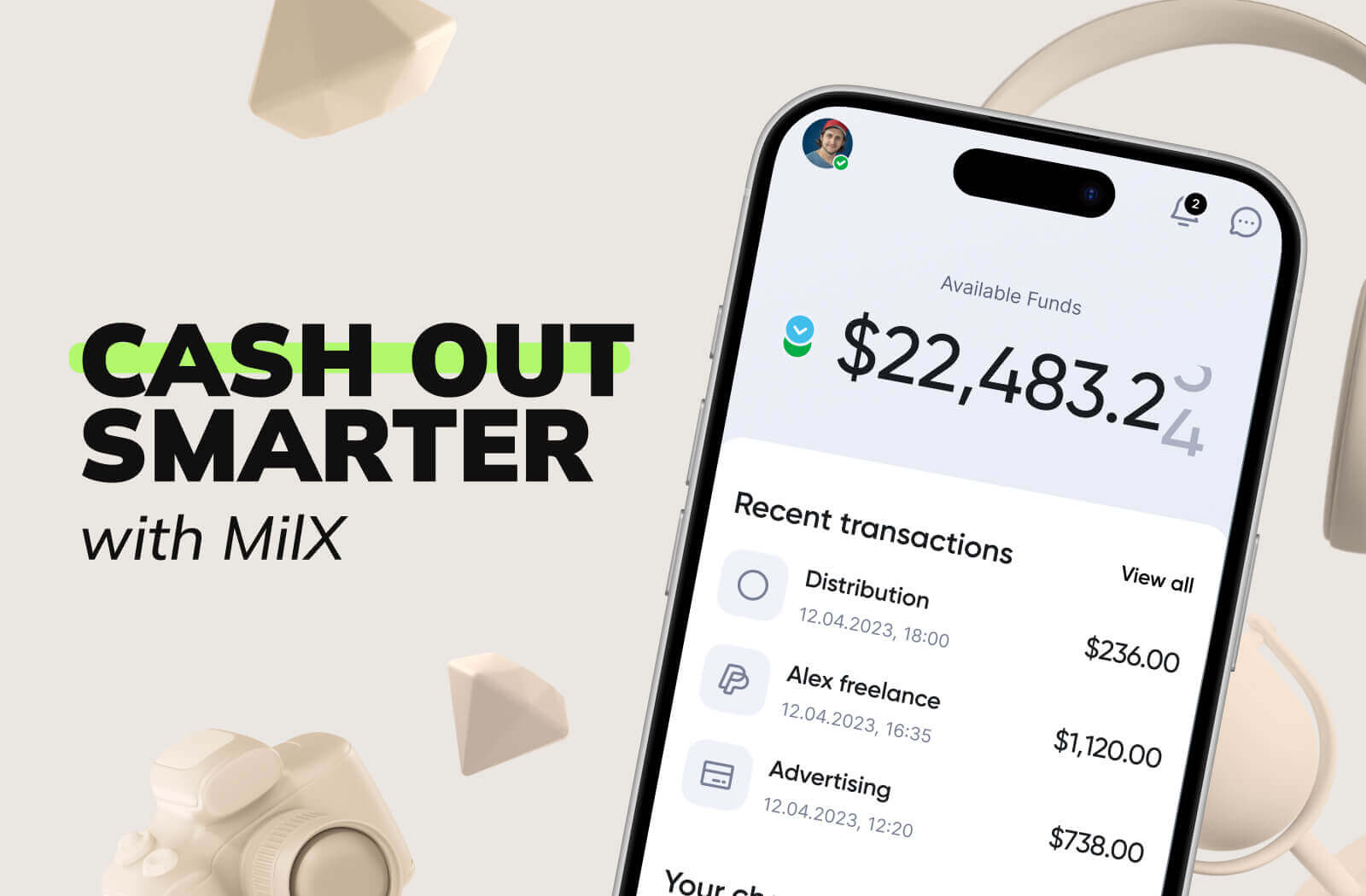
That's where MilX comes in. Instead of waiting for YouTube to release your revenue on their schedule, you can cash out your funds early and on your own terms.
Active Funds let you access up to 6 months of future YouTube revenue upfront. No credit checks. No impact on your credit score. Automatic repayment at just 5% monthly from future income, so there's nothing to track or stress about.
Need your money right now? Instant Payments land in under 5 minutes. Pick from 10+ payout methods: bank card, bank transfer, PayPal, Payoneer, crypto (BTC, USDT, USDC), PIX, Zelle, or GIM in 40+ currencies.
Got a team? Use P2P transfers to pay your editors, designers, or moderators for $0 between MilX users.
👉 Learn more about the MilX app features and dashboard.
MilX is an official YouTube Partner with a 4.6 Trustpilot rating.
Over 5,000+ creators already use it to stay ahead without taking on debt.
Whether you're scaling your stream, launching a second channel, or just trying to cover next month's rent while YouTube live donations fluctuate, MilX gives you the financial breathing room to keep creating without looking over your shoulder.