


Not all MCNs are worth it, though. Plenty of networks have taken a revenue cut for years while delivering little that a creator couldn't have gotten on their own — locking creators into long, sometimes open-ended contracts, offering flat, non-negotiable ad rates with no room to renegotiate as a channel grew, and doing little beyond passing along money the creator had already earned. Some networks still take a cut for a bundle of software you could get on your own — with no person looking at your channel.
Below is the full breakdown on how to evaluate an MCN, whether it's worth is and what the red flags are.
How to Evaluate an MCN?
Check five things before signing anything: whether you can start with a single service before exclusivity, whether the contract states in writing that you keep ownership and revenue share, where your AdSense actually lands, whether the term is capped with a clean exit, and whether the cut is tied to a named deliverable instead of vague "growth support." If a network fails more than one of these, that's not a reason to negotiate harder — it's a reason to walk.
|
Good sign |
Worth asking more about |
|
|
Structure |
You can start with a single service (an audit, a safety review) before any exclusivity talk |
The only entry point is a full contract with rev-share attached |
|
Ownership |
Whatever the platform status, the contract clearly states you keep content ownership, revenue share, and creative control |
No clear written answer on ownership, revenue share, or creative control under an O&O structure |
|
Money |
The contract states clearly what happens to your revenue if the network fails or is acquired — not just the split, but the failure case |
No answer, or a vague answer, on what happens to your money if the company runs into trouble |
|
Term |
Capped at 6–12 months with a short, clean exit |
Multi-year exclusivity, auto-renewal, long notice windows |
|
What you're paying for |
Named deliverables — audit findings, localized channels, a named strategist |
"Growth support" or "strategy" with no specifics in writing |
What Is a Multi-Channel Network, and How Do MCNs Make Money in 2026?
A Multi-Channel Network (MCN) is a company that partners with YouTube channels to offer services like strategy, brand-deal sourcing, rights management, localization, and cross-promotion, in return for a share of revenue that typically runs 10% to 30%.
YouTube recognizes two types of MCN connection:
- Affiliate channels are managed at scale by the network, while you keep your own separate content ownership on the platform.
- Owned & Operated (O&O) channels have the network registered as the operator of record with YouTube. It holds the platform-level rights.
O&O isn't automatically good or bad. It's a technical designation, and networks use it for real operational reasons: routing payments through a tax-treaty-favorable entity, meeting regional distribution rules, or handling kids' content compliance.
What matters is the contract underneath it. Some networks use O&O status while the contract preserves your content ownership, revenue share, and creative control in full; others have used it to genuinely absorb the channel. YouTube's own overview of how MCNs work explains the platform-level mechanics, but it won't tell you which kind of deal you're being offered — only the contract does.
The model has also changed. In the early 2010s, an MCN was often the only realistic path to monetization. Today, every affiliate channel in an MCN also holds its own direct YouTube Partner Program contract, so a network is one service provider among several you can choose from, not a gateway to getting paid.
Why Would an MCN Use O&O Status?
A few reasons come up often:
- Tax withholding on U.S. viewership. YouTube withholds up to 24% of a creator's worldwide earnings if no tax form is filed at all — any creator fixes that themselves by filing a W-8BEN, no network needed. The part a network's structure can help with is different: creators whose country has no U.S. tax treaty face a default 30% withholding specifically on their U.S.-sourced earnings, even with a form on file. Routing payments through an entity in a treaty-favorable jurisdiction can legitimately reduce that.
- Regional distribution and compliance requirements that need a single operating entity per market.
- Kids'-content and safety compliance, where a network takes on operational responsibility for policy adherence.
None of this requires giving up your underlying rights. It's about who's registered as the operator with YouTube for these specific purposes. Ask directly: do I keep content ownership, revenue share, and creative control in the contract, regardless of the O&O label? A good answer is specific and in writing.
What Happens to Your AdSense When You Join an MCN?
You don't lose your personal AdSense account when you join an MCN — it stays active under your name. What changes is where your channel's earnings go: per YouTube's own MCN overview, once you join, all your revenue flows through the MCN's AdSense account by default, and the network pays you your share based on the split in your contract — typically 10% to 30%.
Any balance you'd already earned before joining generally stays put and gets paid out to you directly by Google at the normal threshold.
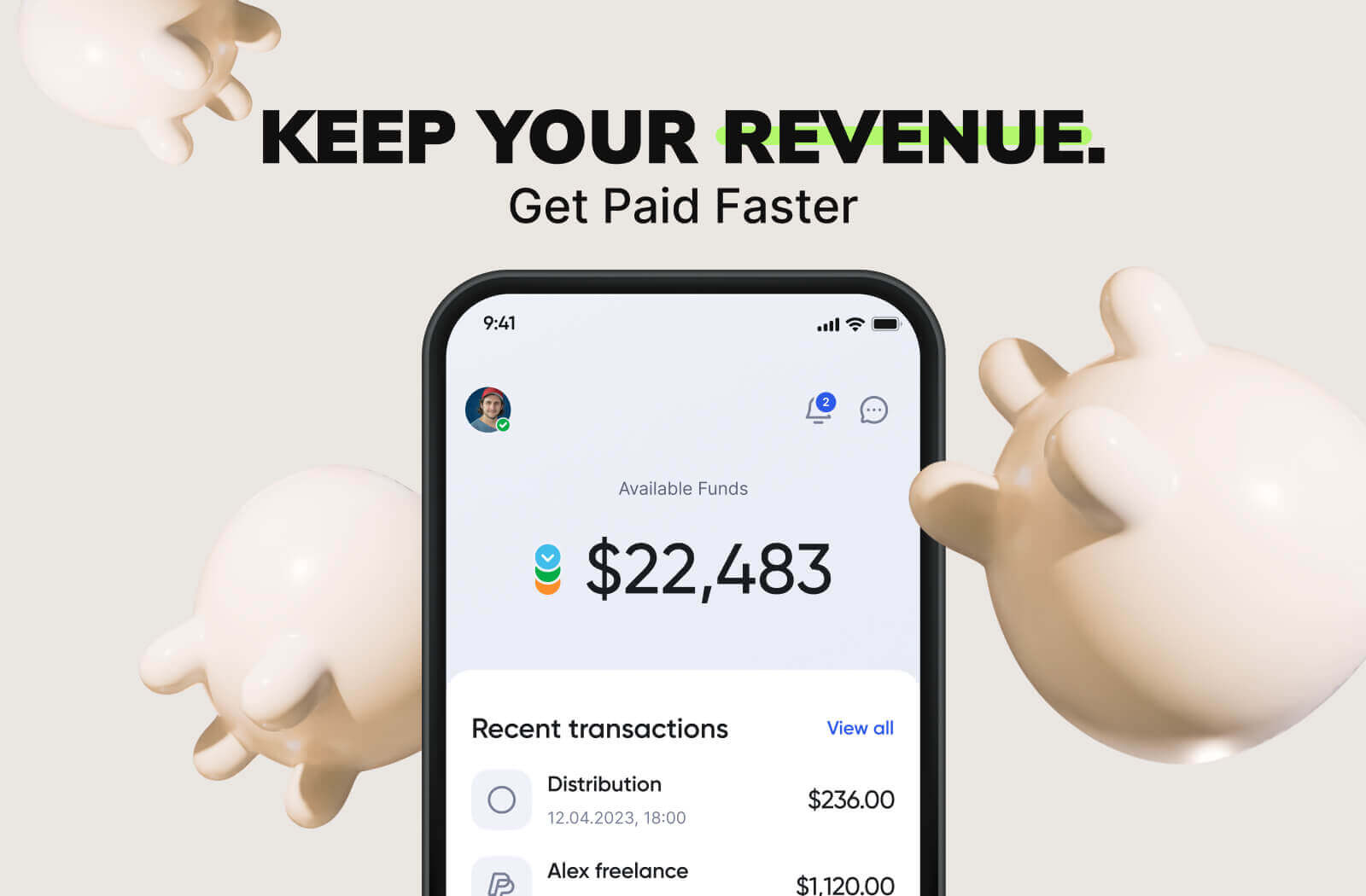
You can get upfront payouts without an MCN.
Get up to 6 months of your future YouTube revenue upfront, transferred through 10+ payment methods in 40+ currencies, without signing away a percentage of your channel to get it. MilX is a financial tool, not a rev-share partnership, with no monthly subscription fee. Download the MilX app and see if your channel qualifies.
What Can an MCN Do for You? A Wide Look at Services
"MCN services" covers a lot more ground than rights management. Here's a wider view of what a network can bring to a channel, and where it tends to matter most:
|
Service |
What It Includes |
Where It Matters Most |
|
Localization, Dubbing & Global Distribution |
Translating and dubbing a channel into new languages, launching dedicated regional channels, and adapting metadata and thumbnails for local audiences. |
Hard to match solo — running nine language channels in parallel takes a production pipeline, not just a translator. |
|
Rights Management & Content ID at Scale |
Chasing down reuploads, managing music and video rights across a large catalog, and handling Content ID claims and disputes. |
Music catalogs and channels with a large back catalog of licensed or original content. |
|
Brand Deals, Sponsorships & Sales Support |
A dedicated sales team that sources sponsorships, negotiates rates, and manages the relationship with brands. |
Deals a single creator wouldn't have access to on their own. |
|
Cross-Promotion & Audience Development |
Collaborations and placement across a network's other channels, plus data on what's working across hundreds of similar channels. |
Pattern recognition that's hard to build from one channel's data alone. |
|
Content Safety & Policy Compliance |
Reviewing content against monetization policy, AI-disclosure rules, and kids' content requirements before it becomes a strike or demonetization event. |
Channels operating close to policy edges, or in the kids' category. |
|
Monetization Diversification |
Help setting up and using features many channels leave dormant — Memberships, alternative revenue streams, sponsorship marketplaces. |
Channels with an engaged audience but underused revenue features. |
|
Channel Audits & Growth Strategy |
An expert-led audit and a specific, data-backed growth plan — what's underperforming, competitor gaps, what to change first — with follow-up on implementation. |
Any channel that's plateaued or unsure why growth stalled. |
|
Dedicated Strategist or Account Support |
A named person assigned to a channel, tracking its data over time and adjusting the plan. |
The hardest service to unbundle — depends on an ongoing relationship, not a one-off deliverable. |
A handful of these — mainly basic analytics, scheduling, and thumbnail testing — are also available as standalone software with no revenue share attached, so it's worth asking which category a given pitch falls into before assuming you need the full partnership to get it.
What Are the Risks of MCN, and How Do You Protect Yourself?
None of this means every deal is a good one. The risks below are real and documented. The table covers what to watch for and how to protect against it before you sign.
|
Risk |
What It Means |
How to Protect Yourself |
|
Revenue cut |
10–30% sounds minor until annualized — on $1,500/month, a 30% cut is $5,400/year |
Ask exactly what the cut buys, in writing, and do the yearly math before signing |
|
Exclusivity & term length |
Multi-year, sometimes open-ended terms with no clean exit |
Cap a first deal at 12 months; treat perpetual or undated terms as a hard no |
|
Vague deliverables |
Contract only describes them passing along money you earned, not a specific service |
Insist on named deliverables tied to the percentage they take |
|
Auto-renewal |
A missed 30/60/90-day notice window rolls you into another full term |
Calendar the notice window the day you sign |
|
Mandatory arbitration |
Disputes routed to costly private arbitration instead of court |
Check whether the network covers filing fees if you're the one disputing a charge |
|
Channel control |
O&O means the network is registered as an operator with YouTube — fine if the contract still protects your rights, risky if it doesn't |
Get written confirmation of content ownership, revenue share, and reversion terms, regardless of platform status |
|
Payment routing |
By default, your revenue flows through the network's AdSense account, not yours — that's normal, not a red flag on its own |
Vet the network's financial stability before signing, and get written terms for what happens to your money if they fail |
These cases illustrate why the table above matters:
- On exclusivity and term length: Machinima's contracts ran "in perpetuity, throughout the universe," with no expiration date. In 2011, creator Ben Vacas signed, without realizing it, a contract that bound his content for life and beyond.
- On payment routing: Defy Media's November 2018 shutdown froze about $1.7 million in September AdSense earnings for roughly 50 creators overnight when the company's lender took control of its assets (The Hollywood Reporter). Both are outliers, not the norm — but they show exactly what the contract clauses above are meant to prevent.
What Should You Ask and MCN Before Signing a Contract?
Evaluate any partnership by checking five things: term length, exit clause, revenue split, who holds channel ownership, and where your AdSense lands.
💚 Good signs
- You can start with a single paid service — an audit, a safety review, a localization pilot — with no exclusivity attached.
- Whatever the platform structure — Affiliate or O&O — the contract explicitly states you keep content ownership, revenue share, and creative control.
- A clear, capped term of 6 to 12 months with a clean, short exit.
- Revenue share tied to specific, measurable services, with a named person doing recurring work.
- The contract clearly states what happens to your revenue if the network goes bankrupt or is sold.
- References from current creators you can call.
🚩 MCN contract red flags
- No written confirmation that you still keep content ownership and revenue share.
- Exclusivity beyond 12 to 24 months with auto-renewal and a long notice window.
- A vague split, or "we'll confirm the percentage later."
- No written list of deliverables tied to the cut they take.
- Pressure to sign fast, or a rate that "expires today."
- A pitch that only offers the full package, no way to try one service first.
🎯 Practical tip: Ask for two creators who left on good terms, and call them. A company with nothing to hide hands over names.
How Do You Read an MCN Partnership Offer in 20 Minutes?
A 10-step check that moves from structure and term length to the money path and a final tally. Print this, or keep it open during the call.
- Confirm the structure. Affiliate or O&O? Either can be fine. Get written confirmation of who keeps content ownership, revenue share, and creative control either way.
- Find the entry point. Can you buy one service before any rev-share talk? If not, ask why.
- Find the term length. Locate the term and the auto-renewal clause. Cap a first deal at 12 months.
- Find the exit. Locate the cancellation clause and notice window. Aim for 30 days or less.
- Read the split. Find the revenue share and what it buys. Tie every percent to a named deliverable.
- Trace the money. Your AdSense routes through their account by default — that's standard. Instead, find out how the network is funded, how long they've paid on time, and what your contract says happens to your money if they fail.
- Check ownership and Content ID. Confirm whether platform-level ownership stays with you (Affiliate) or moves to the network (O&O) — and either way, get your underlying content rights, revenue share, and reversion terms in writing. Confirm who controls Content ID claims.
- Do the math. Using the specific services you listed in step 5 — not a vague sense of "support" — multiply monthly revenue by the cut, times 12. Is that named list of deliverables worth the yearly figure, or would buying the pieces separately cost less?
- Call references. Two current creators, two who left. Ask about payouts, exits, and surprises.
- Weigh it honestly. A couple of open questions are normal — get them answered. A pattern of vague answers is the actual signal.
Standalone Tools, a Single Service, or a Full Partnership — Which Fits?
|
Standalone tools |
A single paid service |
Full managed partnership |
|
|
Cost model |
Flat fee or free, no revenue cut |
Flat fee or plan price, no revenue cut |
Revenue share, typically 10–30% |
|
Ownership/ exclusivity |
None required |
None required |
Usually some exclusivity — cap it |
|
Who does the work |
You, with software |
A specialist team, one-off or ongoing |
A dedicated strategist or account team |
|
Best fit |
Any channel |
A specific fix: compliance, an audit, localization — or ongoing account support without full exclusivity, where a network offers it as a plan |
Rights-heavy catalogs, multi-market channels, or any size channel that wants ongoing, hands-on execution — size alone doesn't rule it out |
|
Where your AdSense sits |
Your account |
Your account |
Routes through the network's account by default — get their financial-stability and failure terms in writing |
When Is a Full Rev-Share Partnership Worth It?
Size isn't the deciding factor — a need type is. A channel with 10,000 subscribers can start with separate services or consultation and then switch to a full partnership if the MCN shows value. A channel with 20 million subscribers can just as easily only need a single audit. The question is "do I need ongoing execution, or a one-time fix?"
For small and early-stage channels, a full partnership tends to pay off when:
- You need consistent operational work you don't have time or expertise to do yourself.
- You're in a higher-risk category (kids' content, policy-sensitive niches) where one missed compliance issue could end the channel, and you want a team watching for that continuously.
- Your channel gets hacked or wrongly terminated, and you don't know the correct recovery path.
- You're locked out of your own AdSense account and have no direct line to a human at YouTube.
- You’ve been experimenting for a long time, and still can’t shatter the ceiling.
It's not worth it at small scale when the actual need is a single, bounded task — one audit, one compliance check, one hacked-account recovery. That's a paid single service, not a permanent revenue-share partnership.
For large and established channels, a full partnership tends to pay off when:
- You have a rights-heavy catalog that needs Content ID management at scale.
- You're expanding into many languages and markets simultaneously.
- You need brand-deal sourcing beyond what your own network can access.
- You're operating a portfolio of multiple channels or brands, not just one
- You have a large back catalog sitting mostly idle between uploads — turning that catalog into continuous, always-on distribution (streaming, syndication) is an infrastructure and rights-clearance problem that doesn't scale well without dedicated tooling and staff.
- You're a high-value target for hackers or bad-faith copyright claims — attackers and fraudulent claimants specifically go after channels with existing audiences and monetization, and the cost of a successful attack (or a wrongly-processed claim) scales with the channel's size, so the value of fast, correct escalation scales with it too.
It's not automatically worth it at large scale either — a channel with a big audience but a narrow, well-defined need (one market's localization, one audit) is still better served by a single paid service than a permanent percentage cut on all future revenue.
What Signals Value vs. No Value in an MCN
|
No real value |
Worth it |
|
|
Reporting |
Generic monthly update, same template sent to every partner |
Specific data tied to your channel's numbers, with a clear before/after |
|
Execution |
Advice and recommendations only — you still do the work |
Someone on their side implements pieces of the plan with you |
|
Escalation |
No direct line to YouTube when something breaks |
Verified Partner status with an escalation path for strikes, claims, or account issues |
|
Track record |
Can't or won't produce current partners as references |
Names recent partners, including ones your size, who'll talk to you |
|
Scope |
New "growth support" fees keep appearing with nothing new attached |
Deliverables stay tied to what you agreed to pay for |
|
Responsiveness |
Weeks to respond to a channel-threatening issue |
Fast turnaround on time-sensitive problems (a strike, a demonetization event) |
How Do You Leave an MCN?
Your channel gets released from an MCN one of two ways: you choose to leave, or the network releases you because your channel has dropped below the YouTube Partner Program eligibility threshold. Either way, being released can change your monetization status, so it's worth being ready before it happens, not after.
Before you're released:
- Download your revenue reports. Once you're released, you lose access to them — there's no retrieving this data after the fact.
- Confirm you have an active AdSense for YouTube account in your own name. You'll need it for the reapplication process, and setting it up in advance is what makes the transition smooth. Try signing in with your channel's information, search your email for an old signup, or create one now if you've never had one.
After you're released, check whether your channel is still enabled for monetization — the path forward depends on how your channel was classified:
- Affiliate channels are automatically relinked to their own content owner and reapproved for the Partner Program. Minimal friction.
- Owned & Operated channels have to reapply from scratch: apply to YPP again even if you were previously approved, link an active AdSense account with a payment method set up, turn ads back on for your videos, and reconfirm your upload defaults so new videos monetize automatically. Don't create a second AdSense account if you already have one — duplicate accounts violate AdSense's terms and can get both flagged.
You Can Get Payout Benefits Without an MCN
You can get a network's cash-flow benefits without signing a rev-share partnership by using the creator MilX financial app.
MilX is a banking app built for creators.
- Advance Funds — get revenue you've already earned but haven't been paid yet, up to 2 months (60+ days) early.
- Active Funds — access up to 6 months of future revenue, no credit check.
- P2P payments — pay your editor or team for $0.
- 10+ withdrawal methods across 40+ currencies, with every fee shown before you confirm.
MilX is used by 5,000+ creators, has processed $500M+ in creator revenue, is an Official YouTube Partner, is regulated by Canada's Fintrac, and holds a 4.6 on Trustpilot. No monthly subscription fee.
👉 Take control of your creator finances with MilX: download the app.
FAQ
What is an MCN on YouTube?
An MCN, or Multi-Channel Network, is a company that partners with YouTube channels and takes a 10% to 30% revenue share in return for services like brand deals, rights management, localization, and strategy.
Are MCNs worth it in 2026?
It depends on the service, not the category. Localization, rights management at scale, and dedicated strategy work continue to deliver real, documented results for creators who use them. Basic tools and payouts are now available without a revenue share.
Can I get MCN-style services without signing a rev-share deal?
Often, yes. Many networks now offer single services — an audit, a compliance check, a localization pilot — as standalone purchases. Ask directly whether you can buy one service before discussing a long-term partnership.
Can I leave an MCN?
Yes, but the process depends on your channel's platform status. Affiliate channels are automatically relinked to their own content owner and reapproved for the Partner Program when released. Owned & Operated channels have to reapply for the Partner Program from scratch, since the network was the operator of record — a process step, not a sign you've lost your underlying rights, if your contract protected them from the start. See YouTube's own guidance on leaving a network.
Do I still need an MCN to monetize on YouTube?
No. Since every affiliate channel in an MCN also holds its own YouTube Partner Program contract, you can monetize, get analytics, and use a music library without joining a network.
Can a partner take my channel?
Only if your contract lets them. O&O status means the network is the operator of record with YouTube, but that's a platform-level designation, not automatically a transfer of your underlying rights — many networks use it for tax, regional, or compliance reasons while the contract keeps your content ownership and revenue share intact. The real question isn't Affiliate vs. O&O. It's whether the contract states, in writing, that you keep ownership and get your channel back on clear terms if you leave — see YouTube's breakdown of Affiliate vs. O&O channels.
What are the biggest red flags in a partnership contract?
The biggest red flags are exclusivity beyond 12 to 24 months, auto-renewal with a long notice window, a vague revenue split, no written answer on what happens to your money if the network fails, and a pitch with no way to try a smaller service first.
How much do MCNs typically take from your revenue?
Most networks take a percentage of revenue, tied to whatever services are named in the contract. There's no fixed "fair" number — a cut for a dedicated strategist and multi-market localization is a different deal than the same cut for software you could rent yourself. Judge the percentage against the specific deliverables, not in isolation.
Can an MCN release me even if I don't want to leave?
Yes. If your channel drops below the YouTube Partner Program eligibility threshold, the network can release you involuntarily. If that happens while you're classified as Owned & Operated, you'll need to reapply for YPP from scratch — worth knowing before your channel is anywhere near that line, not after.
What's the difference between an MCN and a talent management company?
A talent manager represents you personally and typically takes a commission on deals they source, without becoming part of YouTube's platform-level relationship with your channel. An MCN operates through YouTube's own Content Manager system, can be registered as Affiliate or O&O, and its services (rights management, Content ID, monetization routing) are tied to the channel itself, not just to you as a person. Some creators use both at once for different reasons.
Is joining an MCN reversible?
Mostly, yes, but not symmetrically. Affiliate status reverses cleanly — your channel relinks to its own content owner and gets reapproved automatically. Owned & Operated status takes more work to unwind, since the network was the operator of record and you'll need to rebuild your monetization setup from scratch. Neither is permanent, but one costs more time on the way out.