

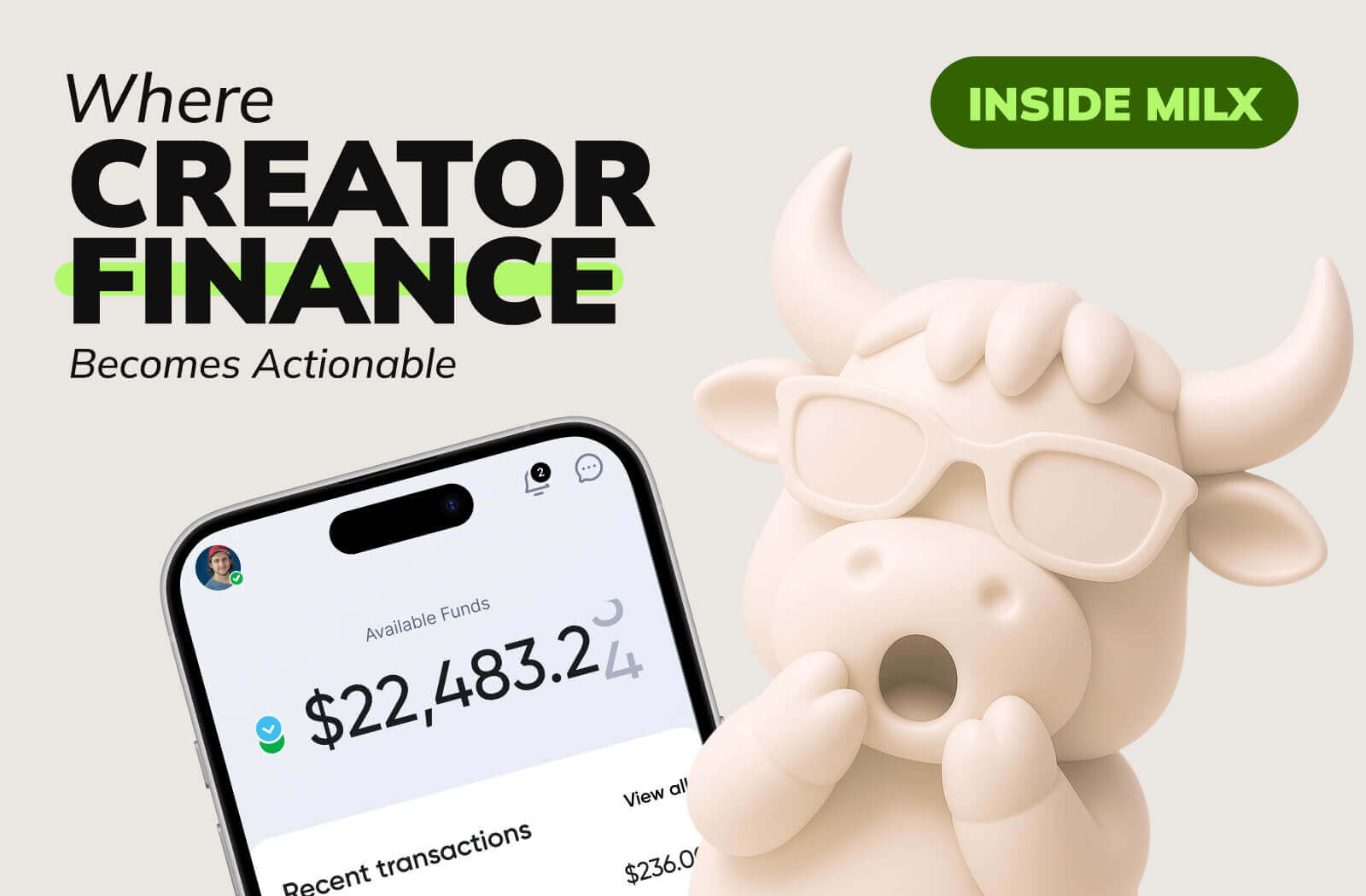
So this is our attempt to answer that properly. From the MilX team, for anyone encountering us for the first time.
MilX is the first finance app built specifically for digital creators. We've processed over $500 million in creator revenue for 5,000+ YouTubers around the world, and we're an official YouTube Partner.
But the numbers aren't the story. The story is what we saw before we built any of this, and the specific decisions we made because of it.
Here's what we faced. And what came out of it.
The Problem We Couldn't Stop Seeing
Before we wrote a single line of code, we spent a lot of time just talking to creators.
Why? Because gaining access to YouTube monetization is only half the battle. In addition, in order to monetize their content, creators also need to be able to effectively withdraw their earnings.
And the same frustration kept surfacing as background noise that never went away. YouTube's payout system was built for a different era.
Wendy, a lifestyle creator in the US, described reinvesting in her content as a constant timing game. She'd earn in one month, wait for AdSense to release it the next, and by the time the money arrived, the moment a trend, a collab, a piece of gear that would've helped had passed.
Tatyana, a full-time vlogger, put it more bluntly: the monthly payout cycle made no sense for how she ran her channel. She thought like a business owner. She needed to pay freelancers, invest in production, and plan. But her operating capital was frozen until the 21st.
Michael, managing a channel earning $10K–$50K a month, had a different flavor of the same problem. His income came from AdSense, brand deals, and Patreon, all on different schedules, all going to different accounts. He spent real time just figuring out where his money was.
One creator, one bank account, one currency, one transfer a month. That's not how a modern creator business works. And traditional banks weren't filling the gap. They didn't even recognize content creation as a legitimate income source.
So that's the product problem we decided to solve.

Decision 1: Build Around the Creator's Cash Flow Cycle, Not YouTube’s
The first and most consequential product decision we made was this: MilX should move at the speed of a creator's business, not at the speed of AdSense.
- YouTube pays once a month, somewhere between the 21st and 26th, for revenue earned in the previous month.
- That's a 30-to-60-day lag between earning and receiving.
For a creator paying an editor on a weekly schedule, or trying to capitalize on a trend that has a two-week shelf life, that lag is genuinely expensive.
We built two features inside the MilX app to fix this at different time horizons.
Advance Funds handles the short end: money you've already earned in YouTube Analytics but haven't been paid yet. Instead of waiting for Google's payout cycle, you can cash it out now - up to two months of already-accrued earnings, available as soon as you need it. This isn't a loan. It's your money. We're just moving the receipt date.
Active Funds handles the longer horizon: money you haven't earned yet but are on track to earn, based on your channel's performance. We advance up to six months of projected revenue in a single lump sum. A creator who wants to hire a full-time editor, upgrade their camera setup, or fund a large-scale content series can do that today. No credit check. No bank manager decides whether "YouTuber" counts as a profession.
The key insight behind Active Funds is that a monetized YouTube channel is a predictable revenue-generating asset.
We use dozens of criteria, such as revenue stability, audience retention, content niche CPM, and growth velocity over 90 days, to model that asset and determine how much capital we can responsibly advance. The creator gets capital at startup speed. We manage the risk through data.
From YouTube Analytics to Cash
Turn performance data into real, usable money you can actually spend, reinvest, and scale your channel with MilX.
Decision 2: Don't Make Them Choose a Payment Method. Give Them All of Them.
Early on, we had a debate about payment methods.
- The conservative take was: support bank transfer and PayPal, cover 90% of use cases, keep it simple.
- The counter-argument won: creators are global, and their financial realities are genuinely diverse.
A US creator paying a Filipino editor faces different constraints than a Brazilian creator withdrawing in BRL, or an Iraqi creator who can't use PayPal at all (this came directly from a creator we interviewed).
Crypto isn't a niche preference for some of our users; it's their only viable option for cross-border transfers.
So we built for the full range:
- Visa/Mastercard - instant access, 2.5% fee;
- Bank transfer - in 40+ currencies, flat $40 fee;
- PayPal - 2%, starting from $1;
- Payoneer - 1%, good for global freelancers;
- PIX and Zelle - for Brazil and US local transfers;
- Crypto (USDT, BTC, USDC) - BTC at 0%, fast, maximum flexibility;
- P2P - to other MilX users, completely free;
- GIM - USDT converted to local cash through verified agents.
Ten-plus methods, 40-plus currencies. Not because we wanted a long feature list, but because a single creator might legitimately need three of these in a given month - one for their own withdrawal, one for paying a collaborator, one for sending money to a contractor in a country with limited banking infrastructure.
The principle we kept returning to: the payment method should fit the situation, not the other way around.
Decision 3: Treat Team Payments as a First-Class Feature
One of the clearer signals from our creator research was how often creators were paying people - editors, thumbnail designers, scriptwriters, co-hosts - and how painful that was at scale.
A creator paying an editor in another country through standard bank wire faces $40+ in fees per transfer, processing delays, currency conversion losses, and the general bureaucracy of international wires. For a creator working with three or four contractors, that's a real operational cost that compounds monthly.
Our answer was P2P transfers: if the recipient is also on the MilX app, the transfer is free and instant. Not "low fee." Free. The moment we made that decision, team payouts stopped being a transaction cost and became a feature we could build an ecosystem around.
We extended this with recurring payments - set up a weekly transfer to your editor, and MilX handles it automatically. If multiple scheduled payments fall on the same day and funds are limited, MilX processes by priority, so your highest-priority payees are covered first.
The Payees feature - a saved list of recipients with nicknames - sounds mundane, but it reflects a real workflow. Creators don't want to re-enter payment details every time they pay someone. They want to tap a name, enter an amount, and move on.
The underlying bet here: if MilX becomes the financial infrastructure for creator teams, not just individual creators, the product becomes hard to replace.
Decision 4: Design Funding Around Creator Economics, Not Banker Logic
Traditional credit scoring is built for W-2 employees with predictable monthly salaries. It systematically fails creators, whose income is variable, multi-source, and often looks "unstable" to an algorithm calibrated for a different world.
We built eligibility criteria from scratch, using signals that matter for creator financial health:
- Monthly YouTube earnings from $70 (a real business signal, not a threshold set for banks)
- 1,500+ subscribers and 5,000+ watch hours (proxy for channel stability)
- No active YouTube policy violations (content risk is financial risk)
- AdSense integration confirmed
To issue the upfront capital, we need to see enough channel history to model future revenue responsibly. That's a data bar. We're asking: "Does your channel generate predictable revenue?" Not: "Do you have a credit score?"
The design principle: the product should reflect how creator businesses work, not force creators to fit into a financial model built for someone else.
Decision 5: Make the Dashboard Show Cash Flow
Here's a thing YouTube Studio does well: it shows you views, watch time, CPM, and impressions. It's a great analytics tool. Here's what it doesn't do well: tell you how those metrics convert into money you can spend.
When we designed the MilX creator earnings dashboard, we made a deliberate choice to orient everything around cash flow rather than performance metrics. The questions we wanted to answer on the main screen:
- What can I withdraw right now?
- What's pending, and when does it arrive?
- What's accumulating based on my recent performance?
- How consistent is my revenue week-to-week?
We update balances daily.
The transaction history - date, method, amount, type - is there because creators managing a team or tracking expenses across projects need an audit trail that their bank statements can't provide.
The upcoming payout forecast is there because planning for a gear purchase or a hire requires knowing what's coming, not just what arrived last month.
We're not trying to replace YouTube Studio's analytics. We're translating those analytics into financial intelligence.
Decision 6: Earn Trust Through Transparency
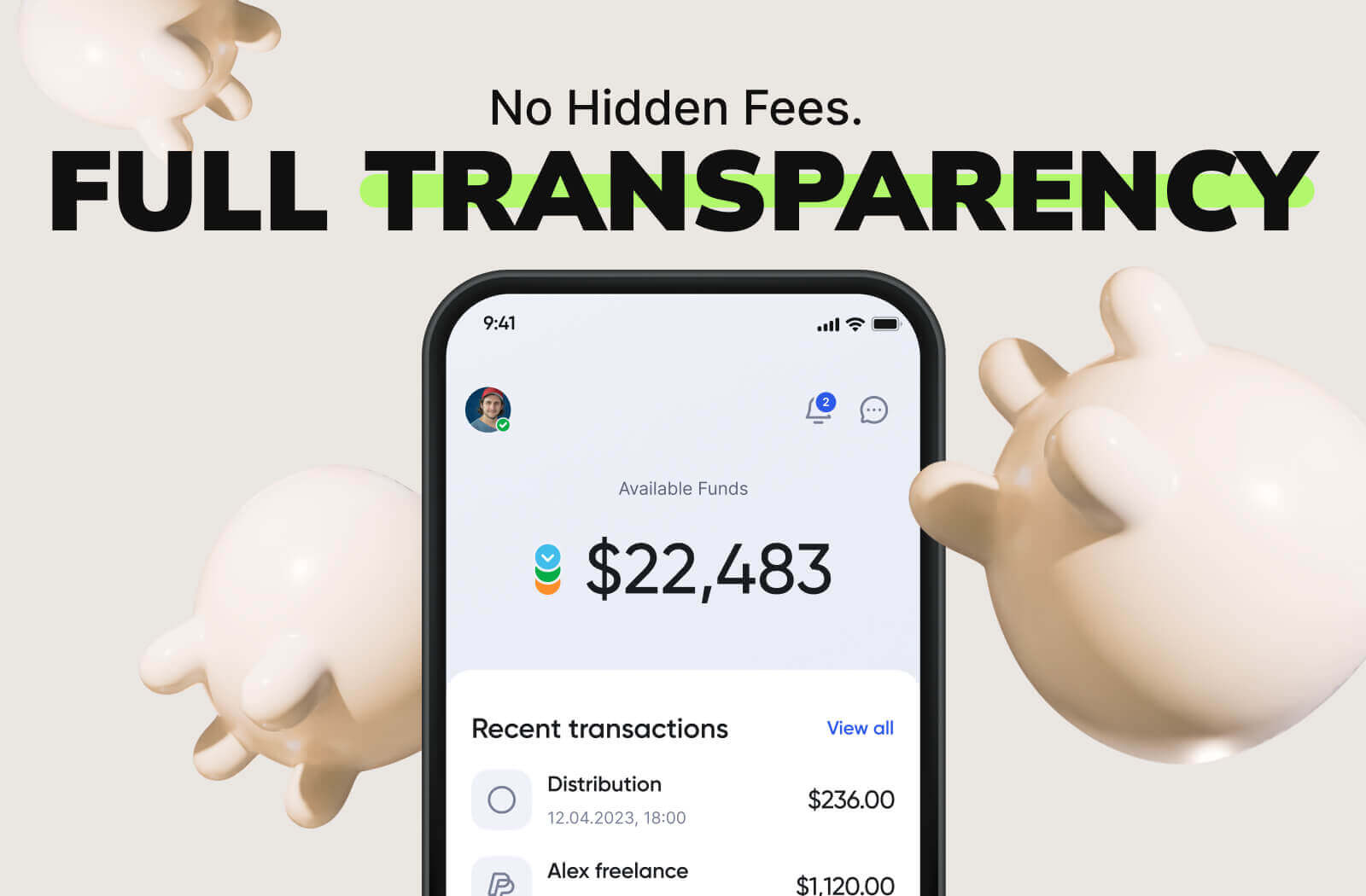
One of the writing rules in our internal guidelines is: "If there's a fee, say it." That's a product decision disguised as a style rule.
Creators have been burned by MCNs and platforms that buried terms in fine print.
Our default is explicit disclosure.
- Every payment method lists its fee.
- Upfront funding states the 0.33% daily commission and 5% monthly repayment clearly in the UI before a creator commits.
- The scoring system that determines upfront payout eligibility is explained as a concept.
Security transparency follows the same logic. FaceID, TouchID, 2FA via Google Authenticator, bank-grade encryption, regular security audits - all backed into the platform.
Why We're Telling This Story
MilX is built around a belief simple enough to state in one sentence: creators are running businesses, and they deserve financial infrastructure that treats them that way.
That belief is the product decision behind everything in this app. Every feature traces back to a specific pain we heard in a specific conversation and decided to do something about.
If you're a creator who's been navigating the 30-day payout lag, the international wire fees, the bank that doesn't understand how you earn - that's the problem we built MilX to solve.
You're why this exists.