

Some of the biggest names on YouTube were drowning while the world kept watching.
They chased viral fame, built audiences from nothing, and raked in brand deals until it all collapsed. Not from lack of talent, but from one fatal gap: no financial safety net.
These aren’t just stories of broke YouTubers, they’re warnings. Because if you’re not careful, the algorithm isn’t the only thing that can turn on you.
10 Stories of YouTubers Who Went Broke
They had it all, fame, fans, and fortune. But somewhere between the uploads and the applause, things fell apart.
These YouTuber bankruptcy stories are a blueprint of what not to do when success hits fast.
# 1: Andrew Hales: From Prank Star to $50K in Debt
Andrew Hales (LAHWF), known for his awkward pranks and raw interviews, hit millions of views. But behind the scenes, he was spiraling.
In his candid video “how i became broke,” he admits to blowing through earnings on travel, rent he couldn’t afford, and unchecked credit card use. The uploads stopped, and the money ran out. Hales found himself deep in debt, owning up to $40–50K in losses.
But unlike others, he didn’t hide. He shared it all. He is an example of a brutally honest breakdown of creator burnout and the cost of inconsistency.
# 2: Boogie2988: Internet Famous, Financially Frantic
One of the OG YouTubers, Boogie2988 built a loyal fanbase from 2006 with gaming rants and personal vlogs. But years later, he made headlines for a different reason: money problems.
In 2022, Boogie uploaded “I Need Your Help,” admitting financial hardship and asking fans to donate. Many questioned the authenticity, especially after years of flaunting earnings.
Viewers weren’t kind, and criticism poured in, calling out poor money management. Whether broken or just bad PR, Boogie’s plea became a case study in how trust and transparency can make or break a creator’s brand.
# 3: James Charles: $5M a Year, Then Demonetized
James Charles was a beauty brand. Earning millions through YouTube and his Morphe collab, he had it all.
Until 2021. Grooming allegations from underage fans rocked his empire. YouTube cut off ad revenue, and Morphe dropped him.
The fallout was swift. Forbes once reported $5M/year in ad revenue alone, gone overnight. Charles’ story shows how quickly YouTube fame downfall can hit when controversy strikes.
# 4: Omi in a Hellcat: From Supercars to Prison
Bill Omar Carrasquillo showed off mansions and muscle cars on YouTube. But it was fraud.
In 2023, “Omi in a Hellcat” was sentenced for running a massive cable piracy scheme. Over $30 million in assets, $6 million in cash, and dozens of luxury cars were seized.
His downfall was about crossing legal lines to fund the lifestyle. A harsh lesson in illusion versus income.
Your Earnings, Your Way
Send your YouTube income to a bank, card, e-wallet, or even crypto - in 40+ currencies. With MilX, you're not stuck with one method. You’re in full control, always.
# 5: David Dobrik: Brands Gone, Buzz Gone
At his peak, David Dobrik was YouTube royalty. With a-list collabs and millions of fans, he seemed unstoppable.
Until 2021, when past assault allegations involving a Vlog Squad member surfaced. The apology video fell flat. Brands like SeatGeek and HelloFresh cut ties.
YouTube demonetized his channel. Even with millions of subscribers, Dobrik’s empire cracked. Proof that sponsors and monetization can vanish fast when accountability fails.
# 6: Olivia Cara: Credit Cards and Coachella
Lifestyle vlogger Olivia Cara got real about her worst money moves, and they’re painfully relatable.
She leased a Range Rover, maxed out credit cards, and lived way beyond her means to keep up appearances. But behind the curated feed? A growing mountain of debt.
Props to Cara, though; she owned her mistakes, turned them into content, and helped fans avoid the same traps. Her story is the definition of creator burnout that YouTube doesn’t show.

# 7: Count Dankula: One Joke, One Fine, No Laughs
In 2016, Scottish creator Count Dankula (Mark Meechan) taught his girlfriend’s pug to do a Nazi salute. He called it a joke, but the law didn’t.
He was fined £800 under hate speech laws. He refused to pay and donated to charity instead, but the money was seized anyway.
It wasn’t bankruptcy, but it was a public fall from grace. And it shows how one “edgy” upload can cost creators real-world consequences.
# 8: Thomas Halbert: Internet Fame, $100 Left
Beauty creator Thomas Halbert was riding the wave of YouTube’s glam scene until Dramageddon hit.
Feuds, controversy, and inconsistent content wore down their momentum. In 2019, they posted a desperate tweet asking for vet bill donations, claiming to have “less than $100” left.
Fans were split; some questioned if it was a scam. Others saw it as a raw glimpse into the unstable finances behind a polished feed.
# 9: OverboardHumor: From YouTube Millionaire to Homeless
Garrett Garcia’s prank channel, OverboardHumor, once had millions of fans. But after a string of controversies and poor financial choices, things fell apart.
At one point, he ended up homeless in Los Angeles, forced to sell his Gold Play Button just to survive.
He later reappeared on other creators’ channels, seemingly doing better. But his fall shows just how fragile YouTube wealth can be.
# 10: Esmée Denters: Signed by Timberlake, Then Dropped
Before Bieber, Esmée Denters was the viral music prodigy. She got signed to Justin Timberlake’s label, had him produce her debut album, and seemed destined for stardom.
Then the momentum died. She was dropped from the label. Her music career stalled. Attempts at a comeback on The Voice UK didn’t stick.
She didn’t go viral again, and she didn’t go bankrupt. But she faded quietly, a sobering tale of how YouTube success doesn’t always translate to long-term fame.
Get Paid Before the Views Roll In
Don’t wait for YouTube’s 21–26th payout. MilX Active Funds lets you unlock up to 6 months of future revenue - now.
Why Even Viral Creators Lose Money
From overspending to inconsistent uploads, most creators fall victim to the same YouTube monetization mistakes, and they don’t realize it until it’s too late.
Millions of views don’t mean millions in the bank. In fact, some of the most popular faces on YouTube are secretly broke.
Why? Because YouTube income is unstable by design. CPMs rise and crash with no warning. A video that earned $10K last month might make half that today, for no clear reason.
Then comes burnout. You stop uploading for a few weeks? Your income vanishes. YouTube rewards consistency, not creativity.
Worse yet, success becomes expensive. Bigger checks lead to bigger spending, new gear, new cars, and new apartments. Before you know it, your lifestyle is built on income that might disappear tomorrow.
And it often does. One policy update, one demonetized video, one brand pulling out, and everything unravels.
👉 Avoid these 7 most common mistakes creators do.

5 Tips to Avoid Financial Burnout
One month, you’re flush with brand deals. The next? You’re ghosted, demonetized, or simply... forgotten.
And it hits harder when you’ve built your life around unpredictable money.
Here’s how to build for the long run, not just the next trend.
1. Diversify Or Disappear
Relying on AdSense alone is a gamble. Smart creators stack income from multiple sources:
- Merch that sells while you sleep.
- Affiliate links that reward your recommendations.
- Sponsors who pay for trust, not just traffic.
- Courses, consultations, memberships - whatever fits your niche.
2. Budget Like Your Channel Depends On It
Because it does.
Big earnings don’t last if you spend like they will. That $20K brand deal won’t come every month, but your bills will.
Track your expenses, set aside taxes, and create a buffer. This isn’t flashy advice. It’s survival.
3. Make Evergreen Your Engine
Trending videos get attention. Evergreen videos build income.
Tutorials, reviews, explainers, “how-tos”, these stay searchable for years. Even if you’re offline or taking a break, they keep earning.
Your algorithm-proof safety net? Long-tail SEO and timeless content.
👉 Discover how to shift from everyday effort to passive income.
4. Don’t Trust the Spike
One viral month can ruin you if it tricks you into thinking the boom will last.
Creators go broke not when they’re struggling, but when they think they’ve made it. They upgrade everything: rent, cars, equipment, lifestyle.
And then… views drop. Brands pause. Ad revenue shrinks.
Always plan like the next dip is coming, because it is.
👉Read more about why some viral videos bring zero money.
5. Build Systems, Not Stress
Hire slowly, and try to automate when possible. Create repeatable workflows that let you scale without burning out.
You don’t need a giant team, but clarity and control.
Financial burnout doesn’t come from working too hard. You can face it from not knowing where your money’s going, or what happens when it stops.
Take back control before the platform takes it from you.
How MilX Helps Creators Stay Financially Stable
Fame is great, but a good cash flow is better.
Without financial stability for creators, even the most viral channel can crumble after one bad month.
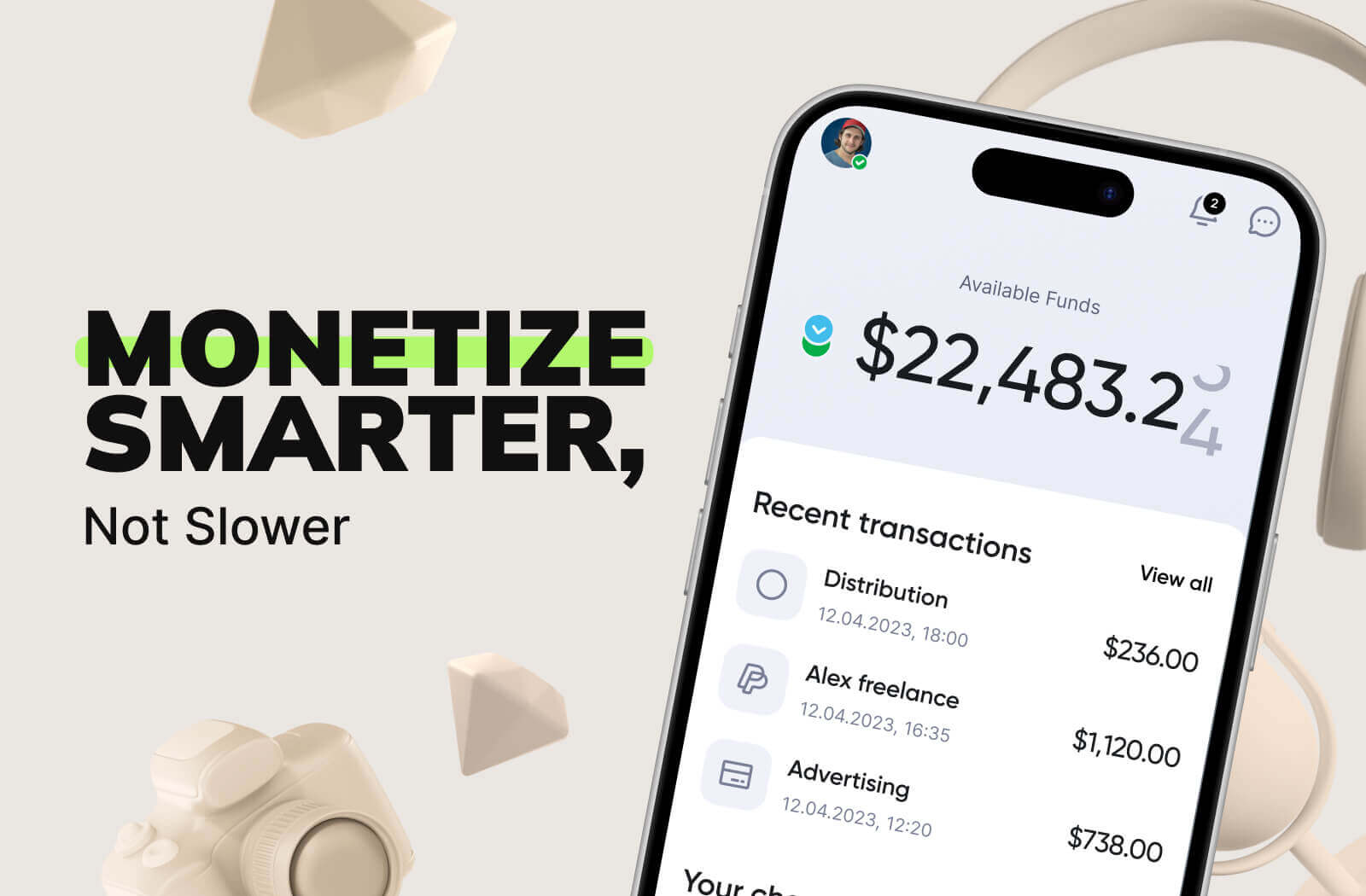
That’s why tools like MilX for creators exist: to turn unpredictable earnings into upfront funding and long-term control.
MilX is your money, just early. You access up to 6 months of future YouTube income upfront, then pay it back automatically as you earn.
- Withdraw in 40+ currencies (including crypto),
- Choose from 10+ payout methods,
- Send free P2P transfers to your editor, designer, or collab partner.
More than 3,100 creators already use MilX to stay ahead, launch faster, and cover content costs without going broke.
MilX doesn’t just protect your income, it powers your next move.